Custom sports and fitness software
Custom sports and fitness software for facilities, academies, leagues, and clubs. Booking, memberships, scheduling, scoring, and payments, built around how a real sports operation actually runs, not a generic template.
Facility booking with court, lane, and session scheduling, membership credits, and peak pricing
Membership management with loyalty, class packs, and multi-location access control
Athlete performance tracking and coaching platforms with data capture and progress reporting
Tournament and league management with bracket generation, live scoring, and participant communication
The problem
Sound familiar?
Managing court and lane bookings from a spreadsheet because your scheduling tool can't handle membership credits, peak pricing, and multi-sport availability at the same time?
Running league registrations and tournament brackets across email and paper forms because there's no system that handles your sport's specific format and ruleset?
Short answer
Sports fans expect a year-round digital channel: 77% run a second digital activity while watching games (Deloitte, 2023). RaftLabs builds sports and fitness software: facility booking, memberships and access control, athlete performance tracking, league and tournament management, live scoring, and fan apps. Launch a v1 in 12 to 14 weeks, typically $45K to $95K. Fixed cost, agreed before work starts.
Who this is for
Sports and fitness businesses we build for
Multi-sport facilities
Different booking rules, credits, and pricing per sport in one system.
Sports academies
Athlete performance tracking designed with your coaching staff.
Tournament organisers
Formats and scoring rules event tools can't express.
Sports tech product builders
A platform to resell to clubs, owned by you.
01 Diagnosis
Problems we solve for sports and fitness businesses
- 01Problem
Athlete performance data sits in multiple apps with no unified athlete profile
CostA coach has GPS data in one app, strength results in a spreadsheet, and session notes in a third tool. There's no single view of the athlete. Comparing performance across a season means manual export and combination work, which most coaches don't have time to do. Decisions get made on gut feel instead of data, and talent development stalls.
SolutionAthlete profile management holds sport-specific performance metrics tracked over time for each athlete: times, distances, weights, scores, and custom KPIs defined per sport or coaching programme. Session logging gives coaches a record with notes, drill records, and performance observations attached to each training session. Comparison tools show current performance against personal bests and programme benchmarks. Progress reports generate automatically and get shared with the athlete and their parent or guardian where relevant. Integration with wearable devices and fitness trackers captures data automatically where the sport supports it, and device data normalizes into the performance model your coaches actually use, with manual entry as the baseline.
- 02Problem
Membership management and access control systems aren't integrated
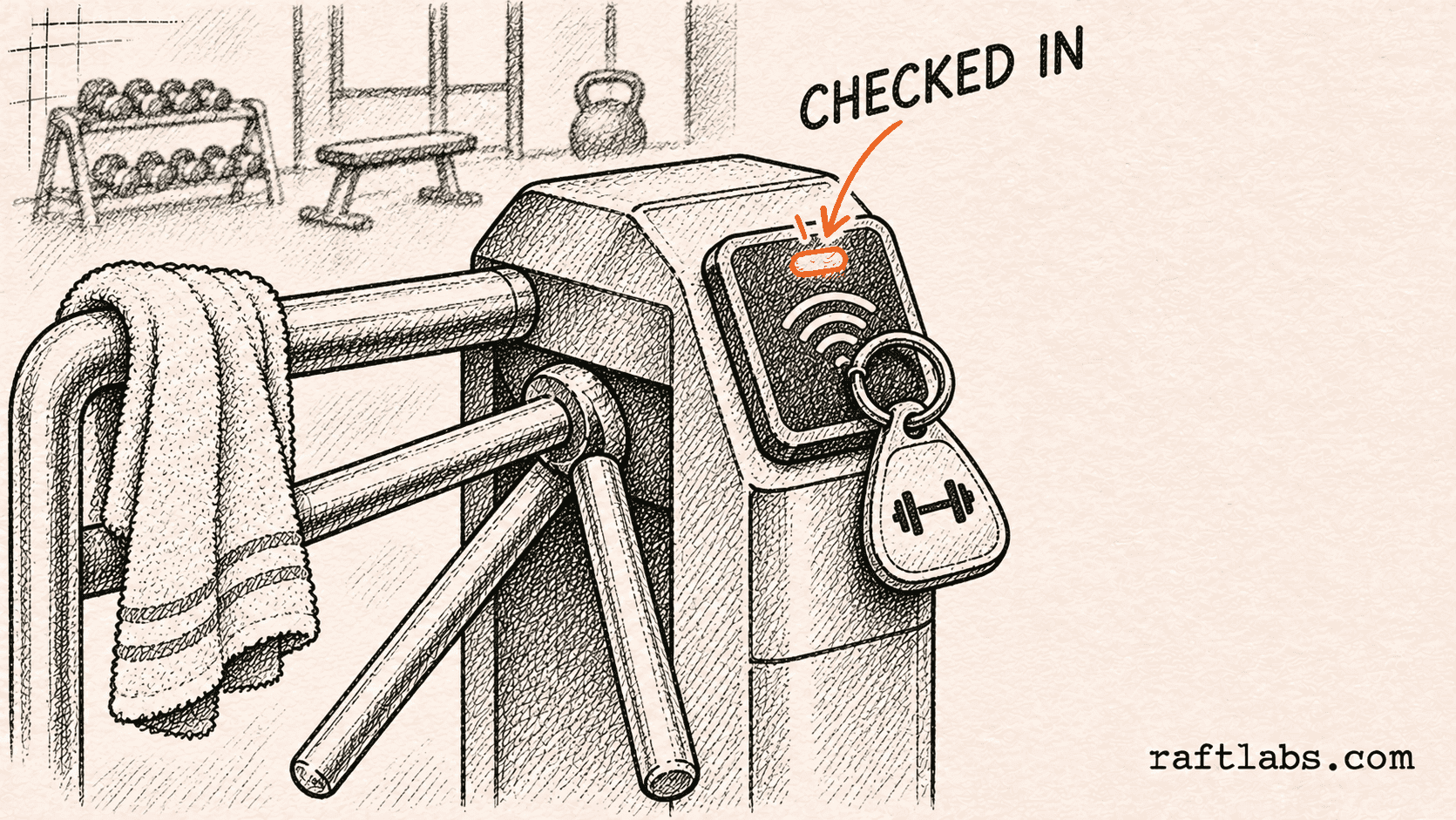
CostA member's payment status lives in the billing system and their door access lives in a separate system. When a membership lapses, access isn't revoked automatically. The front desk manually checks two systems before letting anyone in. That slows peak-time entry and creates compliance gaps when lapsed members walk through unchallenged.
SolutionGym management and membership software runs with configurable tiers and access rules covering which facilities, which times, and how many sessions per week or month. Direct debit billing includes automated retry for failed payments and dunning sequences (follow-up steps) for overdue accounts. Access control integration with turnstile, door entry, or check-in systems verifies membership status at the point of entry. Multi-location access management covers group memberships that span more than one facility. Once a membership is no longer current, that point-of-entry check no longer grants access, so a lapsed member is stopped by the check instead of walking through.
- 03Problem
Fan engagement depends on social media platforms rather than owned channels
CostFan contact details, engagement data, and content distribution all sit on platforms the club doesn't control. Algorithm changes reduce reach without notice. Deloitte's 2023 Sports Fan Insights survey found that 77% of fans run a second digital activity while watching games at home, from live stats to fantasy and betting. That demand runs year-round, well beyond the final whistle. Without a direct channel the club owns and can monetise, every message costs either staff time or paid reach.
SolutionFan engagement apps give sports clubs an owned engagement channel rather than depending on social media platforms. The apps carry live scoring, team news, and push notifications for match updates, with digital ticketing, club news and video content, a loyalty and rewards programme for match attendance, merchandise integration, and a community discussion layer. Fantasy league and prediction game mechanics drive active participation rather than passive following.
- 04Problem
Coaching tools for session planning aren't connected to athlete load data
CostA coach plans a hard training session without knowing that three athletes on the roster are at high injury risk based on last week's load. Training planning tools that don't surface athlete readiness data lead to overtraining, injuries, and underperformance. The cost shows up in physio bills, missed competitions, and athlete churn.
SolutionSession planning tools and athlete performance tracking are built as connected modules in the same platform. The planning tools include drill libraries, workout builders, and session templates that coaches can customise per athlete or group. Alongside the plan, the coach works with each athlete's sport-specific performance metrics tracked over time and the session logging record, with notes, drill records, and performance observations attached to each training session. Performance data models are built with your technical staff in discovery, so the metric framework answers coaching questions, not device questions.
02 What we ship
Sports and fitness software we build
Facility booking and scheduling
Court, lane, field, and session booking with real-time availability across all spaces and time slots. Membership credit deduction at booking, per-session credits, class pack credits, and unlimited membership access are handled by the same system. Peak and off-peak pricing rules apply automatically based on time of day and day of week. Instructor and coach assignment covers sessions that require a staff member. Online booking works via web and mobile app, with payment at time of booking. Admin override handles block bookings, maintenance closures, and event reservations that take spaces offline.
Membership management and loyalty
Gym management and membership software with configurable tiers and access rules covering which facilities, which times, and how many sessions per week or month. Direct debit billing with automated retry for failed payments and dunning sequences for overdue accounts. Access control integration with turnstile, door entry, or check-in systems verifies membership status at the point of entry. The loyalty programme lets members earn points on bookings, purchases, and referrals, then redeem them for session credits, merchandise, or upgrades. Multi-location access management covers group memberships that span more than one facility.
Athlete performance tracking
Athlete performance tracking brings each athlete's metrics, session records, and wearable data together in one profile, with benchmark comparisons and automatic progress reports.
Tournament and league management
Tournament registration with configurable entry forms, age group and division management, and payment collection at registration. Bracket generation covers single elimination, double elimination, round robin, and Swiss format events. Live draw tools handle group stage allocation. Real-time results entry drives automatic bracket progression. League management handles season scheduling, standings calculation, and results publication. Participant communication goes out via automated email and SMS with match schedules, venue information, and result confirmation.
Sports coaching platforms
Coaching platform for sports academies and individual coaches managing athlete caseloads. Session planning tools include drill libraries, workout builders, and session templates that coaches can customise per athlete or group. Video analysis lets coaches attach clips to session notes and flag specific moments for athlete review. Goal setting and milestone tracking keep progress visible to both coach and athlete. A parent portal lets parents of youth athletes view session notes, upcoming schedules, and performance progress without contacting the coach directly. Billing management covers coaching subscriptions and session packs with automated invoicing.
Fan engagement and gamification
Fitness challenge platforms include leaderboards, streak tracking, and social sharing for gym and fitness brands running community challenges. A gamification layer adds badges for milestones, challenges that unlock benefits, and community rankings that make fitness goals social. Integration with existing social media channels and email marketing platforms supports challenge promotion and winner announcements.
Integrations
Wearable data, cleaned and coach-ready
Device data normalizes into the performance model your coaches actually use.
- Wearables and health data
- Garmin · Polar · Apple Health · Google Fit
- Access note
- WHOOP (more restricted access)
03 Buy, build, or wait
Stay on the platform while one sport and standard memberships describe your operation.
The sports software question is really about whether one system needs to run bookings, memberships, and your sport's specific rules.
Buy or rent
A configured platform, for single-sport facilities
Mindbody, TeamSnap, or ClubRight cover standard booking and billing at low cost.
Wait, while the operation is small
One venue with simple memberships rarely justifies a custom build.
Build custom
When multiple sports share one facility
Different booking rules, credit types, and pricing models in one system break the platform.
When you are selling a sports tech product
A platform resold to clubs has to be yours, not rented.
When tournament formats are complex
Sport-specific formats and scoring rules exceed what event tools support.
Bottom line
Stay on the platform while one sport and standard memberships describe your operation. Build when multiple sports, complex memberships, or a product you sell exceed what configuration can do.
04 How we work
How we build sports and fitness software
- Step 0101
Discovery
We work with facility managers, coaches, and operations staff to map the current booking, scheduling, and athlete management workflows. We document the performance metrics that matter for your sport, the membership rules that govern access, and the fan engagement touchpoints the club wants to own.
- Step 0202
Architecture
We design the data model for athletes, sessions, memberships, events, and performance records before writing code. For facilities with multiple sports and booking types, the architecture determines how different credit types, pricing rules, and access policies coexist in one system.
- Step 0303
Build
We build booking, membership, performance tracking, and fan engagement as connected modules. Working software gets delivered every two weeks. Coaches and administrators can review real workflows at each checkpoint and confirm the build matches operational reality.
- Step 0404
Launch and support
We support the transition from existing booking tools and spreadsheets, train facility staff and coaches, and monitor the system through the first peak period. Post-launch support covers configuration adjustments as the operation grows and new sports or membership tiers are added.
05 Track record
Working with us
- Building production software since 2015
- 2015
- Average client rating on Clutch
- 4.9/5
- Price agreed before we start, no hourly billing
- Fixed
08 Why us
Why choose us?
- 01
Metric frameworks designed with coaches
Performance data models are built with your technical staff in discovery, so dashboards answer coaching questions, not device questions. - 02
Rules per sport, one system
Booking, credit, and pricing rules differ by sport and run side by side, instead of forcing one template on every programme. - 03
Fixed cost before work starts
The v1 is scoped and priced up front, and the platform grows module by module from there.
Frequently asked questions
Straight answers to what buyers ask before they scope. Still stuck? .
Our proven track record is in the neighbouring problems that sports software is built from: booking engines, membership and access control, loyalty and rewards, and events and community apps. We've built a real-time booking platform with keyless entry for a hospitality operator, membership and events apps for clubs and communities, and loyalty platforms where every visit or purchase earns automatically. The booking, membership, and engagement mechanics are the same. The sport-specific parts, your booking rules, your competition format, your performance metrics, we scope with you during discovery.
Off-the-shelf sports and fitness platforms cover standard class booking, membership billing, and basic scheduling for most single-sport facilities. Custom software is the right choice when your facility manages multiple sports with different booking rules, credit types, and pricing models in one system. It's also the right choice when your membership logic, credits, access control, or multi-location setup exceeds what the platform's membership module supports. The same applies when you're building a sports tech product or coaching platform to sell to clubs or coaches, or when your tournament and league management needs are complex enough that the platform's event tools can't support them. We'll tell you honestly if a platform configuration would cover your requirements rather than recommending custom development where it isn't warranted.
Yes. Wearable integration depends on what devices your athletes use and what APIs those devices expose. Garmin, Polar, Apple Health, and Google Fit all have APIs that allow third-party apps to read workout data. WHOOP has more restricted access. The practical consideration is that wearable data needs cleaning and normalisation before it's useful. Raw heart rate data doesn't tell a coach much without context. We design the data model around the specific performance metrics that matter for your sport and coaching programme, with manual entry as the baseline and device integration layered on top for athletes who use compatible hardware.
Yes. Tournament format logic is configurable. Bracket type, seeding rules, tiebreaker calculations, age group divisions, handicap systems, and scoring formats are all parameters we define during the build rather than hardcoded defaults. The key is scoping the format rules accurately before development starts, because bracket logic errors are disruptive once a tournament is live. We typically spend time with your tournament director during discovery to document every edge case: how ties are broken, how walkovers are handled, how late registrations affect the draw. The public-facing live scoring and standings are usually the highest-visibility part of a tournament platform, and they need to be reliable under peak load when all participants are checking results at the same time.
A facility booking system with membership management for a single location launches as a validated v1 in 12 to 14 weeks, typically $45K to $95K. That first slice proves the model in the market; the full product grows from there. Adding an athlete performance tracking module or a coaching platform grows the build further. A full platform with booking, membership, performance tracking, tournament management, and a fan engagement app typically runs $130K to $300K. Cost depends on the number of sports and booking types, integration complexity with access control hardware, and how sophisticated the performance data model needs to be. We scope every project before pricing. Fixed cost, agreed before development starts.
Sports and fitness software by product
- 01
Custom software development
Facility booking, athlete tracking, tournament management, and membership platforms built for your sport and venue type
- 02
Workflow automation
Automate membership renewals, class booking reminders, athlete performance reports, and league result notifications
- 03
AI chatbot development
Member-facing booking bots, training schedule queries, and event information automation
Get a build-vs-buy plan for your fitness business.
Tell us the challenge: facility booking, membership management, athlete tracking, or tournament software. We'll tell you what we'd build and how.
- Scope and cost agreed before work starts. No surprises. No obligation.
- Working prototype within 3 weeks of kickoff.
- Pay by milestone. You see progress before each invoice.
- 60-day post-launch warranty. Bug fixes, UI tweaks, and deployment support. No retainer.
- All conversations are NDA-protected.