Foundations
What is deep learning?
It is the reason AI jumped from lab demos to reading scans, transcribing calls, and understanding photos. When a vendor says their system learns from images or voice, deep learning is almost always the method underneath.
In plain terms
Deep learning is a form of machine learning that uses many stacked layers of simple pattern detectors, which is why modern AI handles images, voice, and language so well.
Deep learning is machine learning with many layers. Each layer picks out a slightly more complete pattern than the one before it: first edges, then shapes, then objects in a photo, or sounds, then words, then meaning in a recording. Stacking those layers is what let software get good at seeing and hearing.
The trade is appetite. Deep learning needs far more examples and far more computing power than simpler methods, and it is harder to ask why it decided something. For a business, that means it earns its place on perception problems, where nothing else works as well, and it is usually the wrong spend on tidy, tabular questions.
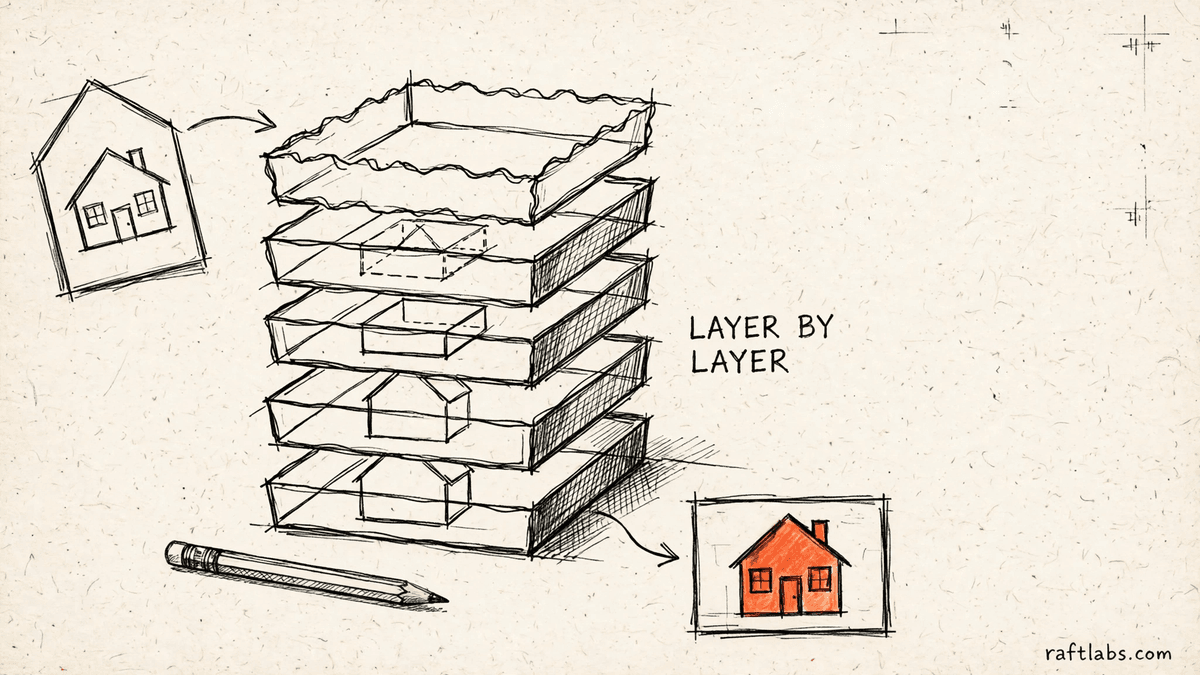
Think of it this way: Picture a row of inspectors passing an item down a line. The first spots edges, the next shapes, the next whole objects. No single inspector sees the full picture, but the line as a whole recognizes it.
A manufacturer photographs every part on the line. A deep learning system checks each photo against thousands of earlier ones marked good or faulty, and flags cracks a tired human eye would miss at speed.
A radiology group tests a system that pre-reads scans and sorts the clearly normal ones from the ones a doctor should see first. It works because the group has years of labeled scans. A smaller clinic with a few hundred images would not get the same result from the same software.
For perception jobs: reading images, video, handwriting, or speech, where the pattern is too complex to describe as rules and you have many examples to learn from. For simple predictions on tidy business data, such as scoring leads from a spreadsheet. A plainer machine learning method is cheaper there, easier to explain, and often just as accurate.
You do not need to pick a model from this page. RaftLabs starts from the job: the documents, the decision, and what a wrong answer costs. You see a working version before a large build. The related work on our side is Machine learning development.
This sits with the other foundations terms on the glossary. The words under every AI conversation, from the model itself to the data it learned from. Worth reading next: Artificial Intelligence (AI), Machine Learning (ML), and Large Language Model (LLM).
Frequently asked questions
Straight answers to what buyers ask before they scope. Still stuck? .
- Deep learning is one kind of machine learning, the kind that uses many stacked layers. Machine learning is the wider family, including simpler methods that learn from spreadsheets and transaction records. Most business data problems use the simpler kind. Most image, voice, and language problems use deep learning.
- Only if the job is perception: understanding images, video, speech, or free text at a level rules cannot reach. If your data already sits in rows and columns and the question is a score or a forecast, ask the vendor why a simpler method would not do. The answer tells you a lot about the proposal.
Work with us
Tell us what's broken.
Tell us what's not working in your business. We'll find the real problem and tell you exactly what it would take to fix it.
- Scope and cost agreed before work starts. No surprises. No obligation.
- Working prototype within 3 weeks of kickoff.
- Pay by milestone. You see progress before each invoice.
- 60-day post-launch warranty. Bug fixes, UI tweaks, and deployment support. No retainer.
- All conversations are NDA-protected.