Taxidermy price calculator
Build a mount quote line by line: the mount type, the base options, and any rush surcharge. Every price is your own, so the total matches the quote in front of you.
- Six mount types
- Base options itemised
- Deposit split shown
Before you run the numbers
One total, every line visible
A taxidermy quote is not one price. It is a short list of separate charges: the mount itself, the base options you choose, and a rush share if the piece is needed sooner. When those lines are bundled into a single figure, it is hard to tell what you are paying for.
This calculator keeps the lines separate. Enter the prices you have been quoted, or your own prices if you run a taxidermy studio, and see the total build up line by line, with the deposit split shown.
Your numbers
1. Choose a mount type and enter your price for it
2. Base and pedestal options
3. Rush turnaround (optional)
4. Deposit (optional)
Result
Quote total
Enter your own prices on the left to see the total.
Short answer
A taxidermy price calculator adds up a mount quote from your own prices: the mount type you select, any base or pedestal options you add, and a rush surcharge if you enter one. It then splits the total into the deposit due and the balance on completion, using your percentages.
What the quote covers
What goes into the price of a mount?
The price of a mount covers the mount work first. You pick one mount type: a shoulder mount, a life-size mount, a European mount, a rug, a bird mount, or a fish mount. Each type is different work, so each one carries its own price, set by the studio doing the job.
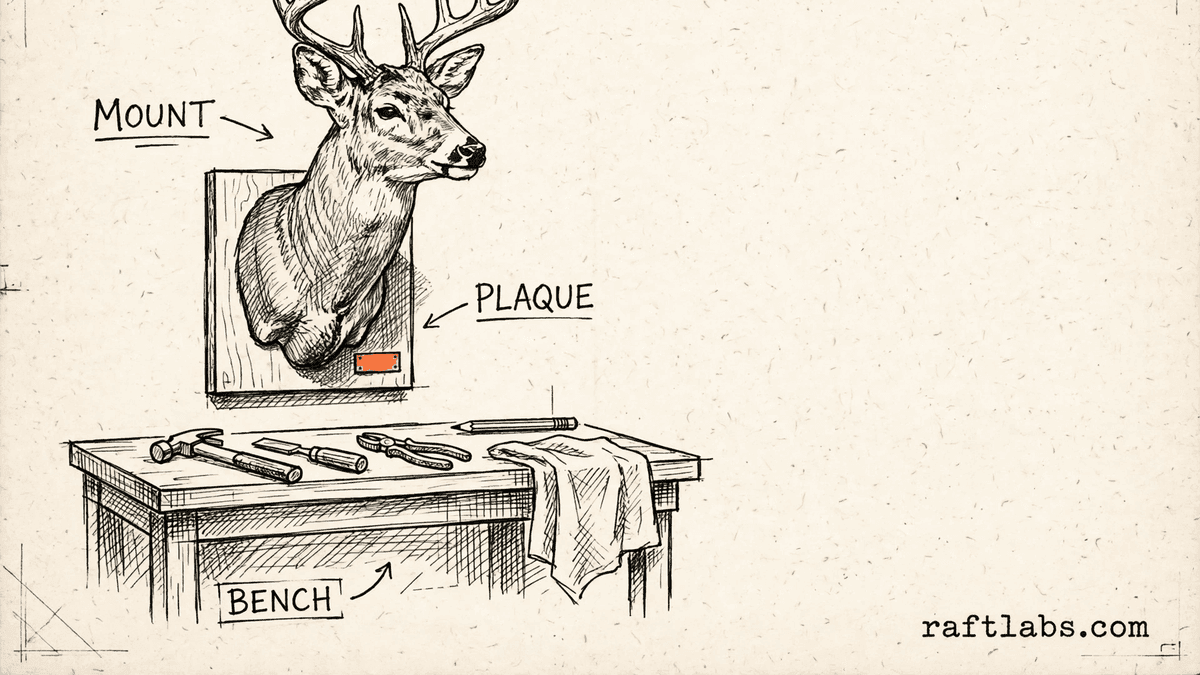
The second part is the base. A plaque or nameplate, a pedestal base, and a habitat base are workshop options you can add to a mount. Each one is priced on its own, and you only add the ones in your quote.
The last two parts are about time and payment. If a piece is needed sooner than the agreed schedule, the studio may add a rush surcharge as a percentage of the quote. The deposit is the share paid before work starts, with the balance due when the piece is finished. This calculator asks you to enter every price and percentage yourself, so the total is your arithmetic, not a price list.
| Cost part | What it covers | Who sets the price |
|---|---|---|
| Mount work | The selected mount type, prepared and finished to the agreed pose | The taxidermy studio |
| Base and pedestal options | A plaque or nameplate, a pedestal base, or a habitat base added to the mount | The taxidermy studio |
| Rush turnaround | An added share when a piece is needed sooner than the agreed schedule | The taxidermy studio |
| Deposit | The share paid before work starts, with the balance due on completion | The taxidermy studio |
The math
How the total is worked out
Start with the price of the mount type you selected. Add each base option you included. If a rush percentage is entered, add that share of the combined amount. That gives the quote total. The deposit is the deposit percentage of the total, and the balance is what is left.
Total = (Mount price + Base options) x (1 + Rush %)
Example: a shoulder mount at an example price of $800, plus a plaque at an example price of $75 and a pedestal base at an example price of $250. That adds up to $1,125. An example rush surcharge of 20% adds $225, for an example total of $1,350.
($800 + $75 + $250) x 1.20 = $1,350
If the studio asks for an example deposit of 30%, the deposit on that example total is $405 and the balance on completion is $945. Every figure in this example is a made-up input chosen to show the math. Your total will use the prices you enter.
Getting it right
How to get an accurate mount quote
The total is only as good as the figures behind it. Four steps keep a quote clear and free of surprises later.
- 01
Agree the pose and base before work starts
The pose, the turn of the head, and the base are hard to change once work has begun. Agree on them in writing at the start, and pick the base options at the same time so the quote covers the finished piece, not just the mount.
- 02
Put the turnaround date in writing
If the piece is needed by a set date, say so before the quote is made. A rush surcharge only applies when a faster turnaround is agreed, and the percentage should be on the quote so there is no surprise later.
- 03
Ask for every line in writing
A clear quote shows the mount, each base option, and any rush share as separate lines. If a quote gives you one lump sum, ask the studio to break it down. The itemised total from this calculator gives you a layout to compare against.
- 04
Confirm what the deposit covers
Ask what share is due before work starts, what it covers, and when the balance falls due. Put the agreed percentage into the calculator so the deposit and the balance are both in front of you before you agree to the work.
Frequently asked questions
Straight answers to what buyers ask before they scope. Still stuck? .
- A taxidermy quote lists the mount work for the type you choose, any base or pedestal options you add, and a rush surcharge if you ask for a faster turnaround. Each part is priced on its own line. This calculator follows the same layout, and every price in it is one you enter yourself.
- A rush surcharge is a percentage added to the quote when a piece is needed sooner than the agreed schedule. The studio sets the percentage and applies it to the mount and base options combined. Enter the percentage in the calculator and it adds that share to the total before it works out the deposit.
- A deposit is the share paid before work starts. It holds your place in the work queue and covers the first stage of the job, such as preparing the form and materials for your piece. The rest is paid when the work is done. Enter the deposit percentage and the calculator shows the deposit due and the balance on completion.
- A shoulder mount shows the head, neck, and shoulders of the animal and is made for a wall. A life-size mount shows the full animal in an agreed pose and needs a base or a place to stand. A European mount is different again: it is the cleaned skull on a panel or plaque. Pick the type that matches your commission, then enter your price for that type.
- Common workshop options include a plaque or nameplate fitted to the mount, a pedestal base the mount sits on, and a habitat base built to look like the ground around the piece. Each option is priced on its own. Tick only the options in your quote and enter your price for each one.
- Yes. A studio can enter its own price for each mount type, add the base options in the quote, and set its rush and deposit percentages. The result is an itemised quote the client can read line by line, with the deposit due and the balance on completion shown clearly.
Stay on topic
More for taxidermy teams
The tools give you a range. A call gives you a number.
30-minute scoping call. We will walk through how your studio handles intake, deposits, and mount tracking today, and you leave with a clear plan for the software that runs it.