Bike rental price calculator
Price a rental from your own rate card: hourly, half-day, full-day, and multi-day rates for city bikes, e-bikes, and touring bikes. The calculator finds the cheapest block combination and keeps the deposit separate.
- Three bike types
- Cheapest block wins
- Deposit shown separately
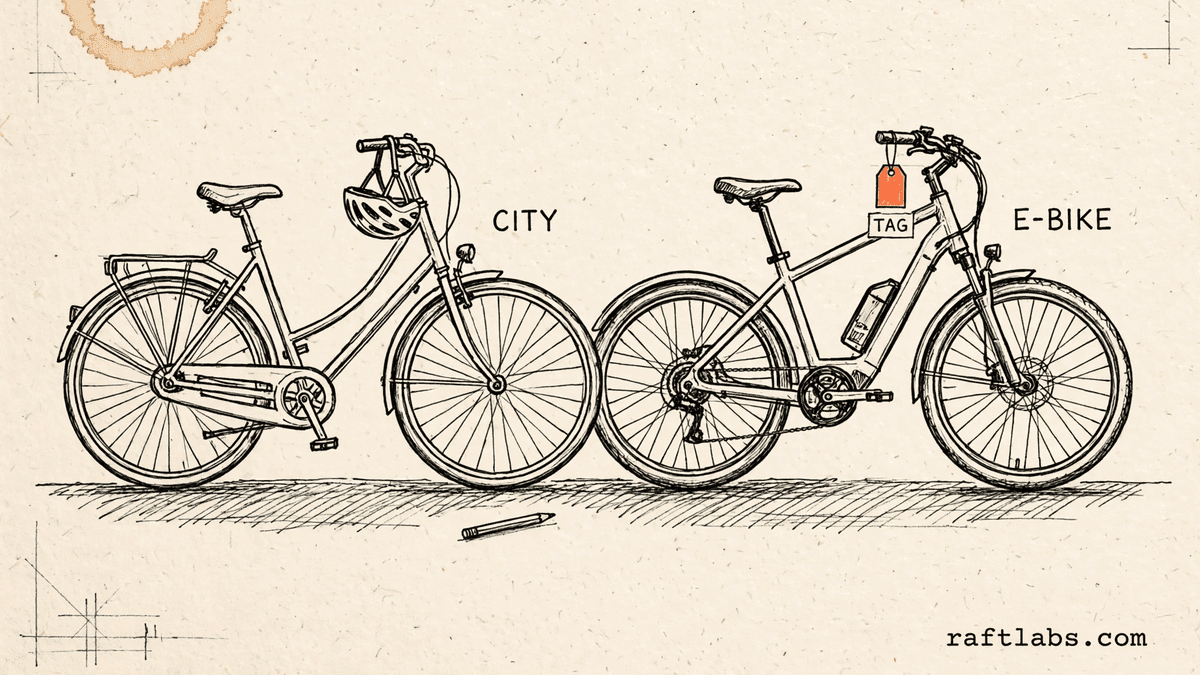
Before you run the numbers
The cheapest block, shown in words
A rental can often be priced in more than one way. Six hours could be six times the hourly rate, one half-day block plus extra hours, or a full day. Which one costs least depends on your own rates, not on a fixed rule.
This calculator tries the valid combinations from the rates you enter, keeps the cheapest one, and names it in the result. The deposit stays on its own line, so it never inflates the rental price.
Your numbers
1. Choose a bike type and enter your rates for it
2. What each block covers
These two fields are time lengths, not prices. They are editable so the blocks match how you sell time. Change them if your half day or full day covers a different number of hours.
3. Rental length and number of bikes
Enter the rental as whole days plus any extra hours on top. For a rental under a day, leave whole days at zero and enter only the extra hours.
4. Extras
5. Deposit
The deposit is held while the bike is out. It is shown as its own total and is never added to the rental total.
Result
Rental total
Enter your own rates and prices on the left to see the total.
Short answer
A bike rental price calculator works out the cheapest way to price a rental from your own rates. It compares paying by the hour, using day blocks plus extra hours, and rounding up to whole days, then multiplies by the number of bikes and adds any extras you include.
What the cost covers
What goes into a bike rental price?
A bike rental price has three parts. The first and largest is time. You sell time in blocks: by the hour, by the half day, by the full day, and by each extra day on a longer rental. A good price uses the cheapest mix of those blocks that covers the full rental length.
The second part is extras. Some extras travel with each bike, such as a helmet, a lock, or a child seat, so their cost grows with the number of bikes. Delivery is different: it happens once for the booking, so it is priced once.
The third part is the deposit. The deposit is held while the bike is out and returned when the bike comes back as agreed. It is not a charge for the rental. This calculator shows the deposit total separately and never adds it into the rental total.
| Cost part | What it covers | Who sets the price |
|---|---|---|
| Time blocks | The rental time itself, priced as hours, half days, full days, or extra days at your rates | You, from your own rate card |
| Extras | Helmets, locks, and child seats priced per bike, and delivery priced once for the booking | You |
| Deposit | Money held per bike while the bike is out. It is shown on its own line and is not part of the rental total | You |
The math
How the cheapest price is worked out
For one bike, the calculator prices the same rental three ways from your rates and keeps the lowest. The first way charges every hour at the hourly rate. The second way charges whole days first, then covers any extra hours in the cheapest valid way. The third way rounds the rental up to whole days.
Time price per bike = lowest of (all hours at hourly rate, day blocks plus extra hours, whole days rounded up)
Rental total = Time price per bike x Number of bikes + Extras
Deposit total = Deposit per bike x Number of bikes (shown separately, never added to the rental total)
Example, using example inputs only: a city bike at an example hourly rate of $12, an example half-day rate of $30 covering 4 hours, an example full-day rate of $50, and an example multi-day rate of $40 per extra day. The rental is 1 whole day plus 3 extra hours, for 2 bikes. A helmet is included at an example price of $5 per bike, delivery at an example price of $20 once, and the deposit is an example $100 per bike.
Per bike, the three ways compare like this. All hours: 27 hours in total at $12 comes to $324. Day blocks plus extra hours: 1 day at $50 plus the extra 3 hours covered by a half-day block at $30 comes to $80, because $30 is less than 3 hours at $12, which is $36, and less than a full day at $50. Whole days rounded up: 2 days at $50 plus $40 comes to $90. The lowest is $80, so the winning combination is 1 day plus a half-day block.
Time: $80 x 2 bikes = $160. Extras: helmet $5 x 2 bikes = $10, plus delivery $20 = $30. Rental total: $160 + $30 = $190.
The deposit total is $100 x 2 bikes = $200, shown on its own line and not added to the $190. The cost per bike for time plus the per-bike helmet is $80 + $5 = $85. Every figure in this example is a made-up input chosen to show the math. Your total will use the rates and prices you enter.
Quoting well
Tips for a clear bike rental quote
A clear quote names the time blocks, the extras, and the deposit as separate lines. Four habits keep the quote easy to read and easy to compare.
- 01
Quote the deposit separately
State the rental total first, then state the deposit total as its own line. When the deposit is folded into the headline price, the rental looks more expensive than it is, and customers compare it against quotes that leave the deposit out.
- 02
Set the block lengths to match your shop
The half-day and full-day lengths in this calculator are time lengths, not prices. Change them if your shop covers a different number of hours with each rate, so the cheapest block the calculator finds is one you would actually sell.
- 03
Check the winning block before you quote
The result names the winning combination in words, such as one day plus a half-day block. Read it before you quote. If it is not a combination you offer, adjust your rates or block lengths and run the numbers again.
- 04
Label each extra clearly
Say which extras are priced per bike and which are priced once. A helmet price means one thing for a single bike and another for a group booking. Clear labels stop the extras from becoming a dispute at return time.
Frequently asked questions
Straight answers to what buyers ask before they scope. Still stuck? .
- It tries three ways to price the same rental from your own rates. The first is every hour at your hourly rate. The second is whole day blocks plus the cheapest way to cover any extra hours. The third is rounding the whole rental up to whole days. It keeps the lowest total and names the winning combination in the result, so you can see why that price won.
- A half-day rate covers a shorter block of time than a full-day rate. You set how many hours each block covers. The preset lengths are 4 hours for a half day and 24 hours for a full day, and you can change both to match how your shop sells time. The rates themselves are your own prices for each bike type.
- A deposit is money held while the bike is out, not money charged for the rental itself. It is returned when the bike comes back as agreed. This calculator shows the deposit total on its own line and never adds it into the rental total, so the headline price stays clear.
- Helmets, locks, and child seats are priced per bike, so the calculator multiplies each one you include by the number of bikes. Delivery is priced once for the whole rental, no matter how many bikes are in the booking. Each extra has its own price field, and you enter the price you charge.
- Yes. The calculator has three separate rate groups: city bikes, e-bikes, and touring bikes. You enter your hourly, half-day, full-day, and multi-day rates for the type you are pricing, and the calculator uses only that group. You can price each type in turn without mixing the rates.
- Yes. Enter your own rate card for the bike type, set the rental length and the number of bikes, and add any extras the customer wants. The result shows the rental total, the cost per bike, and the deposit total on its own line. That gives you a clear quote you can read back to the customer line by line.
Stay on topic
More for bike rental teams
The tools give you a range. A call gives you a number.
30-minute scoping call. We will walk through how your shop handles bookings, deposits, and returns today, and you leave with a clear plan for the software that runs it.