The AI Agent Production Sprint: scope, price, and what happens
A fixed-scope way to take one agent workflow from idea to real use. What the sprint covers, what it costs to start, and what it deliberately leaves out.

In this article
Short answer
The AI Agent Production Sprint is a fixed-scope engagement that takes one AI agent workflow toward production use. First phases start at $10K, with scope and price agreed in writing before work begins. The scope names the workflow, the systems involved, who approves agent actions, the test cases, and what done looks like.
Key takeaways
- One workflow only. A sprint that tries to cover five workflows usually finishes none of them well.
- First phases start at $10K, with a fixed scope and price agreed in writing before work begins.
- The scope names the systems, the people who approve actions, the test cases, and what done looks like.
- Changes after the scope is set are priced and approved before the work happens, not added to a later bill.
- Clients own 100% of the code, so another team can take over from the project notes if you ever choose to move.
Most agent projects do not fail on the model. They fail on vague scope. Everyone agrees an agent would help, nobody agrees which workflow it owns, and months pass without anything reaching real use.
The AI Agent Production Sprint is our answer to that problem. It is a fixed-scope engagement built around one workflow, with the price and the finish line agreed before work begins.
The short answer
Pick one workflow. Agree what the agent may do, which systems it touches, and who approves its actions. Test it on real cases. First phases start at $10K, at a fixed scope and price. Anything outside that scope is a separate, priced decision.
Why one workflow
A workflow is a complete job with a clear end. Handling first-line order questions is a workflow. Processing intake forms is a workflow. Automating the business is not.
One workflow keeps every other decision honest. The data it needs is knowable. The exceptions can be listed. The test cases can be drawn from real work your team already handles.
Our AI agent development page makes the same point in another way: timing and cost depend on the workflow and its authority boundary, not on how many agents are in the diagram.
What the scope covers
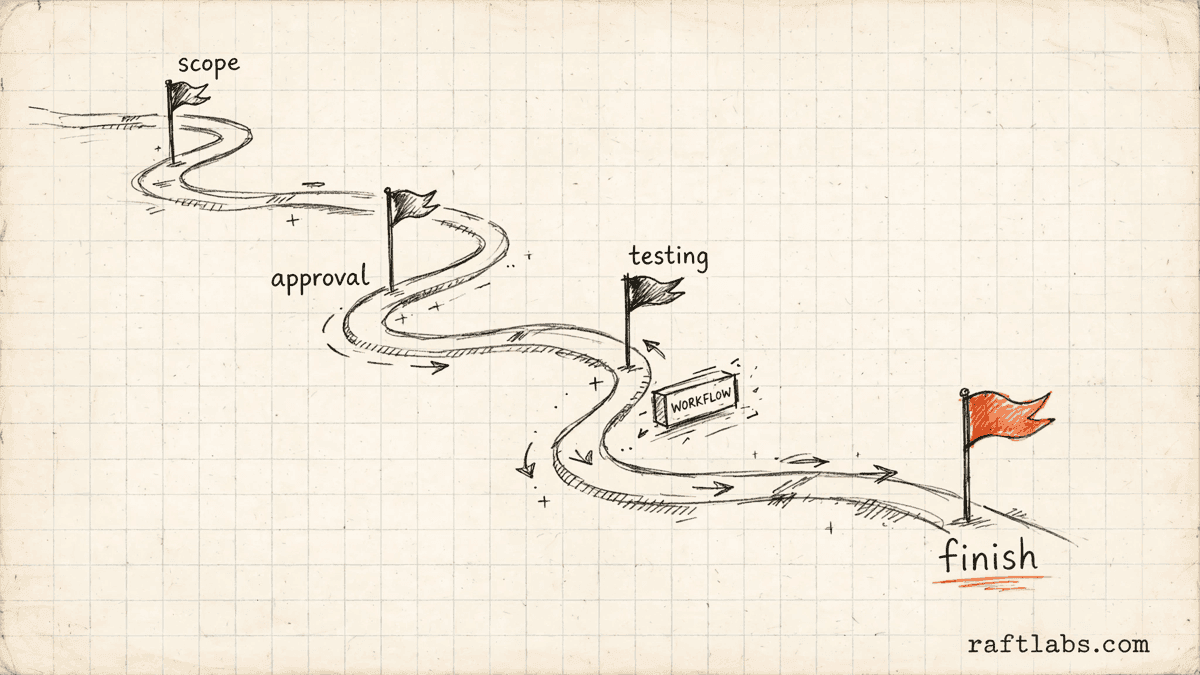
A complete scope names six things in writing. If any one is missing, the scope is not ready.
First, the workflow itself, in one sentence a new hire could understand. Second, the systems the agent connects to, and what it reads or changes in each. Third, who uses the agent and who approves its actions.
Fourth, the cases it will be tested against, drawn from real work. Fifth, what is excluded, stated as plainly as what is included. Sixth, the price, and what done looks like, agreed in writing.
That discipline is how our wider custom software development work runs too. A fixed scope only protects you if done is defined before the work starts.
Price, in plain terms
First phases start at $10K. That starting point covers a bounded first phase, such as an agent suitability audit, a workflow and authority map, a sandboxed evaluation, or one agent working in observation or approval mode. A full sprint, taking one workflow through to production use, typically runs $15,000 to $30,000 and typically takes four to six weeks.
The final price for your workflow depends on ordinary, checkable factors. More systems mean more integration work. More roles mean more permission design. Costlier mistakes mean deeper testing.
You approve any change before it happens. If the scope grows mid-phase, the change is priced, you decide, and only then does the work proceed.
What a good first workflow looks like
Choose work that is frequent, rule-guided, and easy to check. The input should arrive in a form the agent can read. The right answer should be verifiable by a person in minutes.
Avoid starting with your most sensitive or most political process. A first sprint should earn trust inside your team, not spend it.
Good candidates often sit in support, operations, or internal admin. The common thread is a clear owner who can say yes, no, and not like that during testing.
Authority grows in stages
A careful sprint does not hand over full authority on day one. The agent starts by observing and drafting. A person approves each action.
As test results and live records build confidence, agreed actions can proceed without approval. Sensitive actions stay under approval for as long as you want. That staging is a decision you own, not a default we set for you.
After the sprint
You hold the working agent, its test cases, and its records. Clients own 100% of the code, and the project notes stay current, so the work can continue with any team.
Many teams then face a running question: who watches the agent, updates its tests, and reviews its actions each month? That ongoing work is separate from the sprint. Our guide to what an agent operations retainer covers sets out that arrangement in detail.
How to start
Bring one workflow, its owner, and a handful of real cases. We will say plainly whether an agent fits, what the first phase should cover, and what it will cost. If an agent is the wrong answer, a simpler automation or a bought product may be the honest recommendation, and we will say so.
Ask an AI
Get an instant summary of this post from your preferred AI assistant.
Frequently asked questions
Straight answers to what buyers ask before they scope. Still stuck? .
- It is a fixed-scope engagement focused on one agent workflow. The work covers mapping that workflow, agreeing how much authority the agent holds, connecting the systems it needs, testing it on real cases, and preparing it for real use under agreed approval rules.
- First phases start at $10K, and a full sprint typically runs $15,000 to $30,000. The exact price depends on the workflow, the systems involved, the roles and permissions, the exception cases, and the depth of testing. You receive the full price in writing before work begins, and any change to scope is priced and approved before it is done.
- A named workflow owner, access to the systems the agent must reach, examples of real cases including awkward ones, and a decision on who approves agent actions. Without those four things, any timeline or price would be a guess.
- Additional workflows, extra systems beyond the named scope, and open-ended support after launch are not included. Ongoing care is a separate arrangement. Our page on what an agent operations retainer covers explains that next step.
- You do. Clients own 100% of the code, and the accounts and data stay in your name. Project notes are kept current during the work, so your own team or another team can continue from them.
- You hold a working agent for one workflow, its test cases, and its action records. From there you can widen its authority, add a second workflow as a new fixed phase, run it with your own team, or arrange ongoing operations support.