Foundations
What is multimodal AI?
Real business evidence rarely arrives as tidy text. It is a photo of a damaged part, a voice note from a site, a scanned form. A multimodal model can take the whole bundle at once, which removes the step where someone describes the photo before the system can help.
In plain terms
Multimodal AI is an AI model that takes in more than one kind of input, such as text, images, and audio, and reasons over them together.
Multimodal AI works across kinds of input, called modes: text, images, audio, sometimes video. A text-only model reads your question and nothing else. A multimodal model can read the question, look at the photo, and listen to the recording in the same request, and answer about them together.
The business change is the removed hand-off. Today, someone looks at the photo and writes a description before any system can act on it, and detail is lost in that step. When the model sees the evidence itself, the claim, the inspection, or the report starts from the original material. The check still matters: a person should confirm what the system says it saw.
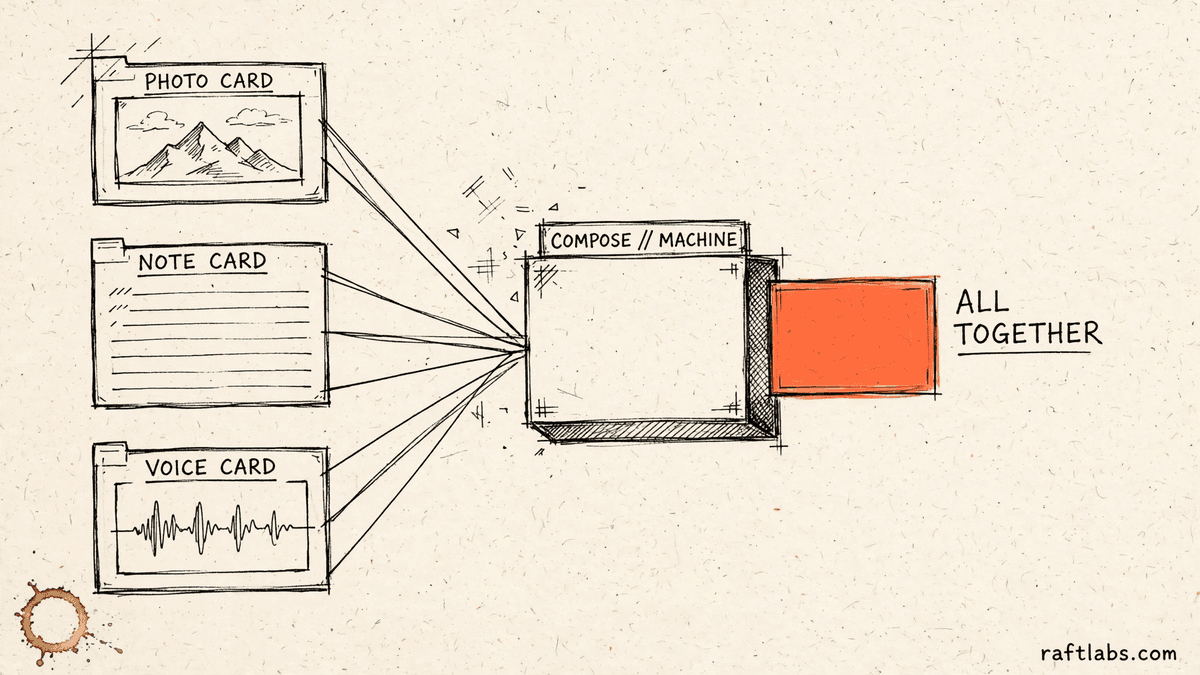
Think of it this way: It is the difference between a colleague who can only read your email and one who can look at the photo you attached, listen to your voice note, and read the form, then answer about all three together.
A field technician photographs a failed pump, adds a short typed note, and asks what to check first. The system reads the corrosion pattern in the photo against the note and the manual, and answers about that pump, not pumps in general.
An insurer's claimant uploads two photos of a dented panel and records a 20-second voice note. The system drafts the claim summary from the photos and the note together, lists the parts it can identify, and marks the one part it cannot see clearly for the handler to confirm.
When the question only makes sense with the evidence attached: damage claims with photos, site reports with voice notes, documents that mix forms, stamps, and handwriting. When the input is plain text and stays plain text. A text-only setup is cheaper to run and easier to test, and adding image or audio input you do not need only adds cost and failure modes.
You do not need to pick a model from this page. RaftLabs starts from the job: the documents, the decision, and what a wrong answer costs. You see a working version before a large build. The related work on our side is Generative AI development.
This sits with the other foundations terms on the glossary. The words under every AI conversation, from the model itself to the data it learned from. Worth reading next: Artificial Intelligence (AI), Machine Learning (ML), and Large Language Model (LLM).
Frequently asked questions
Straight answers to what buyers ask before they scope. Still stuck? .
- Usually it is a capability of the model you already rent, not a separate product. The questions to ask are which inputs the model accepts, what each one costs per use, and whether your documents and photos may be sent to it under your privacy terms. The feature design changes more than the shopping list.
- It can replace the typing, not the judgment. It can read the photo and the form and draft the record, which saves the repetitive part. The inspector still decides pass or fail, because that call carries liability. Design it as drafting help with a human signature, and it earns trust faster.
Work with us
Tell us what's broken.
Tell us what's not working in your business. We'll find the real problem and tell you exactly what it would take to fix it.
- Scope and cost agreed before work starts. No surprises. No obligation.
- Working prototype within 3 weeks of kickoff.
- Pay by milestone. You see progress before each invoice.
- 60-day post-launch warranty. Bug fixes, UI tweaks, and deployment support. No retainer.
- All conversations are NDA-protected.