




How Much Does It Cost for SaaS Application Development in 2026
- Riya Thambiraj
![Riya Thambiraj]()
- SaaS
- Last updated on
Key Takeaways
Building a SaaS product typically costs $10,000–$20,000 for an MVP and $20,000–$60,000 for a full-featured platform, with AI or enterprise builds priced custom.
Total cost depends mainly on feature complexity, number of integrations, platforms (web or mobile), and the location and type of development team.
Individual features vary widely in price, with simple auth or dashboards on the low end and AI, real-time collaboration, multi-tenancy, and compliance on the high end.
A full build usually follows stages like discovery, design, frontend, backend, QA, deployment, and then ongoing maintenance that runs about $2,000–$8,000 per month.
Team choices include freelancers, in-house teams, or agencies, and offshore agencies can deliver similar quality at a fraction of US or Western Europe rates.
Founders can start with no-code or templates to validate ideas cheaply but often need a custom rebuild once they scale beyond 5,000–10,000 users or need complex logic.
Key cost drivers include UI/UX complexity, region-based hourly rates, third-party integrations, security and compliance needs, and the specific SaaS domain like CRM or ERP.
AI features add significant extra build and operating costs due to model complexity, data needs, infrastructure, and continuous training and updates.
You can control SaaS development costs by starting with a focused MVP, choosing the right tech stack, outsourcing to a reliable partner, reusing pre-built components, and planning for scalable architecture from day one.
Businesses today run on SaaS. An average company runs 112 SaaS applications. Most of them are tools they tolerate, not tools they chose. And at some point, a founder does the math, the licensing fees, the workarounds, the features that almost fit and realizes building their own platform makes more sense than paying for someone else's.
That's the moment this article is for.
SaaS app development cost varies more than most guides admit. A simple MVP and an enterprise platform are both called "SaaS" but the cost to build a SaaS product sits at opposite ends of a very wide range. What you spend depends on three things: how complex your feature set is, how many systems you're integrating, and whether you're building for web, mobile, or both.
This guide gives you the real numbers by build tier, by development phase, by individual feature, and by team type so you can build an actual budget, not a guess.
We've built 30+ SaaS products, and as an experienced SaaS application development company, the breakdown below reflects what the SaaS application development actually cost.
Who This Guide Is For
Founders evaluating whether to build a custom SaaS product or keep buying off-the-shelf tools
CTOs scoping a new platform and trying to pressure-test a quote they've received
Operators planning a budget and need to understand what post-launch costs actually look like
If you need the step-by-step on how to build a SaaS product, tech stack, architecture decisions, team structure see our SaaS app development guide. this article covers cost only.
What You'll Learn
What a realistic SaaS app development cost looks like at each complexity tier
How much individual features cost, from user auth to AI/ML capabilities
What ongoing operations cost after launch (and why most guides get this wrong)
When to build custom, when to start with no-code, and when the rebuild trap kicks in
How team location affects your total SaaS software development cost and by how much
Before we get into the numbers, one quick baseline.Because "SaaS" means different things to different builders, and the type you're building shapes every cost decision that follows.
What is a SaaS Application?
SaaS (Software as a Service) apps run on cloud servers and are accessed through a web browser. No need to download or install anything, and updates happen automatically. These apps work across different devices and operating systems, making them really convenient.
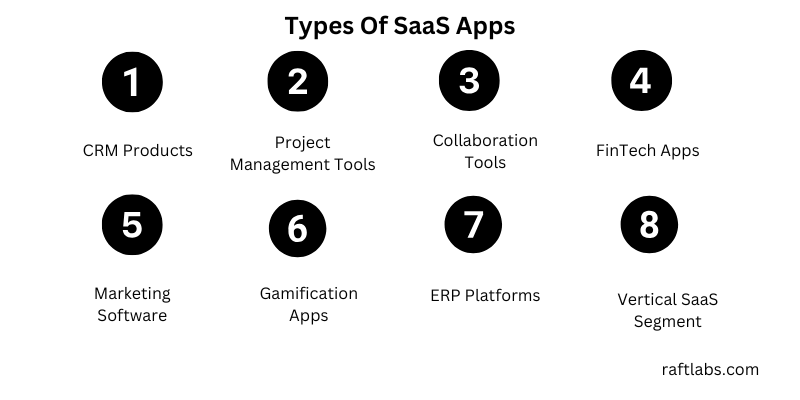
Some of the types of SaaS Applications
CRM Products
Project Management Tools
Collaboration Tools
Fintech Apps
Marketing software
Gamification Apps
ERP Platforms
Vertical SaaS segment
With businesses relying on so many tools, many are realizing that building their own SaaS platform is a smarter move.
Instead of juggling multiple third-party solutions, companies can develop a tailored platform that fits their exact needs.
A custom SaaS app gives better control, seamless integration, and even opens up new ways to make money.
But it’s not just about saving costs, it’s about staying ahead of the competition.
So, how much does it cost to build a SaaS app?
The cost of developing a SaaS platform depends on different factors. A basic version with just a few features will be cheaper. But here’s what to think about:
What kind of user experience (UX) does the app need? Does it have complex workflows or too much going on in one screen?
Does the app need things like analytics, AI-powered features, or video streaming?
Will it require real-time updates or chat functionality?
Adding these features will raise the price of development.
Most businesses want a SaaS app that’s affordable but still high-quality. Understanding the factors that affect cost can help you optimize your budget and get the most value.
This article serves as your SaaS cost calculator, breaking down the factors that affect development costs so you can plan your budget effectively.
How Much Does It Cost To Build A SaaS Product?
Building a SaaS product with us costs $10,000–$20,000 for an MVP development and $20,000–$60,000+ for a full-featured platform. Complex or AI-powered products are scoped on a custom basis which might cost about $120000+.
Here's the quick breakdown for planning:
MVP SaaS — $10,000–$20,000: 1–2 core features, mobile and/or web app, simple design, 6–8 week delivery
Full-Featured SaaS — $20,000–$60,000: iOS + Android + web, multiple features, custom design, 3rd-party integrations, 12–14 week delivery
Innovative / Enterprise SaaS — Custom quote: AI, AR/VR, multi-platform, highly complex business logic which will costing about $120000+.
These are our actual project-basis prices, not a generic market range. US and Western European agencies charge 3–6x more for the same output. The difference is our team composition and delivery model; built from India, with the process and quality bar of an international product studio.
The number that shapes your budget most isn't the tier but what features are in scope on day one. See the per-feature breakdown below.
What is the Cost of Building a SaaS Application?
A full-featured SaaS platform built by RaftLabs runs $20,000–$60,000 all-in. That covers design, development, integrations, QA, and deployment. An MVP version starts at $10,000.
Here's what shapes that number:
A lean MVP with 1–2 features and a clean but simple design stays at $10,000–$20,000
Add custom design, multiple user roles, and 2–3 third-party integrations and you're in the $20,000–$60,000 range
AI capabilities, real-time collaboration, advanced analytics, or compliance layers (HIPAA, GDPR) move to a custom quote
The table below gives you our cost estimates by build tier:
| SaaS Platform Type | Features | Timeline | Cost Estimate | Examples |
|---|---|---|---|---|
| MVP | 1–2 core features, mobile and/or web app, simple design | 6-8 weeks | $10,000 - $20,000 | A basic email marketing tool like Mailchimp in its early days, a simple invoicing app like FreshBooks when it started |
| Full-Featured Product | iOS + Android + web app, multiple features, custom design, 3rd-party integrations | 12-14 weeks | $20,000 - $60,000 | A collaboration tool like Trello, a customer support platform like Zendesk, or a cloud storage service like Dropbox |
| Innovative / Enterprise | AI, AR/VR, multi-platform, highly complex requirements | Varies based on complexity | Custom quote | AI-driven SaaS like Grammarly, an AI-powered sales assistant like Gong, or Notion with its all-in-one workspace approach |
The same full-featured product built by a US agency at $150/hr typically costs $100,000–$300,000. The same product built by us costs $20,000–$60,000. The codebase, architecture, and delivery standard are the same. The rate is not.
SaaS App Development Cost Per Feature
The cost to build a SaaS application per feature depends on complexity. Understanding what each feature costs lets you sequence your roadmap by business value, building the high-ROI features first and deferring the expensive ones until the product is validated.
| Feature | Complexity | Estimated Cost (USD) |
|---|---|---|
| User registration + authentication | Low | $800–$2,000 |
| Admin dashboard | Low–Medium | $1,500–$4,000 |
| Subscription billing (Stripe integration) | Medium | $2,500–$5,000 |
| Role-based access control | Medium | $2,000–$4,500 |
| Email notifications + automation | Low–Medium | $1,000–$3,000 |
| Analytics and reporting dashboard | Medium–High | $4,000–$10,000 |
| Real-time collaboration (e.g., live editing) | High | $8,000–$20,000 |
| Payment gateway + multi-currency | Medium | $3,000–$7,000 |
| AI/ML feature (recommendations, predictions) | High | $10,000–$40,000+ |
| Third-party API integration (per integration) | Varies | $1,500–$6,000 each |
| HIPAA or GDPR compliance layer | High | $5,000–$15,000 |
| Multi-tenancy architecture | High | $8,000–$25,000 |
List every feature in your spec. Map each to a complexity tier. Sum the ranges. That gives you a bottom-up estimate that's more accurate than top-down guesses, and it lets you identify which features are pushing you from the MVP tier into the full-featured tier.
Features that touch payments, compliance, or real-time data cost 3–5x more than features that read and display static data. If your MVP spec has 3 high-complexity features, you're already in the $20,000–$40,000 range before the rest of the build.
Not sure how to scope your feature list? Start with a product discovery session. It's how we turn vague briefs into accurate estimates.
SaaS App Development Costs Based on Development Phases
A full-featured SaaS build costs $20,000–$60,000 before launch and $2,000–$8,000/month to operate afterward.
Here's the phase-by-phase breakdown for a mid-range product:
| Development Phase | Activities Covered | Timeframe | Estimated Cost |
|---|---|---|---|
| Discovery & Planning | Market research, competitor analysis, user persona building, feature listing, MVP roadmap | 2 – 3 weeks | $0 – $4,000 |
| UI/UX Design | Wireframing, prototyping, user journey mapping, and responsive design mockups | 2 – 4 weeks | $4,000 – $12,000 |
| Frontend Development | Implementing user interface, client-side logic, and integrating UI with backend via APIs | 4 – 6 weeks | $10,000 – $30,000 |
| Backend Development | Database architecture, APIs, business logic, authentication, and role management | 5 – 8 weeks | $12,500 – $40,000 |
| QA & Testing | Functional testing, performance testing, bug fixing, usability testing, UAT | 2 – 3 weeks | $4,000 – $10,000 |
| Deployment | Hosting setup, domain, SSL, cloud configuration | 1 week | $500 – $2,000 |
| Maintenance (Monthly) | Updates, monitoring, backups | Ongoing (post-launch) | $2,000–$8,000/month |
So, the total cost of the SaaS app development by considering all the development stages is approximately around $20000 - $90000+ and the cost may vary based on the complexity of the SaaS application that you want build.
SaaS Software Development Cost Based On Team Type
The cost of building a SaaS web, mobile or AI application depends heavily on the development team.
You have three options for hiring web developers to develop your SaaS app:
In-house teams, freelancers, and outsourcing web app development companies.
Each option has its own advantages, different pricing structures, expertise levels, and scalability options.
| Developer Type | Who’s Involved | Hourly Rate | Project Cost (Full-Featured SaaS) |
|---|---|---|---|
| Freelancers | Developer, Designer | $15–$60/hr | Unpredictable. Depends on coordination |
| In-House Team | PM, Developers, QA, Designer | $80K–$150K/yr per person | $250K–$500K+ per year in team overhead |
| Agency (US/EU) | Full-cycle team | $80–$200/hr | $100,000–$300,000+ |
| RaftLabs (Offshore) | Full-cycle team + delivery | $25–$50/hr | $20,000–$60,000 |
1. Freelancers (Lowest Cost, Highest Risk)
Freelancers are the cheapest way to build a SaaS app, with hourly rates from $15 to $100+.
But, managing multiple freelancers for design, development, and testing can be tricky,
Risks include delays, inconsistent code quality, and lack of long-term support.
Works for simple projects but not ideal if you need a scalable, high-quality SaaS product.
2. In-House Team (More Control, Higher Costs)
Gives you full control over development and long-term stability.
High costs, with developer salaries ranging from $80,000 to $150,000 per year per person.
Additional expenses for benefits, office space, and infrastructure.
Best if you plan continuous development and have the budget for an in-house team.
3. Outsourcing (Cost-Effective, Scalable, and Reliable)
Outsourcing SaaS development to an experienced agency provides a structured approach with skilled developers, designers, testers, and project managers.
Ideal if you’re building a high-security web, mobile or AI-driven SaaS platform.
Costs range from $40,000 to $150,000+.
Ensures a smooth workflow, standardized processes, and high-quality code.
Unlike freelancers, outsourcing agencies provide long-term support, scalability, and a dedicated team to maintain your product.
Also check out: Top SaaS development companies and agencies
No-code Vs Custom SaaS Development
For most founders, this is the real decision before any pricing conversation.
| Approach | Upfront Cost | Monthly Cost | Ceiling | Best For |
|---|---|---|---|---|
| No-code (Bubble, Webflow, Glide) | $0–$5,000 | $50–$500/mo | ~5,000–10,000 users, standard logic | Validating an idea, pre-revenue |
| White-label / SaaS template | $5,000–$15,000 | $200–$2,000/mo | Limited by vendor architecture | Early-stage, standard use case |
| Custom SaaS build (MVP) | $10,000–$20,000 | $2,000–$8,000/mo | Unlimited | Validated concept, product company |
| Custom SaaS build (Full-Featured) | $20,000–$60,000 | $2,000–$8,000/mo | Unlimited | Market-ready product, integrations needed |
No-code is right when you're pre-revenue, your workflow is standard, and you need to validate before committing to a build. Bubble and Webflow can carry you a long way in the right market.
Custom is right when your product logic is non-standard, you need to own your data and architecture, you'll have more than 5,000–10,000 users, or your competitive advantage lives inside the product itself. At that point, no-code is a ceiling, not a foundation.
The rebuild trap:
Most founders who start on no-code and scale past 5,000 users face a rebuild. That rebuild costs as much as a custom build would have at the start, usually more, because you're also migrating live data and managing a transition. We have this conversation before recommending an approach.
Key Factors Impact SaaS Development Cost
The SaaS software development cost for your specific product is driven by five variables. Get these right in your brief, and your quote will be accurate. Get them wrong, and expect scope creep.
1. Application Complexity
Feature complexity is the single largest cost variable in any SaaS build. A basic MVP with user management and a dashboard ships in 6–8 weeks at $10,000–$20,000.
Add real-time collaboration, AI recommendations, and custom analytics and you're looking at 12–14 weeks and $20,000–$60,000, or a custom quote if the requirements go beyond that. Every feature in your spec should be justified by a user need, not a wish list. That's how MVPs stay in budget.
The MVP version of a SaaS app will have a simple design. It requires
A few necessary features
Low budget
Less turnaround time
2. UI/UX Design
UI/UX design accounts for roughly 15–20% of your SaaS development budget $2,000–$6,000 at the MVP tier, $4,000–$10,000+ for a full-featured product. The biggest driver isn't aesthetics; it's complexity of user flows.
A single-role product with linear workflows costs a fraction of a multi-role platform with conditional navigation, onboarding sequences, and custom dashboards.
This stage runs 2–3 weeks for developing an MVP and involves wireframes, prototyping, and at least one round of design iterations. Rushing it costs more in development rework than the time saved.
This stage involves creating wireframes, prototyping, and design iterations. It takes between 120 and 250 hours and costs $4,200 to $10,000 or more.
3. Development Team Location
Location is the most controllable lever in your SaaS development cost. The same product built by a US agency at $100–$200/hr costs $100,000–$300,000. When we build it, the cost will be around $20,000–$60,000. The difference isn't quality, it's labour economics.
We've built for clients in the US, UK, and Ireland for the past nine years. The codebase doesn't know where the developer is sitting.
Hourly development rates vary widely across the globe or different locations
| Region | Average Hourly Rate | Cost for Medium Web App |
|---|---|---|
| USA | $100 – $200/hr | $50,000 – $150,000 |
| Western Europe | $60 – $120/hr | $30,000 – $90,000 |
| Eastern Europe | $30 – $60/hr | $15,000 – $40,000 |
| India/SouthAsia | $20 – $50/hr | $10,000 – $25,000 |
| Latin America | $27 - $65/hr | $20,000 - $50,000 |
| Africa | $25 - $50/hr | $20,000 - $45,000 |
So, when choosing a region, consider not just the hourly rates but also factors like time zone alignment, communication styles, and the complexity of your project.
4. Third-Party Integrations
Each third-party integration adds $1,500–$6,000 to your development cost at usual rates, depending on the API's quality and your data sync requirements. A Stripe integration is straightforward, well-documented, standard flows, two to three days of work.
A legacy ERP sync with a non-standard API can take two to three weeks on its own. List every integration in your spec before you get a quote, or your estimate will be wrong.
For example, adding Google Maps so users can find your business or integrating WhatsApp chat for instant customer support, both require extra setup and testing.
SaaS Development Type
Different SaaS applications have different development requirements; some of them require extensive time and effort to build, while some may be integrated easily with some basic coding.
Let’s consider the breakdown of the costs as per the type of SaaS solutions below:
| Type of SaaS | The Average cost for an MVP | Example |
|---|---|---|
| CRM | 60,000$ | Freshworks |
| Accounting | 80,000$ | Xero and QuickBooks |
| Email marketing | 70,000$ | Mailchimp |
| Project management | 70,000$ | Worx Squad and Confluence |
| MarTech | 100,000$ | Hubspot |
| ERP | 120,000$ | NetSuite |
| Visual website builder | 150,000$ | Weblium |
Ongoing Maintenance & Operational Costs
After launch, your SaaS platform costs $2,000–$8,000/month to operate — not per year. This is the number most founders get wrong when they're building their financial model.
Here's what makes up that monthly figure:
Cloud hosting (AWS, GCP, or Azure): $300–$2,000/month depending on users, data volume, and traffic. A 500-user SaaS product costs a fraction of a 50,000-user platform.
Engineering maintenance: Bug fixes, security patches, dependency updates, and minor iterations. Plan for 10–20 engineering hours/month at a minimum.
Infrastructure monitoring: Uptime tools, error tracking (Sentry, Datadog), performance monitoring. $100–$500/month.
Support tooling: Intercom, Zendesk, or similar — $100–$500/month depending on volume.
Third-party API usage: Stripe, SendGrid, Twilio, and similar services charge per transaction or per usage. Budget 1–3% of revenue at early scale.
Security: Penetration testing runs $3,000–$10,000 annually. Compliance audits (SOC 2, HIPAA, GDPR) are additional.
Operational cost by stage:
Early-stage (< 1,000 users): $2,000–$4,000/month
Growing stage (1,000–10,000 users): $4,000–$8,000/month
Scaling stage (10,000+ users): $8,000–$20,000+/month
The $500–$5,000/year figures that appear in some cost guides are wrong. Plan for monthly operating costs from day one.
Security & Compliance Budget
If your app handles sensitive info—like personal data, medical records, or financial details—you can’t skip compliance:
Regulatory Requirements: HIPAA, GDPR, or PCI-DSS often require specific data handling and encryption methods.
Security Audits & Testing: Routine vulnerability checks help you catch weak spots before they become major threats.
Penetration Testing: Hiring specialists to try to “break into” your system is crucial, but it adds to your total SaaS app dev costs.
Investing in security measures early on isn’t just about checking boxes. It’s about building trust with users and preventing huge losses from breaches or fines.
Also, if you're integrating AI into your SaaS platform, there are additional factors that can significantly impact the price.
These include the complexity of the AI models, the need for large-scale data processing, and the infrastructure required to run AI algorithms effectively.
How Much Does It Cost To Build an AI SaaS product?
For businesses looking to integrate AI into their SaaS platforms or want to build an AI powered SaaS App, development costs increase due to the complexity of machine learning models, data processing, and infrastructure.
AI SaaS products cost $30,000–$150,000+ more than equivalent non-AI builds, depending on which AI capabilities you're building and how deeply they integrate into the product's core logic.
Total AI SaaS development costs:
Basic AI feature (chatbot, simple classification): adds $10,000–$30,000 to the build
Predictive analytics or recommendation engine: adds $30,000–$80,000
Custom ML model with real-time data processing: adds $80,000–$150,000+
These are build costs only. AI features also carry higher ongoing operational costs, GPU compute, model hosting, and continuous training are not cheap to run at scale.
AI-powered SaaS products require additional investment to ensure scalability, performance, and security. While a standard SaaS platform focuses on delivering core functionality, AI-driven solutions rely on intelligent automation, predictive analytics, and data-driven insights, factors that influence the overall cost.
Not sure which tier fits your product?
Tell us what you're building, we'll scope it and give you a real number, not a range.

Factors That Affect the Cost of AI SaaS Development
- AI Model Complexity: AI models can vary in complexity. Simple automation tasks like chatbots are cheaper to develop, but advanced features like deep learning or real-time analytics can drive costs up significantly. More complex models require more time, expertise, and resources to build.
- Data Collection and Processing: AI requires a lot of data for training its models. This means gathering, cleaning, and processing large datasets, which adds both time and costs. You’ll also need to store this data securely, which can increase cloud storage expenses.
- Infrastructure Needs: AI applications require powerful computing resources. The servers and infrastructure needed for AI processing are often more expensive than for regular SaaS apps. This includes the use of high-performance GPUs, which can add significant costs to the overall project.
- Continuous Learning and Updates: AI models aren't "set and forget." They need to be regularly updated with new data to improve their accuracy and effectiveness. This ongoing training and model optimization can add to the cost over time.
- Scalability and Integration: AI-driven platforms require careful planning to ensure they can scale effectively. As your user base grows, the app will need to handle more data and requests. Integrating AI with other third-party services or tools also requires additional development, which can raise the overall price.
- Security and Compliance: With AI handling sensitive data or making decisions, ensuring the security and compliance of the application becomes crucial. If your AI SaaS handles healthcare data or financial information, additional investments in meeting industry standards (like HIPAA or GDPR) can increase the development cost.
In summary, while the core factors like product planning and design are similar, AI SaaS development introduces extra layers of complexity, requiring more investment in infrastructure, ongoing updates, and compliance. This can drive up the overall cost but is essential for building a robust and scalable AI-driven product.
AI SaaS development costs range from $20,000 for basic automation to over $150,000 for advanced deep learning solutions, depending on complexity, scalability, and feature requirements.
So, why should you choose AI SaaS development?
Because, despite the higher costs, the potential benefits are enormous.
AI SaaS can provide your business with powerful automation, better data-driven insights, and enhanced user experiences that can set you apart from the competition.
It allows for smarter decision-making, improves efficiency, and creates scalable solutions that can grow with your business needs.
If your goal is to stay ahead in a competitive market and offer innovative solutions to your customers, investing in AI for your SaaS platform is a smart choice that pays off in the long run.
Also Read: Innovative AI SaaS Ideas for Aspiring Founders and Startups
Technical Debt: The Hidden Multiplier In SaaS Cost
Technical debt accumulates when you ship fast without the right architecture: hardcoded business logic, no test coverage, monolithic structure that can't be modularised, database schemas that worked at 100 users and break at 10,000.
What it costs you:
A system built with moderate technical debt typically costs 30–40% more to modify than a clean codebase
At scale, technical debt can make simple feature additions take 3–4x longer than they should
Rebuilding from a debt-heavy codebase costs as much as the original build and sets your roadmap back 6–12 months
How to avoid it:
Define your architecture in discovery, not during sprints
Use modular, microservices-ready structure from day one — even if you start as a monolith
Require test coverage as a delivery condition, not an afterthought
Review code quality at 3-month intervals post-launch
Each of our project starts with a technical architecture review in the discovery phase. It's the highest-ROI hour you can spend before development begins.
Different Pricing Models for SaaS Development
When you’re hiring a development team or agency, it’s important to understand how you’ll be charged. Pricing often comes in three main flavors:
1. Fixed-Price Contracts:
Pros: Clear budget from day one. Good for smaller projects with a well-defined scope.
Cons: If you change your mind mid-project, expect extra charges or delays.
2. Time-and-Materials:
Pros: Flexibility. You can refine features as you go, without renegotiating the entire contract.
Cons: Costs can climb if you keep adding features or alter requirements.
3. Dedicated Team Model:
Pros: You get a full team (developers, designers, QA) working like an in-house unit. Great for continuous development.
Cons: Typically a higher monthly outlay, which can be steep if you’re on a tight budget.
Picking the right model can save significant time and money, so weigh your project’s complexity and growth plans carefully.
When Should You Hire a Developer (In-house or Freelance)?
Deciding between an in-house developer and a freelancer depends on your SaaS development cost, project complexity, and long-term vision.
Each option has its advantages based on what you’re building and how much you're willing to invest.
Hire an In-House Developer If:
You’re building a SaaS platform that needs ongoing updates and maintenance.
You want full control over development, security, and workflow.
Your budget covers salaries, benefits, and infrastructure costs.
Your SaaS app pricing and packaging requires deep integration with company-specific systems.
You need a dedicated team member who understands your business goals.
Hire a Freelance Developer If:
You’re working on a short-term SaaS product like an MVP or a single feature.
Your SaaS software pricing is tight, and you need a cost-effective solution.
You need a specialist for UI/UX, backend, or AI without long-term commitments.
You’re comfortable managing remote tasks and different time zones.
You have an internal tech lead who can review the code and maintain quality.
If your SaaS cost structure involves a more complex or scalable platform, outsourcing to an agency might be a better choice.
This option balances SaaS development costs, quality, and long-term support while ensuring a structured workflow.
| Development Type | Estimated Cost | Pros | Cons |
|---|---|---|---|
| Freelancers | $15 - $100/hr | Low cost, flexible | Inconsistent quality, less accountability |
| In-House Team | $80K - $150K/yr per dev | Full control, long-term stability | High upfront and maintenance cost |
| Outsourcing | $40K - $150K+ | Cost-effective, scalable | Less direct oversight |
When Should You Hire a SaaS Development Agency?
Hiring a SaaS development agency is a smart move when you need expertise, efficiency, and a scalable product.
Here’s when it makes the most sense:
You need a high-quality, scalable SaaS product
Agencies build SaaS platforms that handle growth and high user traffic.
They follow best practices to ensure security and high performance.
You want to launch faster
Agencies have full teams ready to start, cutting hiring delays.
Their streamlined process helps launch an MVP in weeks, not months.
Your project requires advanced tech and integrations
If your platform involves AI, blockchain, or AR/VR, agencies provide the right expertise.
They ensure smooth third-party integrations like CRMs, cloud services, and SaaS software pricing tools.
You have a limited in-house team or no tech expertise
If you don’t have developers, an agency acts as your tech partner.
Even with an in-house team, agencies fill skill gaps and manage peak workloads.
You want long-term support and maintenance
Agencies handle security updates, bug fixes, and feature improvements.
They ensure your platform stays up-to-date as your business grows.
You need cost-effective development without full-time hires
Instead of managing multiple developers, you get a full team at a fixed SaaS development cost.
Agencies reduce overhead costs like salaries, benefits, and infrastructure.
If you're wondering how much does it cost to build a SaaS product, agencies provide clarity with a well-defined SaaS cost structure and pricing models.
And, if SaaS development costs and long-term quality matter, outsourcing can be a smart choice.
Some of the Indirect Costs in SaaS Product Development
Hidden costs
Beyond the obvious line items, unexpected costs can sneak up on you:
Third-Party Services: Payment gateways, analytics tools, and APIs might charge monthly or transaction fees.
Licenses & Subscriptions: Some premium UI components or specialized libraries come with license costs.
Team Coordination: If you’re juggling multiple freelancers, spending time on status calls or overlap scheduling can add indirect expenses.
Documentation & Training: Especially if your SaaS app has advanced features, creating how-to guides or onboarding materials can become a separate mini-project.
Being upfront about these less-visible expenses keeps your budget from ballooning over time.
Project Management & Methodology
How you manage your dev process can impact your bottom line:
Agile or Scrum: Frequent check-ins and sprints keep development aligned with your vision, reducing rework.
Kanban Boards & Task Tracking: Visual tools help you quickly spot bottlenecks and track each step of development.
Iterative Feedback Loops: Getting user input after every release helps you pivot if something isn’t working, before it eats into your budget.
Even small tweaks in your workflow—like weekly instead of monthly reviews—can save time and money over the project’s lifespan.
Considering Growth & Global Scale
A SaaS platform that starts with 100 users could eventually serve thousands or even millions. Preparing for that growth is smart:
Multi-Region Servers: Hosting your app closer to your users can improve performance (and sometimes add regional compliance complexities).
Localization Costs: If you want global reach, you’ll need translations, multi-currency support, and region-specific content.
Load Testing: Simulating thousands of users hitting your app at once ensures you’re ready for real-world spikes.
By planning for scaling early, you avoid having to redo major parts of your architecture down the road.
Integration Complexity
If your SaaS app needs to talk to other software, that’s a plus—but it can spike development costs:
Basic API Calls: Quick to set up, but you still need to handle data formats and error responses.
Deep Two-Way Sync: Requires more logic to keep data consistent in both apps (e.g., pushing updates back and forth with a CRM).
Security Layers: Integrations mean additional entry points. You’ll want robust authentication (OAuth, tokens), which adds development hours.
The more integrations, the bigger the budget, so it’s smart to outline must-have vs. nice-to-have integrations early in the process.
Marketing, Launch, & User Onboarding
Launching a SaaS platform isn’t just about writing code:
Marketing Budget: Paid ads, content marketing, or influencer outreach can be just as critical to success as the platform’s features.
Onboarding Flows: Well-crafted tutorials, in-app tours, or email drip campaigns help users see immediate value—reducing churn.
Support Resources: FAQ sections, help guides, or chatbots cut down on the load for your support team.
Having a dedicated portion of the budget set aside for marketing and user engagement prevents you from having a polished app that no one knows about.
Here is a small tip for you. Focus on building relationships early. Start engaging your audience before the launch by sharing sneak peeks or early access offers to create excitement and build momentum.
Return on Investment (ROI) & Financial Upside
Sure, costs matter, but so do the gains:
Multiple Revenue Streams: Beyond subscription plans, you can offer add-ons, premium support, or an enterprise tier with advanced features.
Faster Product Iterations: Launching early with an MVP and refining quickly can lead to faster market adoption.
Competitive Differentiator: If your platform solves a unique pain point, you can stand out—and charge accordingly.
Lifetime Value of Customers (LTV): Even if initial development seems pricey, a solid SaaS app can attract loyal customers who stick around for years, paying monthly or yearly fees.
Tracking basic metrics—like LTV vs. Customer Acquisition Cost (CAC)—gives a snapshot of how quickly you’ll recoup your SaaS app dev costs.
5 Proven Tips to Reduce SaaS Development Cost
You can bring a quality SaaS product to market for $10,000–$20,000 at the MVP tier, or $20,000–$60,000 fully featured. These five decisions are what keep builds in budget:
1. Start with an MVP (Minimum Viable Product)
Focus on core features to validate your idea.
MVP development cost is lower compared to building a full product.
Launch faster, gather feedback, and save on future iterations.
2. Choose the right tech stack
Pick programming languages, frameworks, and cloud services that suit your needs.
Open-source tools and scalable cloud services reduce SaaS software development costs and infrastructure expenses.
A well-chosen SaaS tech stack ensures your product is cost-effective and adaptable to future needs.
3. Outsource development to a trusted partner
Hiring an in-house team can drive up costs due to salaries and benefits.
Partnering with a trusted agency helps reduce SaaS app development cost.
Agencies bring a structured workflow, cutting development time while maintaining quality.
4. Leverage pre-built components & APIs
Instead of building from scratch, use pre-built solutions like Stripe for payments and Firebase for authentication.
These components cut down on custom development time and lower the cost of building a SaaS product.
5. Plan for scalability from day one
Design a scalable architecture to avoid costly overhauls as you grow.
Implementing cloud-based solutions, modular code, and microservices ensures long-term cost control.
By focusing on strategic decisions, businesses can keep SaaS development costs under control.
A well-thought-out plan balances quality, scalability, and efficiency, helping companies launch faster and scale without unnecessary expenses.
The goal is to focus on the long-term value and ensure resources are used wisely.
Some of Real World Examples of SaaS
Here are some real-world examples of SaaS applications of how companies applied smart strategies to reduce SaaS development costs and achieve remarkable growth:
1. Dropbox– MVP First Approach
Started with a simple explainer video to test the idea.
Focused on core features to save time and costs.
Gained user interest before investing heavily in development.
Growth milestone: Success metric: Dropbox's Q1 2025 revenue is approx. $620 million, reflecting the success of their MVP approach and scalability.
2. Slack – Outsourced Development
Outsourced much of its software development to a third-party agency at the beginning.
Saved on salaries, benefits, and infrastructure costs.
Allowed them to focus on growth while keeping development costs low.
Growth milestone: Slack was acquired by Salesforce for $27 billion in 2021, demonstrating the long-term success of their strategy.
3. Airbnb – Leveraging Existing Tools
Used Craigslist to find their first users and test their ideas.
Saved costs by not building a platform from scratch initially.
Focused on validating the concept before further investment.
Growth milestone::Airbnb now has over 150 million worldwide users who have booked over 1.5 billion stays, with more than 5 million hosts globally.
4. Instagram – Using a Simple Tech Stack
Kept the tech stack simple with just a few essential features.
Delayed adding advanced features like video and stories.
Reduced initial development time and costs.
Growth milestone: Instagram has over 2 billion monthly active users, proving the scalability of their approach.
5. WhatsApp – Focus on Core Features
Launched as a basic messaging app with no extras like voice calls or stickers.
Focused on essential features to reduce development costs.
Gradually added features as the app gained traction.
Growth milestone: WhatsApp was acquired by Facebook for $19 billion in 2014, highlighting its massive success.
These examples show that starting with an MVP, outsourcing, using existing tools, and focusing on core features can cut development costs and lead to significant success.
Why Founders Choose RaftLabs for SaaS Development
We've built multiple SaaS products and enterprise solutions across hospitality, loyalty, healthcare, and MarTech ,for clients in the US, UK, Canada, UAE, and Europe. Here's what that means in numbers you can act on:
| What We Deliver | The Number |
|---|---|
| SaaS products shipped | 30+ |
| Years in product development | 9+ |
| MVP development price | $10,000–$20,000 |
| Full-featured product development price | $20,000–$60,000 |
| MVP delivery time | 6–8 weeks |
| Full-featured delivery time | 12–14 weeks |
| Developer hourly rate | $25–$50/hr |
| Clutch rating | 4.9 / 5 |
| GoodFirms rating | 5 / 5 |
| GDPR-compliant builds | Yes |
We build on solid architecture with clean APIs and dependable infrastructure. We don't over-engineer. Every feature ties to a business goal. And if an idea won't work, we'll tell you before we write code.
If you want a specific estimate for your SaaS product, three questions determine 80% of the number:
1. What are your must-have features on day one?
2. How many third-party systems do you need to integrate?
3. And do you need mobile (iOS/Android), web, or both?
Conclusion
In conclusion, developing a successful SaaS web, mobile or AI app requires careful planning, choosing the right pricing model, and making strategic decisions to optimize costs without sacrificing quality.
Focusing on core features, selecting the right tech stack, and planning for scalability from the start can help you avoid unnecessary expenses while ensuring long-term success.
Real-world examples of successful companies highlight how starting small, iterating quickly, and being mindful of hidden costs can lead to significant growth.
No matter if you want to build a similar SaaS web, mobile or AI app or just want to know SaaS web/mobile or AI app development costs, contact us, and we will be happy to assist you with your specific requirements.
Frequently Asked Questions
At RaftLabs, the SaaS app development cost is $10,000–$20,000 for an MVP and $20,000–$60,000 for a full-featured product. Complex or AI-powered platforms are scoped on a custom basis.
These are project-based prices; they cover design, development, QA, integrations, and deployment, not just engineering hours. On top of the build cost, plan for $2,000–$8,000/month in ongoing operational costs after launch.
Five main drivers:
feature complexity (each additional feature adds development time),
UI/UX requirements (multi-role platforms with complex flows cost significantly more),
development team location (offshore rates at $25–$60/hr vs US at $100–$200/hr),
number of third-party integrations ($1,500–$6,000 each at offshore rates),
and whether you need mobile apps (iOS + Android add cost by requiring separate or cross-platform codebases on top of the web application).
The main cost components include development (coding, backend, frontend), design (UI/UX), cloud infrastructure, integrations, security measures, testing, and ongoing maintenance. AI-powered features and analytics also add to the cost.
SaaS operating costs run $2,000–$8,000/month for most early-to-mid-stage products, not per year.
For a product with under 1,000 users, budget $2,000–$4,000/month covering cloud hosting, engineering maintenance, monitoring, and support tools. At 1,000–10,000 users, expect $4,000–$8,000/month.
At 10,000+ users, plan for $8,000–$20,000+/month.
The biggest variables are cloud infrastructure (which scales with traffic and data volume), engineering hours for ongoing maintenance, and third-party API usage fees.
AI-powered SaaS products offer several advantages, making them a smart choice for businesses:
- Automation & Efficiency – AI automates repetitive tasks, improving productivity and reducing manual work.
- Personalization – AI analyzes user behavior to deliver personalized recommendations and experiences.
- Scalability – AI-driven SaaS platforms handle growing user demands without performance issues.
- Cost Savings – Automating processes and predictive analytics help cut operational costs.
- Better Decision-Making – AI-powered insights improve decision-making with real-time data analysis.
- Enhanced Security – AI detects threats and prevents data breaches through continuous monitoring.
- Competitive Advantage – AI-driven features keep businesses ahead by improving user engagement and innovation.
AI SaaS development timelines depend heavily on the scope of AI integration.
- Minimum Viable Product (MVP) – A basic version with 1-2 core features and a simple design. Ideal for early adopters and investors. (Example: A basic chatbot integration)
Timeline: 6-8 weeks. - Full-Featured Product – A scalable, well-designed solution with multiple features and third-party integrations. (Example: A recommendation engine built on historical user data)
Timeline: 12-14 weeks. - Innovative Tech Product – Advanced AI, AR/VR, or deep-tech solutions requiring custom designs and complex problem-solving.
Timeline: Varies based on complexity.
- Minimum Viable Product (MVP) – A basic version with 1-2 core features and a simple design. Ideal for early adopters and investors. (Example: A basic chatbot integration)
No-code platforms (Bubble, Webflow, Glide) are the right answer when you're pre-revenue, your workflow maps to standard templates, and you need to validate quickly — setup costs $0–$5,000 plus $50–$500/month.
Custom development ($10,000–$60,000 offshore) is right when your product logic is non-standard, you need to own your architecture and data, you expect more than 5,000–10,000 users, or your competitive advantage depends on what's inside the product.
The typical failure mode: starting on no-code, scaling past the platform's limits, then rebuilding at the same cost as a custom build would have been upfront, plus migration overhead.
An MVP takes 6–8 weeks from kickoff to production launch. A full-featured product takes 12–14 weeks. Complex builds with AI, AR/VR, enterprise-grade compliance, and multi-tenant architecture vary by scope and are typically scoped individually. The variable that most consistently extends timelines is integration complexity: a straightforward Stripe integration takes 2–3 days; a non-standard legacy ERP sync can take 2–3 weeks on its own.
When you need a complete team rather than individual hires, when your budget doesn't stretch to full-time in-house salaries ($400,000–$600,000/year for a minimum viable engineering team), when you need to launch faster than hiring allows, or when you need long-term maintenance and support without building an internal department.
The trade-off is less day-to-day control compared to an in-house team which is manageable with the right communication structure (weekly check-ins, Slack access, sprint demos).