AI in Travel and Hospitality: Complete 2026 Guide
Hotels investing in AI report revenue uplifts of 3-15% and sales ROI increases up to 20%. This guide covers how AI is deployed across the full guest journey, from dynamic pricing to predictive maintenance, with implementation roadmaps for properties of every size.

In this article
Short answer
AI in travel and hospitality delivers measurable results across dynamic pricing (3-15% revenue uplifts), guest communication automation (handling reservation inquiries and FAQ at scale), predictive maintenance, and personalization. Hotels investing in AI report sales ROI increases up to 20%. Small properties start with chatbots or dynamic pricing and see returns in 2 to 4 months. Enterprise chains require a unified guest data platform before AI can personalize effectively. The 84 percent of travel executives prioritizing AI investment are responding to permanent changes in guest expectations, not speculative technology trends.
Key takeaways
- Hotels using AI report revenue uplifts of 3-15% and sales ROI increases up to 20%.
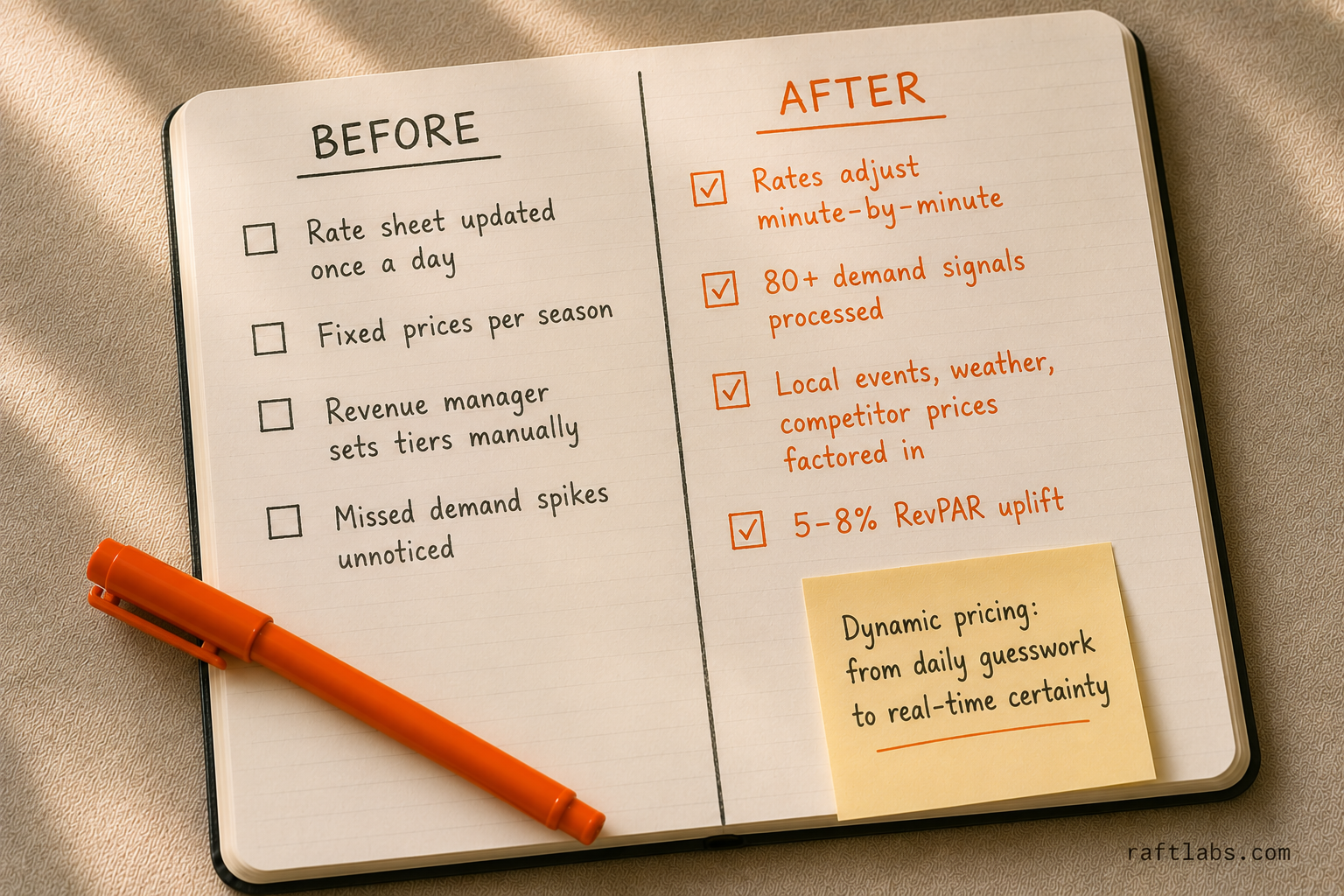
- AI enables dynamic pricing that adjusts rates minute by minute, not once a day.
- 84% of travel executives believe AI is key to their growth objectives.
- The AI hospitality market is projected to grow from $90 million in 2023 to $8 billion by 2033.
- AI addresses labor shortages, margin pressure, and demand volatility across hotel and airline operations.
- Personalization, predictive maintenance, and automated guest messaging are delivering measurable returns today.
- Small hotels can start with chatbots and dynamic pricing tools; enterprise chains need unified data platforms.
- Guest trust and data privacy are non-negotiable; transparency drives long-term loyalty.
- Competitive advantage comes from accumulated guest data, ecosystem integration, and human-AI collaboration.
- The 2030 hospitality workforce will be defined by staff who work alongside AI, not against it.
Hotels using AI are already reporting revenue uplifts of 3-15% and sales ROI increases up to 20%. AI now underpins almost every aspect of trip planning, pricing, and on-property service. The shift is not about replacing staff - it is about getting more out of every guest interaction with better data and faster response.
What is AI in travel and hospitality?
Artificial intelligence in the hospitality industry refers to technologies that enable machines to perform tasks requiring human intelligence: learning from data, recognizing patterns, making decisions, and interacting naturally with guests. This covers everything from machine learning algorithms that optimize pricing to natural language processing systems that power conversational chatbots.
The industry's AI adoption is accelerating. According to recent surveys, 84% of travel executives believe AI is key to achieving their growth objectives. That's not optimism; that's recognition of a fundamental shift in how hospitality businesses compete.
The numbers back it up: hospitality companies investing in AI see revenue uplifts of 3-15% and sales ROI increases up to 20%. The AI hospitality market is expected to reach $8 billion by 2033, a 60% annual growth rate.
What's driving this momentum is a combination of mature technology, proven ROI, and guest expectations that have permanently shifted toward personalized digital experiences.
Modern travelers expect systems that anticipate their needs and respond instantly. As a travel and hospitality software development provider, we use AI to improve satisfaction through personalized service, proactive support, and sentiment analysis.
What you'll learn in this guide
This article covers how artificial intelligence is reshaping every stage of travel and hospitality, from initial trip inspiration to post-stay engagement. You'll find:
How AI is deployed across the complete guest journey, with real-world case studies from major brands
Specific use cases in hotels, airlines, car rentals, and booking platforms with measurable ROI data
The economic impact of AI adoption, including revenue uplifts of 3-15% and ROI increases up to 20%
Practical implementation strategies for small properties, mid-size operators, and enterprise chains
Critical challenges including privacy concerns, data governance, and maintaining the human touch
Future trends pointing toward interconnected AI ecosystems that coordinate across travel sectors
Implementation roadmaps for any organization, regardless of tech maturity
Whether you're taking your first steps with AI or looking to scale existing implementations, this guide provides the strategic framework you need to compete in an AI travel landscape. Our AI development services can help you build custom applications on top of it.
Who this guide is for (and who it's not)
This guide is designed for:
Ideal readers:
Hotel and hospitality executives seeking to understand AI's strategic impact on revenue and operations
Revenue managers and operations directors evaluating AI implementation for their properties
Technology decision-makers in travel companies planning digital transformation initiatives
Entrepreneurs launching new hospitality or travel ventures who want to build AI-first operations
Consultants and advisors helping clients in tourism
This guide may not be for you if:
You're looking for quick-fix solutions without strategic planning
You want purely technical implementation guides (this focuses on business strategy and use cases)
You're seeking AI solutions outside the travel and hospitality sectors
You're unwilling to invest time in understanding foundational AI concepts before implementation
Key benefits of AI in travel and hospitality businesses
The benefits of AI in travel and hospitality aren't theoretical; they're measurable and already visible in how leading brands operate.
1. Stronger revenue and profitability
Revenue management has always been critical in travel and hospitality, but AI enables a level of sophistication that was impossible just a few years ago. Dynamic pricing strategies now adjust rates based on real-time demand, market conditions, and competitor pricing, not once a day, but minute by minute.
Marriott International reported a 22% improvement in revenue per available room after implementing AI pricing that considers over 80 data sources, including social media sentiment, flight schedules, and air quality. Finnair increased revenue by ~3% by optimizing prices across 70 origin and destination segments with AI.
These gains come from the ability to make over 100 million sales-related decisions daily, something no human team could handle alone. AI optimizes room rates, identifies upsell opportunities, predicts booking patterns, and maximizes ancillary revenue across every touchpoint.
2. Operational excellence
Operational efficiency ranks as the top benefit of AI for 51% of hotel firms. From automating routine tasks to optimizing housekeeping schedules, AI frees staff to focus on high-value guest interactions where the human touch actually matters.
Research shows AI can lift support staff productivity by 20-50%. Airlines like Cathay Pacific now handle 50% of customer care chats through AI assistants, reducing response times while keeping service quality high.
AI workforce management tools predict occupancy and demand patterns to build smarter schedules, reducing overtime and burnout while keeping service delivery standards intact. The result is happier staff, lower costs, and more consistent guest experiences.
3. Personalized guest experiences
Modern travelers expect personalization, with 57% willing to share personal data in exchange for customized experiences. AI enables personalized services by analyzing booking histories, browsing behavior, and guest preferences to deliver tailored recommendations that actually feel relevant.
Booking.com's AI Trip Planner understands open-ended queries like "romantic weekend getaway within two hours of London" and provides personalized hotel recommendations. Airbnb uses AI to suggest accommodations matching individual preferences and past bookings.
With around 80% of hotels using or planning to implement AI analytics for customized guest interactions, personalized guest experiences are becoming table stakes, not differentiators. The hotels that master personalization will capture loyalty; those that don't risk becoming commoditized.
4. Data-driven insights
AI converts guest data and operational information into decisions. Hotels can analyze customer behavior, identify trends, predict demand, and optimize resource allocation across all business functions.
This analytical power extends to sentiment analysis of guest feedback, customer segmentation, and predictive analytics that guide strategic decisions. Instead of reacting to problems after they happen, hospitality businesses can anticipate and prevent them.
Smart operators use AI to detect patterns invisible to human analysts: correlations between weather patterns and spa bookings, connections between local events and restaurant demand, or relationships between room location and guest satisfaction scores.
These benefits translate directly into real-world applications throughout the guest journey.
Check out: our hospitality software development services to reshape your hospitality business.
Operational challenges AI is solving in travel and hospitality
Since 2022, travel and hospitality leaders have faced persistent labor shortages, volatile demand, and margin pressure. AI adoption is accelerating not as innovation theatre, but as a requirement for operational stability.
1. Addressing labor shortages and skill gaps
Labor shortages remain severe across hospitality and aviation. By 2030, up to 30% of customer service work will be automated or AI-assisted.
AI supports teams by:
Handling repetitive, high-volume queries (check-in, baggage, Wi-Fi)
Accelerating onboarding through scenario-based training
Optimizing schedules based on demand forecasts
This shifts staff time toward higher-value guest interactions. While labor efficiency helps operations, profitability remains under pressure.
2. Relieving margin pressure through pricing and operational efficiency
AI dynamic pricing is now standard in airlines and expanding rapidly across hotels and mobility providers. These systems adjust rates in real time using demand signals, events, weather, and competitor data.
Beyond pricing, AI improves cost control through smart energy management (HVAC, lighting), predictive maintenance, and optimized housekeeping routing. Yet even optimized operations must adapt to increasingly unpredictable demand.
3. Managing demand volatility and disruption
Seasonal forecasting is no longer sufficient. Demand now shifts rapidly due to weather, geopolitics, and economic changes.
AI forecasting enables operators to:
Anticipate demand changes earlier
Adjust staffing, pricing, and inventory proactively
Respond automatically to local event-driven spikes
This improves both profitability and sustainability.
Check out: Our Enterprise AI Development Services to build tailored AI products for your hospitality business.
AI use cases in travel and hospitality
Travelers now expect instant, frictionless experiences. Margins are thin. Digital natives make up a growing share of guests. These three pressures are driving AI adoption across the sector.
Over half of large travel brands report using AI in at least one critical process like pricing, service, or marketing; and nearly 80% of travelers have already interacted with AI in some part of their journey.
In the travel industry, multiple AI agents can now collaborate and share data across multiple service providers, working together to deliver personalized travel experiences for customers.
AI now influences the full lifecycle: pre-trip inspiration, planning and booking, on-trip operations, and post-trip engagement. Here's each stage with concrete examples.
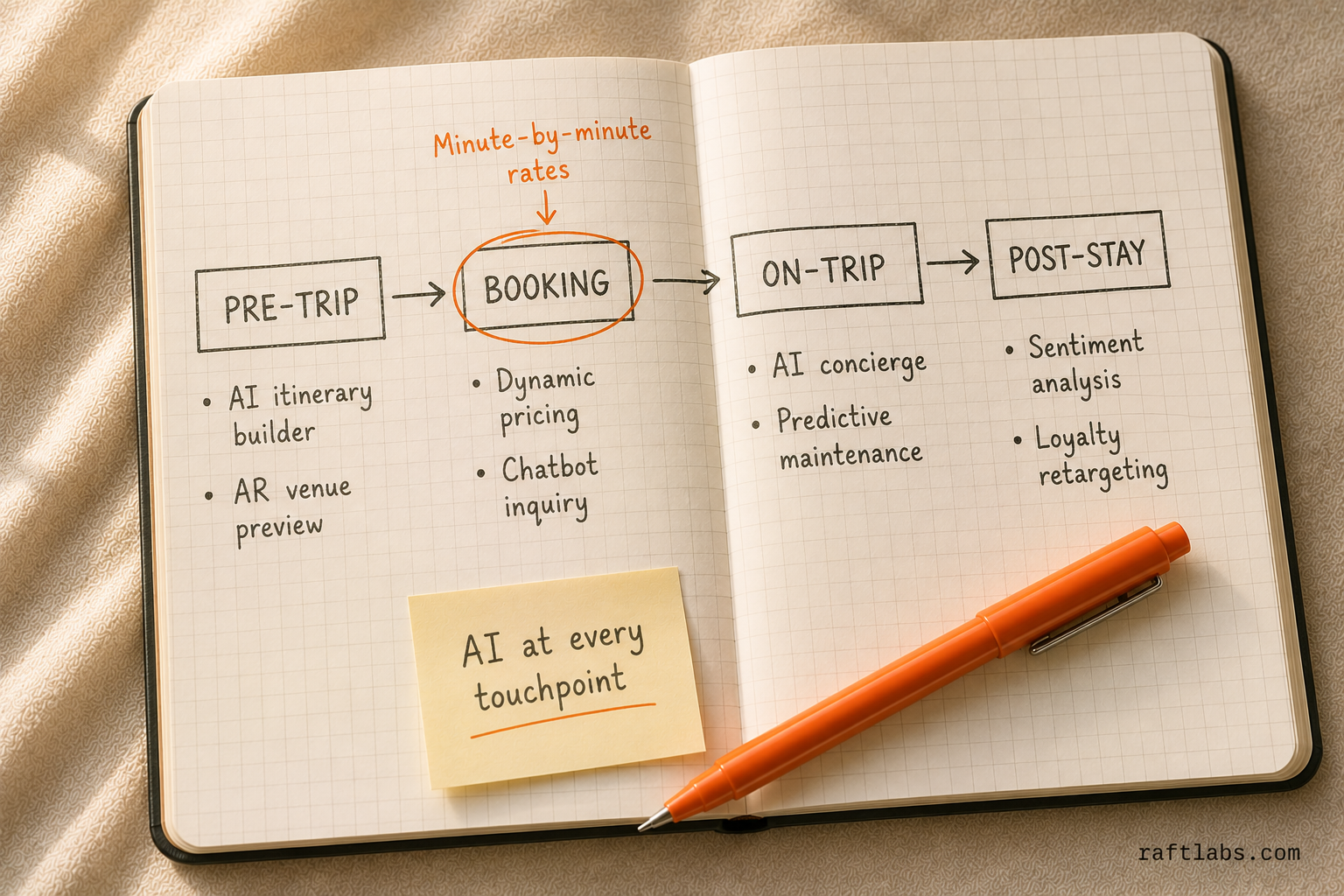
1. AI for inspiration and trip planning
Anyone who's planned a complex trip knows the experience: dozens of browser tabs, conflicting advice from travel blogs, and decision fatigue that leads to abandoned planning sessions. Traditional OTAs helped aggregate options, but they still required significant mental effort to compare and decide.
Generative AI tools have changed this. Natural language prompts like "five-day family trip to Kyoto in April 2026 under $2,000" now produce structured itineraries within seconds.
Booking.com has moved beyond chatbot experiments into a full suite of AI experiences: instant support, voice-enabled trip control, smarter search, and faster resolution at every stage of the traveler journey.
In parallel, Google is embedding AI directly into the travel discovery and planning experience. Integrated across Search, Maps, and Flights, AI helps travelers move from inspiration to comparison to booking with significantly less friction.
How generative AI makes this work: it combines past trip data, loyalty information, and stated preferences to refine suggestions. Some travelers report that AI-generated destination ideas have introduced them to places they'd never have considered otherwise. Augmented reality is also being used to provide immersive pre-arrival experiences, allowing travelers to explore hotels and destinations virtually before booking.
Agentic AI takes this further. These AI agents pre-check availability and constraints like visas, weather trends, and local events before surfacing recommendations - not just generating options but validating them first.
Check out: Our AI agents development services if you're planning to integrate AI agents into your hospitality business.
2. AI in booking, reservations, and pricing
Airlines pioneered yield management in the 1980s, but by 2024, AI dynamic pricing has become standard across major hotel and airline groups. The booking process has shifted from static rate sheets to real-time optimization.
Hilton's AI dynamic pricing engines reportedly deliver 5-8% revenue uplift by adjusting rates minute-by-minute based on demand, local events, and competitor pricing. These models ingest booking patterns, weather forecasts, and market signals that human revenue managers simply couldn't process at scale.
AI chatbots in hospitality embedded in booking engines handle customer inquiries about cancellations, loyalty points, children policies, and upgrades, reducing call-center load by 20-40% in some chains. Predictive AI forecasts booking curves by market, channel, and segment, allowing revenue managers to open or close rate plans weeks in advance.
During the booking flow, AI recommendation engines surface ancillary service offerings like airport transfers, early check-in, or excursions. This is systematic revenue optimization that increases average booking value while genuinely helping guests.
3. AI during the trip: real-time support and operations
Travel is a live system. Delays, weather disruptions, and guest issues constantly change the game, and AI now orchestrates real-time adjustments that would have been impossible with manual processes.
Predictive maintenance in airlines and trains uses AI models analyzing sensor data to flag probable component failures before they cause cancellations. When storms or strikes hit, scheduling AI recommends re-routing and crew reassignments to minimize missed connections.
Hotels deploy AI concierges through text, apps, or voice assistants in the room to answer questions 24/7, take room service orders, and give localized recommendations. These systems handle customer interactions around the clock, breaking down language barriers for international guests through real-time translation capabilities.
The results are measurable: multilingual hotel voice assistants have boosted in-room service revenue by over 20% and guest satisfaction scores by more than 15 points in documented case studies.
4. AI after the trip: feedback, loyalty, and lifetime value
The post-stay stage feeds the entire AI system, providing data for improvement and remarketing. Sentiment analysis scans reviews on platforms like Google, Booking.com, and TripAdvisor to flag recurring issues: noise complaints on certain floors, slow room service response times, or HVAC problems in specific room blocks.
AI segments guests by behavior: "spa-focused weekenders," "remote workers," "multi-generational families." This enables targeted campaigns and offers that feel relevant rather than generic.
By analyzing post-trip surveys and engagement patterns, AI predicts churn risk and initiates retention responses: bonus loyalty points, surprise upgrades, or personalized messages that arrive at exactly the right moment.
These systems help shift from one-off bookings to long-term relationships, increasing guest lifetime value and direct bookings over time.
Also Read: Generative AI in hospitality industry use cases and benefits.
Tired of disconnected systems and generic guest experiences? Build custom AI apps that integrate with your PMS, CRM, and booking platforms. Deliver personalized experiences your competitors can't replicate. Start your AI transformation
How AI is reshaping travel apps, OTAs, and booking platforms
Traditional OTAs dominated distribution throughout the 2010s, aggregating inventory and winning the search battle. In recent years, AI planners and "superapps" have started disrupting this model by promising end-to-end planning and booking in a single interface.
Current traveler behavior involves juggling multiple apps and tabs, leading to abandoned carts and fragmented experiences. OTAs, hotels, and new AI startups are all competing to own the core digital relationship with the traveler.
AI travel apps and agentic planners
AI-native travel apps build full itineraries (flights, hotels, activities) from a single prompt. They can regenerate options based on constraints like budget, kids, or accessibility needs without starting over.
Agentic AI capabilities take this further: the system can autonomously search, compare, hold, and in some cases book inventory on behalf of the traveler once given rules and payment authorization. According to recent surveys, nearly 97% of travelers express interest in a unified "superapp" that covers flights, hotels, transfers, and experiences in one place.
These apps may reduce reliance on traditional aggregators but introduce new dependency risks on underlying AI platforms and data providers. Travel companies need to weigh the convenience benefits against potential lock-in.
Traditional OTA workflow vs. AI conversational planner
| Aspect | Traditional OTA Workflow | AI Conversational Planner |
|---|---|---|
| Search Process | Multiple filters, manual comparison | Natural language query |
| Personalization | Based on explicit filters | Inferred from context and history |
| Iteration | Start over with new searches | Refine through conversation |
| Booking Steps | Multiple pages and forms | Simpler single flow |
| Ancillary Offers | Generic pop-ups | Contextually relevant suggestions |
OTAs and large platforms as AI powerhouses
Online Travel Agencies such as Booking.com, Expedia, and Trip.com are not being disrupted by AI; they are becoming some of its most powerful beneficiaries.
These platforms are embedding generative AI deeply into discovery and booking flows. Booking.com's AI Trip Planner already interprets open-ended intent and narrows options using constraints like budget, location preferences, and cancellation flexibility. This shifts value upstream, away from static search results and toward AI-mediated recommendations.
Behind the interface, AI is reshaping how demand is distributed. OTAs optimize ranking, bidding, and merchandising in real time. For hotels and airlines, this creates a quiet but significant risk. Without active channel management, margins erode as platforms gain more control over visibility and pricing power.
The winning strategy is not choosing between OTAs and direct channels. It is using both intentionally. Leading suppliers use OTA AI to capture high-intent demand while investing in their own AI direct experiences to retain guests, build loyalty, and reduce commission dependency over time.
Looking ahead, conversational OTAs will function less like marketplaces and more like personal travel agents. Messaging, customer support, modifications, and post-stay engagement will live in a single, continuous thread. For executives, the implication is clear: control over the guest relationship, not just the booking, will define long-term competitiveness.
How to build a practical AI strategy for travel and hospitality
AI success depends more on foundations than tools.
Here's a practical roadmap.
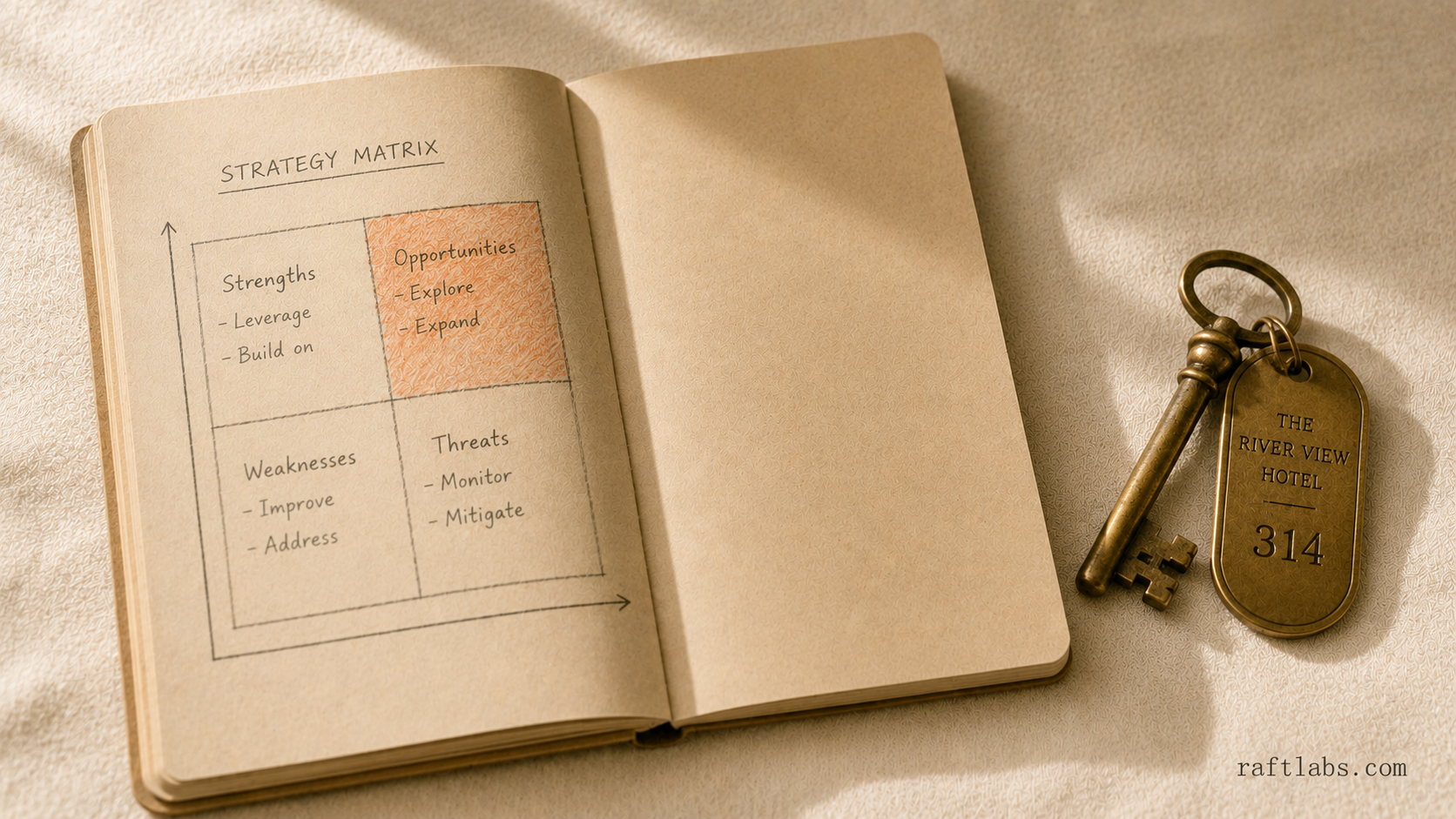
- Centralize guest and operational data: bring fragmented data from PMS, CRM, bookings, and operations into one consistent view.
- Connect core systems: integrate PMS, booking, CRM, and messaging so guest actions in one platform trigger real-time responses across the journey.
- Define data standards and ownership: establish shared definitions, data quality rules, and accountable owners before AI touches the data.
- Launch one end-to-end use case (e.g., pre-arrival upselling): prove real business value through a single, measurable workflow before expanding.
- Measure impact and scale: track clear KPIs (revenue lift, efficiency gains, guest satisfaction) before adding additional use cases.
- Build governance and culture: cross-functional leadership, ethical oversight, and staff adoption keep AI scaling responsibly.
How travel and hospitality businesses can start using AI
Different organizations need different starting points. Here's a practical breakdown by business size.
1. Small hotels and independent properties
Quick wins:
Deploy an AI website chatbot to handle FAQs and booking inquiries 24/7
Use an AI-enabled channel manager to optimize OTA distribution
Implement off-the-shelf dynamic pricing tools (many integrate directly with common PMS platforms)
Tools vs. custom builds: stick with established SaaS tools. Custom AI development rarely makes sense at this scale. KPIs to track: direct booking conversion rate, response time reduction, RevPAR changes, guest satisfaction scores.
2. Mid-size operators
Quick wins:
Integrate AI revenue management across multiple properties
Deploy unified guest messaging platforms with AI-assisted responses
Implement predictive analytics for demand forecasting and staffing
Tools vs. custom builds: use proven platforms but consider light customization for brand differentiation. Generative AI solutions for content creation can reduce marketing costs.
KPIs to track: revenue per available room, labor cost as a percentage of revenue, guest lifetime value, NPS improvements, upsell conversion rates.
3. Large chains and enterprise operators
Quick wins:
Build unified customer data platforms across all properties and channels
Deploy generative AI for personalized marketing at scale
Implement enterprise-wide AI for housekeeping, maintenance, and operations optimization
Tools vs. custom builds: hybrid approach - core platforms from established vendors, custom AI for differentiated capabilities that create competitive advantage.
KPIs to track: cross-property guest recognition rates, total revenue optimization, operational cost reductions, guest satisfaction and loyalty metrics, sustainability improvements (energy consumption, waste reduction).
| Business Size | Best Starting Points | Investment Level | Expected Timeline to ROI |
|---|---|---|---|
| Small Hotels | Chatbots, dynamic pricing | Low ($200-2,000/month) | 2-4 months |
| Mid-Size | Revenue management, guest messaging | Medium ($5,000-25,000/month) | 4-8 months |
| Enterprise | CDP, custom AI, full integration | High (six figures+) | 6-18 months |
Before rushing into implementation, organizations should understand the challenges and limitations they'll face along the way.
How to measure ROI of AI in travel and hospitality
Implementing AI requires investment, and leadership rightfully demands proof that these initiatives deliver measurable returns. Without clear metrics, AI projects risk becoming expensive experiments that never scale. Here's how to structure your measurement framework.
Financial metrics that matter
To evaluate AI investments beyond pilots and proofs of concept, travel and hospitality leaders need a clear, outcome-driven measurement framework.
| Category | Metric | What to Measure | Typical AI Impact / Benchmark |
|---|---|---|---|
| Revenue Impact | Revenue Per Available Room (RevPAR) | Compare RevPAR post-AI pricing vs historical baselines | 5-8% RevPAR uplift within 6-12 months |
| Average Daily Rate (ADR) | Measure rate realization by segment, channel, and day of week | Improved peak capture, reduced underpricing | |
| Ancillary Revenue Growth | Incremental revenue from AI upsells, upgrades, spa, and add-ons | 15-25% increase in ancillary revenue per guest | |
| Direct Booking Conversion Rate | Website conversion improvements after AI chatbots and recommendations | 2-3% lift, driving significant OTA commission savings | |
| Guest Lifetime Value (LTV) | Repeat bookings and total spend over the guest lifecycle | Long-term loyalty and higher total guest value | |
| Cost Reduction | Labor Cost per Occupied Room | Staff hours saved via chatbots, automated check-in/out, optimized scheduling | Measurable reductions in labor cost |
| Customer Acquisition Cost (CAC) | Marketing spend per booking from AI targeting and personalization | 20-35% reduction in CAC | |
| Energy & Resource Consumption | Utility usage per occupied room (HVAC, lighting, water) | 15-30% reduction in utility costs | |
| Service Recovery Costs | Cost of compensation, vouchers, and staff time spent resolving issues | Lower recovery costs via predictive issue detection | |
| Operational Efficiency | Average Handle Time (AHT) | Time to resolve guest inquiries by inquiry type | 30-50% reduction for routine queries |
| First Contact Resolution (FCR) | Percentage of issues resolved on first interaction | 15-20 point improvement | |
| Staff Productivity | Tasks completed per labor hour | More time for high-value guest interactions | |
| Booking Abandonment Rate | Drop-offs during booking flow | 25-40% reduction with conversational AI | |
| Service Quality | Net Promoter Score (NPS) | Guest satisfaction and advocacy, segmented by guest type | 5-15 point NPS improvement |
| Online Review Ratings | Star ratings and sentiment across platforms | +0.2 to +0.5 stars in 6-12 months | |
| Response Time to Guest Requests | Time to acknowledge and respond to requests | Seconds vs minutes with AI concierges | |
| Service Consistency Score | Variance in guest satisfaction across properties or shifts | Reduced variability |
Creating your AI scorecard
Don't track everything. Focus on metrics that align with your strategic priorities and create a simple scorecard that executives can review monthly:
For revenue-focused initiatives:
Primary: RevPAR, ADR, ancillary revenue per guest
Secondary: direct booking percentage, upsell acceptance rate
Lagging: guest lifetime value, repeat booking rate
For efficiency-focused initiatives:
Primary: labor cost per occupied room, average handle time
Secondary: staff productivity, automation rate
Lagging: employee satisfaction, turnover rate
For guest experience initiatives:
Primary: NPS, review ratings, complaint resolution time
Secondary: personalization engagement rate, service consistency
Lagging: brand loyalty metrics, referral rates
Measurement timeline:
30-60 days: early indicators (response times, automation rates, engagement metrics)
90-180 days: operational metrics (efficiency gains, cost reductions, booking conversion)
6-12 months: financial impact (RevPAR, profitability, LTV)
12-24 months: strategic outcomes (market share, brand positioning, competitive advantage)
Set clear baselines before implementation and account for seasonality, market conditions, and other variables that might influence results. The most successful AI programs measure continuously and iterate based on data, not gut feeling.
Create a simple one-page dashboard that shows month-over-month trends for your 5-7 most important metrics. Share it with leadership monthly to maintain momentum and secure continued investment.
Get your free hotel website review, get a prioritized fix list delivered to your inbox Get your free report
Challenges and limitations of AI in travel and hospitality
While AI offers substantial potential, travel and hospitality companies must navigate significant challenges to realize its benefits. Understanding these obstacles upfront helps organizations plan realistic implementations and set appropriate expectations.
1. Technology integration complexity
Many hospitality businesses operate on legacy systems that were never designed to work with modern AI tools. Property management systems, point-of-sale software, and booking engines often date back decades and lack the APIs needed for integration.
The challenge intensifies when trying to connect systems across different vendors, each with their own data formats, update schedules, and technical limitations.
Mitigation strategies:
Start with vendors that offer pre-built integrations with your existing systems
Consider middleware platforms that can bridge legacy and modern systems
Budget for data migration and system upgrades as part of your AI initiative
Plan for a phased rollout rather than attempting a full transformation overnight
2. Data quality and availability issues
AI is only as good as the data it learns from. Many hospitality companies discover their data is incomplete, inconsistent, or stored in formats that block AI analysis. Guest profiles scatter across multiple databases. Reservation data has gaps. Historical records often lack the granularity needed for accurate predictions.
Solutions:
Conduct a data audit before implementing AI to identify gaps and quality issues
Invest in data cleaning and standardization as a prerequisite to AI deployment
Establish data governance policies to maintain quality going forward
Start with use cases that don't require perfect historical data
3. High implementation and maintenance costs
Enterprise-grade AI solutions require significant upfront investment in software, infrastructure, and expertise. Smaller properties may find custom AI development prohibitively expensive. Larger chains face ongoing costs for model training, updates, and monitoring that must be carefully managed.
However, the right software foundation matters more than AI features alone. Our analysis of how software architecture decisions impact hotel margins shows that consolidating SaaS tools and building custom middleware often delivers higher ROI than adding AI to a fragmented tech stack.
Cost management approaches:
Begin with SaaS-based AI tools that spread costs over time
Focus on high-ROI use cases that pay for themselves quickly
Consider partnerships or consortiums to share AI development costs
Build internal AI competency gradually rather than relying entirely on external vendors
4. Guest privacy and trust concerns
Guests are increasingly wary about how their personal data is collected and used. AI systems that feel intrusive or surveillant damage trust and brand reputation, even when technically compliant with regulations.
The "creepiness factor" becomes real when personalization goes too far: guests may appreciate relevant room service suggestions but feel uncomfortable when the hotel seems to know too much about their behavior.
Building trust:
Provide clear, jargon-free explanations of how AI uses guest data
Offer meaningful opt-out options without degrading service quality
Design AI interactions that feel helpful rather than invasive
Be transparent when guests are interacting with AI rather than humans
5. Balancing automation with human touch
The hospitality industry fundamentally revolves around human connections and service quality. Over-automation risks making properties feel sterile and impersonal, alienating guests who value interpersonal interactions.
Finding the right balance:
Position AI as staff augmentation, not replacement
Automate repetitive, low-value tasks while freeing humans for high-touch interactions
Train staff to work effectively alongside AI systems
Maintain pathways for guests to access human assistance when needed
Celebrate wins where AI has improved both guest experience and employee satisfaction
6. Model accuracy, bias, and hallucination risks
AI models are only as reliable as their training data and architecture. When models are trained on historical booking data that reflects past biases, they can perpetuate and amplify those patterns in recommendations and pricing.
Generative AI systems face an additional challenge: hallucination. These models can confidently generate plausible-sounding but factually incorrect information about hotel amenities, local attractions, or travel restrictions.
Risk mitigation approaches:
Put thorough testing protocols in place before deploying customer-facing AI systems
Use human-in-the-loop verification for high-stakes recommendations
Regularly audit AI outputs for accuracy and bias across different guest segments
Establish clear disclaimers when AI-generated content hasn't been verified
Create feedback loops where staff can flag and correct AI errors
Train models on diverse, representative datasets that reflect your entire guest base
7. Vendor lock-in and technology dependency
As hospitality companies adopt AI platforms from major vendors, they risk becoming dependent on proprietary systems that are difficult to migrate away from.
Strategic considerations:
Prioritize vendors offering open APIs and data portability
Maintain ownership of your core guest data regardless of vendor relationships
Build internal capabilities alongside vendor solutions to retain strategic control
Negotiate contracts with clear exit clauses and data extraction rights
Consider open-source alternatives for non-differentiating capabilities
Participate in industry standards initiatives to promote interoperability
Guest trust, data privacy, and responsible AI in hospitality
Personalization depends on data, but travelers are increasingly concerned about how that data is used. Surveys show roughly even splits between travelers who value personalization and those very concerned about privacy.
Transparency isn't optional. It's essential for maintaining customer expectations and building long-term loyalty.
1. Data consent, transparency, and value exchange
Guests should know what data (stay history, preferences, behavior) is collected and why. Present this in clear language at booking and check-in, not buried in legal documents.
Offer explicit, granular consent options for personalized offers, marketing communications, and data sharing with partners. Travelers are more willing to share data when the value is obvious: instant room readiness, tailored recommendations, faster support.
Practical implementations: simple consent dialogs, preference centers in apps, visible controls to opt out or delete data. When a chatbot is an AI agent rather than a human, say so explicitly. Transparent communication builds long-term trust.
2. Security, compliance, and continuous risk management
AI systems must be designed with "security by default," especially where payments, IDs, and health or accessibility data are involved. Real-time identity verification and secure data handling aren't optional features.
Regulatory contexts vary: GDPR in the EU, CCPA/CPRA in California, and emerging privacy laws in APAC and Latin America affect cross-border data flows differently. Measures like encryption, anonymization, data minimization, and strict vendor due diligence for AI providers are essential.
AI models need continuous monitoring for bias, drift, and hallucinations. Periodic audits and retraining cycles keep systems accurate. Define clear escalation paths and "kill switches" to disable problematic AI features quickly if issues arise.
3. Human oversight and preserving the human touch
AI should support staff, not replace human empathy, judgment, and accountability. High-impact decisions, like denying service, resolving serious complaints, or handling safety issues, should always have a human in the loop.
Staff should be able to override AI recommendations, manually adjusting pricing or approving exceptions, and log reasons to improve future models. Some luxury brands are positioning human interaction as a premium feature, especially in high-end segments where customer needs go beyond efficiency.
AI copilots and knowledge bases help staff respond faster while still delivering warm, personalised service. The goal is AI-enabled technology that lifts rather than replaces hospitality.
How AI creates competitive advantage in travel and hospitality
As AI adoption becomes widespread across the hospitality industry, competitive advantage won't come from simply having AI; it will come from how thoughtfully and deeply you integrate it into your value proposition.
The properties that win won't be those with the most AI features, but those that use AI to deliver experiences competitors can't replicate. Here's how leading brands are creating defensible differentiation through intelligent technology.
The commoditization challenge
Travel and hospitality face a fundamental problem: guest experiences and amenities are increasingly easy to replicate. A new pool, upgraded bedding, or trendy restaurant can be copied by competitors within months. Even loyalty programs and pricing strategies get quickly matched.
AI introduces a different kind of competitive advantage: accumulated data, refined algorithms, and integrated systems. These are far harder to replicate than physical amenities.
While a competitor can install the same pool, they can't replicate ten years of guest preference data or the organizational capabilities built around AI-human collaboration.
1. Sources of AI-driven competitive advantage
1.1. Proprietary guest intelligence
Your guest data, when properly unified, cleaned, and analyzed, becomes increasingly valuable over time. Each interaction, booking, and preference captured makes your AI more accurate at predicting what future guests want.
This creates a compounding advantage: better predictions drive better experiences, which attract more guests, which generates more data, which improves predictions further.
How to build this advantage:
Implement a unified customer data platform that captures every touchpoint across all properties
Track behavioral signals beyond transactions: browsing patterns, inquiry topics, service usage, time spent on site
Build longitudinal guest profiles that improve with each stay across your portfolio
Use federated learning to improve models across properties without centralizing sensitive data
Connect online and offline data: website behavior, booking history, in-stay preferences, feedback
The moat: competitors can copy your AI vendor, but they cannot copy your accumulated guest intelligence. A hotel chain with ten years of preference data has a lasting advantage over a new entrant using the same technology. Your model improves with every guest interaction. Theirs starts from zero.
1.2. Ecosystem integration and consistent experiences
While competitors offer isolated AI features, leaders are building fully integrated AI ecosystems where every system talks to every other system, creating experiences that feel coordinated across every touchpoint.
How to build this advantage:
Connect pre-arrival, on-property, and post-stay systems into unified workflows
Enable AI decisions in one system to automatically trigger actions in others (booking triggers personalized email, which triggers room setup, which triggers in-app welcome message)
Build partnerships with airlines, ground transport, and attractions for coordinated experiences
Create "one guest, one journey" systems that maintain context across all touchpoints
Design experiences where AI in one domain (booking) informs AI in another (on-property service)
The moat: integration complexity creates natural barriers. Competitors can't replicate your ecosystem without years of investment in data infrastructure, technical integration, and partner relationships. Each additional integration point makes your ecosystem harder to copy.
Real-world example: a guest books through your AI chatbot mentioning they're celebrating an anniversary. That information flows to your PMS (room upgrade), F&B system (complimentary champagne), housekeeping (rose petals), and marketing system (anniversary package offers for next year). Competitors with siloed systems can't match this coordinated experience.
1.3. Vertical-specific AI models
Generic AI tools provide baseline capabilities, but custom models trained on your specific property types, guest segments, and operational realities deliver superior performance.
How to build this advantage:
Fine-tune foundation models on your historical data and outcomes
Develop specialized models for your unique use cases: boutique luxury, budget efficiency, resort families, business travelers
Create proprietary algorithms that reflect your brand values and service philosophy
Build AI that amplifies your existing strengths rather than trying to be everything to everyone
Invest in models that handle your specific operational challenges better than generic solutions
The moat: vertical-specific models trained on proprietary data are difficult to replicate. Your "resort family pricing AI" or "business traveler concierge AI" becomes a unique asset that delivers better results for your target segments than generic alternatives.
1.4. Human-AI collaboration excellence
Technology alone isn't differentiating. How your people work with AI creates the real advantage. Properties that master human-AI collaboration deliver experiences that feel both high-tech and high-touch, a combination that's incredibly difficult for competitors to replicate.
How to build this advantage:
Train staff to use AI as a copilot that supports rather than replaces judgment
Design workflows where AI handles routine work and humans add creativity and empathy
Create feedback loops where staff insights continuously improve AI performance
Hire and develop team members who are comfortable working alongside intelligent systems
Build a culture that celebrates both technological efficiency and human warmth
The moat: organizational capabilities and culture are hard to copy. Your competitor can buy the same software, but they can't replicate the tacit knowledge, workflows, and cultural norms that make your team effective at human-AI collaboration.
2. Differentiation strategies by property type
The path to competitive advantage looks different depending on your property positioning and target segments:
Luxury and boutique properties:
Focus on hyper-personalization that feels invisible and natural. Use AI to anticipate needs and preferences before guests articulate them, then have staff deliver with human warmth and creativity.
A boutique hotel uses AI to analyze guest booking patterns, social media activity, and past stays to create personalized in-room amenities and local recommendations. The AI does the analysis; staff do the curation and delivery. Guests feel "known" without feeling surveilled. The concierge has an AI-generated brief on each arriving guest but uses it to inform genuinely personal interactions, not scripted responses.
Mid-market and business hotels:
Compete on frictionless efficiency combined with reliable quality. Use AI to eliminate pain points in the business traveler journey, like fast check-in, reliable connectivity, and predictive service, while maintaining consistent standards.
A business hotel chain uses AI to predict which guests will need meeting rooms, late checkout, or printing services based on booking patterns and profile data. Staff proactively offer these services before guests ask, positioning the brand as "the people who get business travelers." The AI handles prediction; humans handle delivery with warmth.
Budget and economy properties:
Use AI to deliver surprisingly good experiences at low price points. Automation enables quality service with minimal staffing, allowing you to compete on value while maintaining acceptable service levels.
An economy hotel uses AI kiosks, mobile keys, and automated messaging to provide 24/7 service with skeleton staffing. The savings fund competitive pricing and targeted upgrades for loyal guests identified by AI.
3. Building moats that last
Sustainable competitive advantages from AI come from network effects and compounding returns:
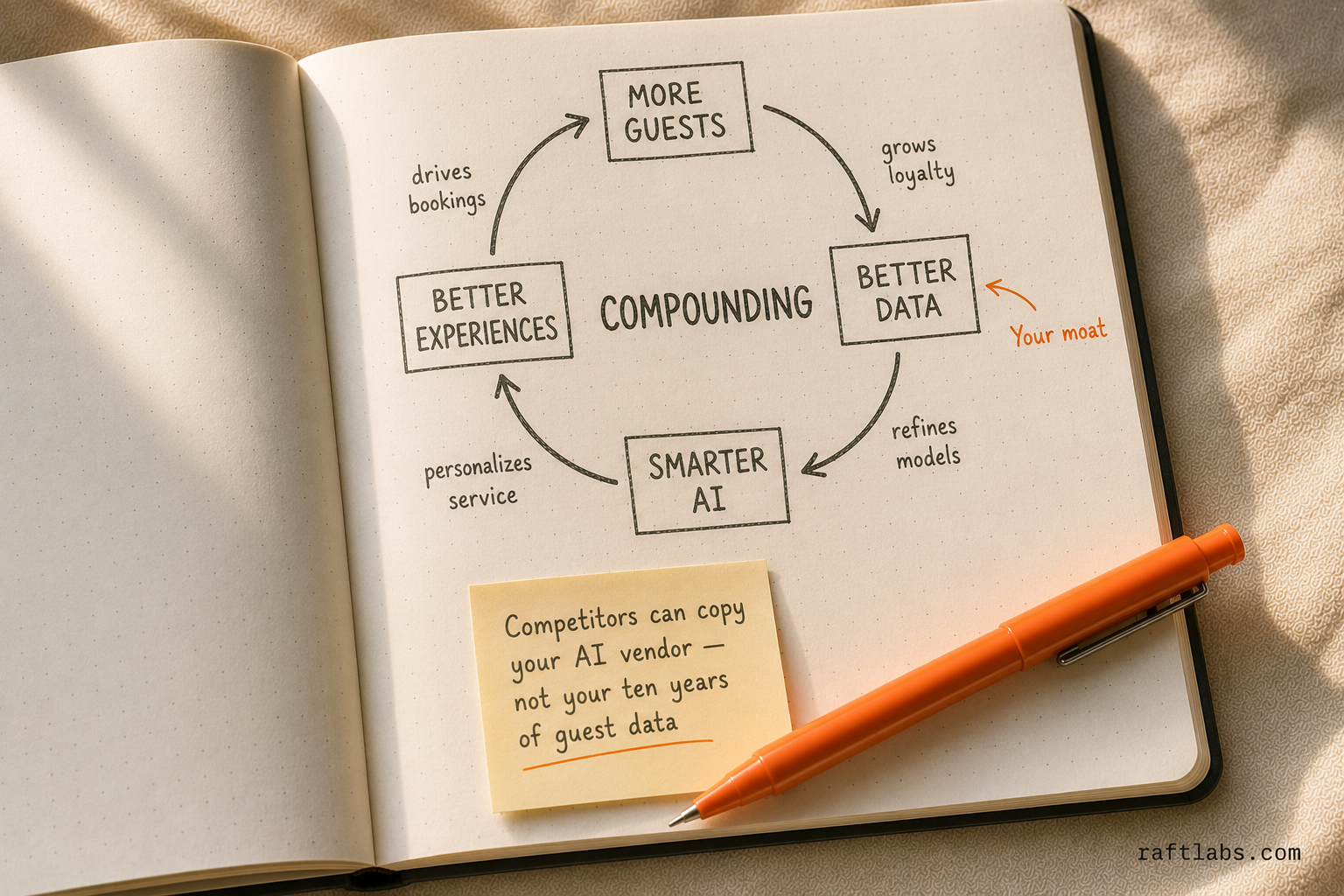
Network effects: more guests, better data, better AI, better experiences, more guests. Each turn of this cycle strengthens your position.
Data accumulation: years of interactions create prediction accuracy competitors can't match without equivalent history. Time becomes a competitive moat.
Integration depth: connected systems are harder to replicate than point solutions. Each integration point adds complexity that competitors must overcome.
Organizational learning: staff expertise in working with AI compounds over time as they develop tacit knowledge about when to trust AI, when to override it, and how to use insights creatively.
The key insight: AI advantage isn't primarily about having better algorithms than competitors. It's about creating data flywheels, ecosystem effects, and organizational capabilities that get stronger with scale and time.
Critical success factors for AI in travel and hospitality
After observing dozens of AI implementations across travel and hospitality, clear patterns emerge distinguishing successful deployments from expensive failures.
Executive commitment: AI initiatives succeed when leaders actively track progress and make sure resources are available. Without visible sponsorship, projects become IT tasks ignored by operations teams.
Customer-first design: the best AI starts with the experience it aims to improve, not the technology itself. Tools must be intuitive, tested with real users, and adopted by staff and guests.
Data quality: reliable, clean, and consistent data is the foundation of any effective AI system. Invest in data governance before deployment to avoid costly errors.
Change management: adoption depends on training, communication, and ongoing support. Staff who understand the purpose and benefits of AI become advocates.
Balanced automation: automate routine tasks but preserve human judgment for complex or sensitive interactions. Regularly reassess to maintain service quality.
12-month AI implementation roadmap for travel businesses
Theory is valuable, but execution drives results. This phased roadmap helps organizations implement AI effectively while maintaining momentum. Adjust pace based on capacity.
Months 1-2: foundation and assessment
Weeks 1-2: form cross-functional AI task force with executive sponsor; define scope, roles, and decision-making.
Weeks 3-4: assess current tech stack, data quality, guest pain points, staff AI readiness, and benchmark KPIs.
Weeks 5-6: identify 3-5 high-impact AI use cases aligned with strategy; set success metrics and quick wins.
Weeks 7-8: build business cases with ROI projections, costs, timeline, risks, and secure budget approval.
Months 3-5: quick win implementation
Month 3: deploy first use case (e.g., chatbot, personalized marketing, or dynamic pricing); select vendor, integrate systems, prepare training.
Month 4: test internally and externally with pilot segment; refine AI responses and workflows.
Month 5: full rollout, staff training, track metrics, document lessons, and celebrate early wins.
Months 6-8: data infrastructure and integration
Month 6: audit data quality, identify gaps, evaluate CDP or warehouse solutions, map data flows.
Month 7: implement unified data layer, connect systems, establish governance, standardize data, monitor quality.
Month 8: set up analytics dashboards, automated pipelines, feedback loops, and train staff on data use.
Months 9-10: scale to additional use cases
Month 9: launch 2-3 additional AI initiatives (revenue management, predictive maintenance, reputation management, post-stay marketing).
Month 10: integrate AI systems across guest journey, test end-to-end workflows, document processes.
Months 11-12: measurement, optimization, and planning
Month 11: evaluate ROI vs projections, gather staff and guest feedback, document lessons, recognize successes.
Month 12: plan Year 2 roadmap - expand use cases, integrate ecosystem partners, pilot emerging tech, and refine governance.
Year one delivers measurable value, organizational confidence, and a solid foundation to scale AI strategically.
How AI is transforming hospitality jobs and workforce skills
AI will reshape hospitality work, but the human element remains central to great guest experiences. Organizations that succeed will not replace people with machines. They will prepare teams to work effectively alongside AI.
The shifting skills landscape
Traditional hospitality skills continue to matter, but new capabilities are becoming essential across all roles.
Skills gaining importance:
Data literacy: understanding AI recommendations and using insights to support better decisions
AI collaboration: knowing when to rely on AI, when to override it, and how to improve it through feedback
Creative problem-solving: handling non-routine guest situations that require judgment and empathy
Digital fluency: adapting quickly to new systems and interfaces
Personalization craft: turning AI insights into meaningful guest moments
Emotional intelligence: managing complex guest needs as AI handles transactional tasks
How key roles are evolving
AI changes how work is done rather than who does it.
Revenue managers: shift from manual pricing to supervising AI models, managing exceptions, and shaping pricing strategy
Front desk and concierge teams: move from transactional support to experience curation using AI guest insights
Operations and housekeeping: transition from fixed schedules to AI-optimized workflows and proactive issue prevention
Marketing and guest relations: evolve from broad campaigns to AI-assisted personalization at scale
IT and data teams: move beyond system maintenance to AI platform management, data quality, and enablement
General managers and executives: shift from intuition-led oversight to strategy informed by AI analytics
The pattern is consistent. AI handles the "what" while humans focus on the "why."
Training for an AI-ready workforce
Building capability requires phased training that meets employees where they are.
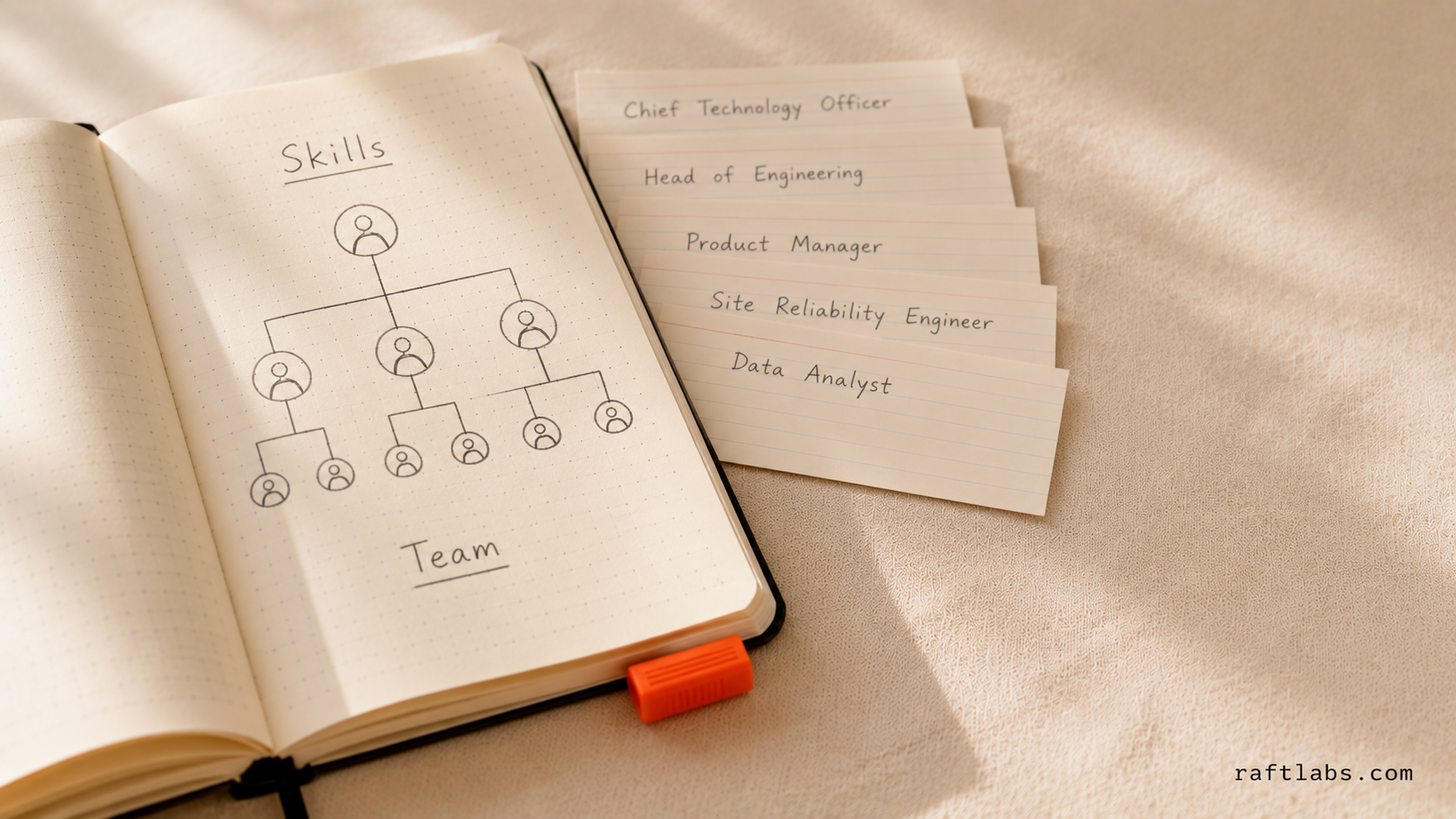
For current employees:
Phase 1, AI awareness: core concepts, daily impact, and clear communication about role changes
Phase 2, role-specific collaboration: hands-on use of AI tools, decision judgment, and feedback practices
Phase 3, advanced capability: data interpretation, AI monitoring, and internal leadership
Managing the transition: change management for AI
Workforce resistance is one of the biggest barriers to successful AI implementation, often derailed by anxiety rather than actual technology failures. Address it proactively with empathy and transparency:
Transparent communication:
Be honest about which tasks will be automated; don't sugarcoat or mislead
Clearly articulate the vision: AI handles routine work so humans can focus on what makes hospitality special
Share the business case in terms staff understand: AI helps the property compete and remain viable
Acknowledge fears directly rather than dismissing them
Involve staff early:
Include front-line employees in pilot programs; they know the work best
Solicit feedback on AI tool usability and effectiveness before full rollout
Act on feedback to show you're listening, not just checking a box
Celebrate staff who successfully integrate AI into their work as role models
Focus on job upgrades, not elimination:
Frame AI as removing drudgery (paperwork, repetitive questions, manual data entry), not jobs
Highlight how AI makes work more interesting by freeing time for meaningful guest interactions
Create new roles for displaced workers when automation does eliminate positions
The 2030 hospitality workforce
By decade's end, successful hospitality organizations will have achieved a new equilibrium between human and machine capabilities:
Hybrid teams: AI handles pattern recognition, optimization, and 24/7 availability. Humans handle creativity, empathy, and complex judgment.
Higher-value roles: staff freed from routine tasks focus entirely on complex problem-solving, creativity, and emotional labour that creates memorable experiences.
Data-informed culture: decisions at all levels informed by AI insights, with humans providing context, judgment, and values alignment.
New specializations: emerging roles like AI experience designers, algorithmic auditors, human-AI workflow architects, and guest data stewards.
See how AI apps can transform your property Discover how custom AI apps can lift guest experience, simplify operations, and grow revenue for your property. Let's talk
Future of an AI-integrated travel and hospitality ecosystem
Within two to three years, a delayed flight will automatically inform your hotel, rebook your airport transfer, and update your restaurant reservation without manual intervention. The technology exists. The barrier is cross-sector data sharing and interoperability standards.
Realizing this vision requires moving from isolated AI tools to an interconnected ecosystem across airlines, hotels, ground transport, and attractions. The building blocks: cross-sector data sharing, federated learning, common standards, and interoperability.
1. Federated travel AI and privacy-preserving learning
Federated learning allows training shared AI models across multiple companies' data without centralizing raw guest data. Each organization keeps its consumer data on its own servers while contributing to improved collective models.
In practice: an alliance of European hotels could train a federated model to detect booking fraud patterns across borders without exchanging full transaction logs. Airlines and hotels could jointly improve disruption response predictions while maintaining data sovereignty.
This approach aligns with GDPR principles by minimizing data movement and reducing central breach risk.
2. Interoperability and API-driven collaboration
Interoperability means different systems, PMS, CRS, airline departure control systems, and ground transport apps can exchange data reliably and securely.
Many legacy systems predating 2000 weren't designed for API-first or real-time data sharing, creating integration friction.
Here's a concrete scenario: A flight delay triggers an automatic update to the hotel PMS (adjusting expected arrival), the ground transfer provider (rescheduling pickup), and the guest messaging app (sending a proactive notification). No manual intervention, no guest stress.
Introducing AI at scale requires this connective tissue. Without it, even brilliant hospitality AI remains siloed and limited.
Future trends of AI in travel and hospitality by 2030
By the end of this decade, AI will not simply lift isolated touchpoints. Combined with IoT and immersive hospitality technologies trends, it will reshape the entire travel ecosystem. These shifts are already visible in pilots and early rollouts.
1. Smart rooms, IoT, and context-aware hospitality
Smart rooms equipped with sensors and connected devices will increasingly recognize guest preferences across stays and even across properties. Temperature, lighting, entertainment settings, and bedding choices can be prepared before arrival and adjusted dynamically during the stay.
AI acts as the orchestration layer, coordinating IoT systems to balance comfort with operational efficiency. Rooms adapt based on occupancy and usage patterns, while energy consumption drops automatically when spaces are unoccupied.
Major hotel groups are already deploying mobile-controlled room features and voice-enabled guest services integrated with PMS and operations systems.
Executive consideration is critical here. Privacy and trust will be differentiators. Guests must have clear consent controls and the ability to disable sensors or voice assistants. Context-aware hospitality should feel helpful, not intrusive.
2. AR, VR, and immersive pre-arrival experiences
Immersive technology is shifting the booking decision earlier and with greater confidence. Augmented and virtual reality allow travelers to explore rooms, public spaces, and nearby attractions before committing.
AI now personalizes these experiences. A family browsing a property sees kid-friendly amenities highlighted, while a business traveler is guided toward workspaces, connectivity, and meeting facilities.
Data consistently shows higher booking confidence and lower post-arrival disappointment when immersive previews are available. AR also has practical, in-destination applications. Airports and large resorts are testing adaptive wayfinding that responds to crowd density, closures, and delays in real time.
3. Autonomous transport and door-to-door journeys
By the early 2030s, autonomous ground transport and selective urban air mobility options are likely to be part of the extended hospitality experience in major cities. AI will coordinate these services with flights, hotels, and events to deliver dynamic, door-to-door itineraries.
Pilots already exist in cities such as Phoenix, Dubai, and Singapore, with autonomous taxis and shuttles operating in controlled environments.
AI selects routes, modes, and timing based on guest preferences, budget, and real-time disruptions such as traffic or flight delays. Leadership teams should begin preparing integration strategies and guest communication frameworks now, rather than reacting later.
4. Toward fully or highly automated hotel operations
Highly automated hotel operations are no longer theoretical. Properties in Asia, Europe, and North America already operate with kiosk or mobile check-in, digital room keys, robotic deliveries, automated checkout, and AI housekeeping coordination.
Industry projections suggest that thoughtful automation can reduce certain operational costs by 20 to 40 percent while maintaining or improving guest satisfaction. The qualifier is execution. Automation must remove friction, not warmth.
For founders and executives, the winning formula is clear. Automate where it adds speed, accuracy, and convenience. Preserve human interaction where empathy and judgment create emotional value.
Why industry collaboration matters for AI in travel and hospitality
Individual properties and brands implementing AI is valuable, but the real transformation happens when the industry collaborates on shared standards, common platforms, and collective problem-solving.
The case for open standards and interoperability
Every hotel chain using different electrical outlets requiring guests to carry property-specific adapters would be absurd. Yet that's essentially where we are with hospitality AI: proprietary systems that don't communicate, forcing guests and travel providers to navigate fragmented experiences.
Open standards for data exchange, common APIs for system integration, and shared protocols for AI model interoperability would benefit everyone. Guests get journeys that flow across providers. Smaller properties gain access to capabilities only large chains can currently afford.
Industry associations like AHLA (American Hotel and Lodging Association), IATA (International Air Transport Association), and regional tourism boards have opportunities to convene the right parties and drive standardization efforts.
Federated learning and collaborative AI development
Federated learning enables multiple organizations to jointly train AI models while keeping their proprietary data private. This allows smaller properties to benefit from the scale advantages of large chains without surrendering competitive data.
Consider a consortium of boutique hotels across Europe jointly training a fraud detection model. Each property keeps its transaction data on its own servers, but they collectively develop an AI system more accurate than any individual property could create.
Shared challenges requiring collective solutions
Some AI challenges transcend individual organizations and require industry-level responses:
Ethical AI guidelines: what constitutes fair and transparent use of guest data? Industry-wide ethical frameworks provide guidance and protect against regulatory backlash from bad actors.
Skills development and training: creating curriculum and certification programs for AI-augmented hospitality roles benefits everyone by establishing baseline competencies and accelerating workforce adaptation.
Sustainability and environmental impact: AI can optimize energy usage, reduce waste, and improve resource allocation, but only if properties share learnings about what works.
Guest privacy and data security: coordinated approaches to privacy protection and breach response strengthen trust across the industry.
Final thoughts: building the AI-augmented future
AI has moved from experimental technology to operational necessity. The question is no longer whether to adopt AI, but how quickly you can implement it effectively and how thoughtfully you can integrate it into your operations while preserving what makes hospitality special.
The organizations that will thrive share several characteristics:
They start with guest and staff experience, not technology capabilities. The best AI implementations feel invisible to guests - natural rather than intrusive. They make staff more effective rather than threatened.
They invest in foundations before racing to deploy. Data infrastructure, system integration, and organizational capabilities enable sustained AI success. Quick wins build momentum, but long-term success requires patient investment in fundamentals.
They embrace human-AI collaboration rather than human-versus-AI competition. AI handles pattern recognition, optimization, and tireless execution. Humans provide creativity, empathy, judgment, and the warmth that defines hospitality.
They maintain ethical guardrails around data use and automation. Trust, once lost, is nearly impossible to rebuild. Properties that prioritize transparency, consent, and privacy protection build lasting guest relationships.
They view AI as a process, not a project. Technology evolves rapidly, guest expectations shift constantly, and competitive dynamics change continuously. Success requires building continuous learning and adaptation into operations.
Your next steps
Regardless of where you are in your AI journey, progress requires a specific next step.
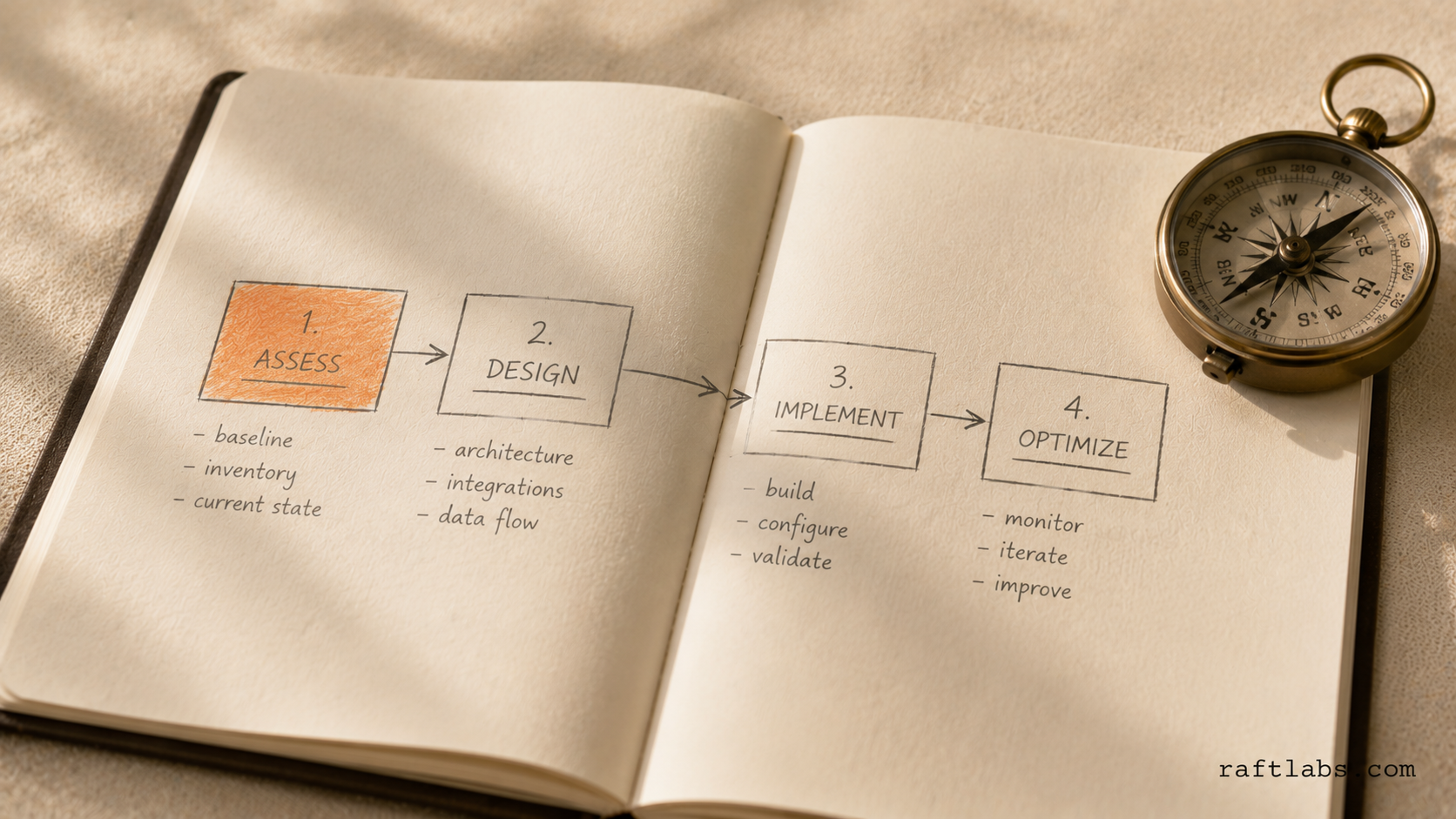
The properties that adopt AI thoughtfully, ethically, and strategically will deliver experiences that delight guests, support staff, and drive sustainable growth.
Hospitality is not human or machine. It is human and machine working together. Start building that capability now.
Partner with an AI development team that understands hospitality
Implementing AI successfully requires more than technical expertise; it demands deep understanding of the travel and hospitality industry's unique challenges, workflows, and guest expectations. Generic AI solutions rarely address the specific needs of hotels, airlines, and tourism operators.
That's where specialized AI development partners make the difference.
What to look for in an AI development partner:
- Industry-specific experience: look for partners who have built AI solutions for travel and hospitality, not just generic chatbots. They should understand PMS integration, channel management, guest journey mapping, and hospitality operations.
- Custom development capabilities: off-the-shelf solutions work for basic needs, but competitive differentiation comes from custom AI that reflects your brand, guest segments, and operational realities.
- Integration expertise: AI is only valuable when it connects with your existing technology stack. Choose partners with proven experience integrating AI into PMS, CRS, CRM, and booking engines.
- Full-cycle support: implementation is just the beginning. Look for partners who provide ongoing model training, performance monitoring, and optimization as your AI systems evolve.
- Strategic guidance: the best partners help you identify the highest-impact use cases, prioritize your AI roadmap, and avoid expensive mistakes.
- Ethical AI practices: make sure your partner prioritises data privacy, algorithmic transparency, and bias mitigation. These are essential for maintaining guest trust and regulatory compliance.
Build your hospitality AI with RaftLabs
Whether you're starting your first AI use case or scaling existing implementations, the right development partner can accelerate your roadmap and improve your ROI.
The hotels, airlines, and travel companies winning with AI aren't going it alone; they're partnering with specialists who combine technical expertise with deep hospitality industry knowledge to build AI for travel solutions that actually work in the real world.
Your guests are ready for AI experiences. Your competitors are moving fast. The actual question isn't whether to roll out AI; it's who you'll partner with to make it happen.
Ask an AI
Get an instant summary of this post from your preferred AI assistant.
Common questions
- Yes. AI isn't just for large chains. Smaller hotels and airlines can benefit by starting with small, focused AI MVPs (Minimum Viable Products). Begin with a single use case like a chatbot for guest queries, personalized email campaigns, or dynamic pricing for one property segment. This approach lets you test, learn, and demonstrate value without heavy upfront investment. Once the MVP shows results, you can scale gradually, improving guest experience, operational efficiency, and revenue while avoiding the risks of a full-scale rollout from day one. Starting small builds confidence, staff buy-in, and a solid foundation for broader AI adoption.
- The timeline varies by business size and use case. Small hotels implementing chatbots or dynamic pricing typically see measurable returns in 2-4 months. Mid-size operators deploying revenue management systems or guest messaging platforms usually achieve ROI within 4-8 months. Enterprise implementations with custom AI and full integration may take 6-18 months but deliver larger-scale impact. The key is starting with quick wins that build momentum and fund more ambitious initiatives.
- Rushing to deploy AI tools without first establishing solid data foundations. AI is only as good as the data it learns from. Companies that skip the data infrastructure step, like unifying guest information across systems, cleaning historical data, and establishing governance policies, end up with AI that makes poor predictions and delivers disappointing results. Start by assessing your current data quality, then build the integration layer that allows AI to access consistent, reliable information across your property management, CRM, and booking systems.
- Not necessarily. Many hospitality businesses operate legacy systems from the 1990s or early 2000s, and complete replacement is often cost-prohibitive. The solution is middleware platforms that bridge old and new systems, allowing AI tools to integrate with your existing property management system, point-of-sale software, and booking engines without requiring full replacement. A good AI development partner will assess your current technology stack and design integration strategies that work with what you have while gradually modernizing over time.
- Very involved initially, less so over time. During discovery and design phases, expect to dedicate significant time from operations, revenue management, guest services, and IT teams to map workflows, define requirements, and provide domain expertise. During development, plan for regular check-ins and testing. After launch, you'll need staff time for training, monitoring, and providing feedback that improves AI performance. Think of it as a partnership. Your development partner brings technical expertise, but you bring hospitality knowledge that makes the AI actually work in real-world operations. The most successful implementations have engaged executive sponsors and cross-functional teams, not hands-off approaches.