15 Top Hospitality Tech Companies in 2026 Transforming Hotels & Travel
The hospitality tech market is growing from $9.1B to $16.2B by 2033. Here are 15 companies leading that shift, with ROI benchmarks, PMS comparisons, and a practical selection framework.

In this article
Short answer
Hospitality technology partners should be evaluated on cloud architecture, API integration depth, AI capabilities, and support for contactless guest journeys, and hotels using AI-driven revenue management report 10-25% RevPAR gains. RaftLabs builds custom hospitality platforms for properties that have outgrown off-the-shelf systems, with a 4.9/5 Clutch rating and fixed-price delivery.
Key takeaways
- Hotels using AI-driven revenue management systems report 10-25% RevPAR gains within the first year - that's $410,000 in additional annual revenue for a 100-room property at 75% occupancy.
- The hospitality tech market is growing from $9.1 billion to $16.2 billion by 2033, but 69% of hoteliers say integrating new tools with legacy systems is their single biggest obstacle.
- Shifting 20% of bookings from OTA to direct channels saves a 100-room hotel roughly $200,000-$300,000 per year in commission fees alone.
- Off-the-shelf PMS tools work for standard operations. Custom development makes financial sense when your property has unique accommodation types, complex pricing logic, or guest experiences that no packaged product can replicate.
- Keyless entry cuts physical key replacement and lock maintenance costs by 60-70%, and mobile check-in drops average front desk time from 10 minutes to under 2.
The global hospitality market is valued at $5.2 trillion and projected to grow to $6.9 trillion by 2029. Technology has shifted from a supporting function to a core growth driver for hotels, resorts, and travel businesses.
The hospitality technology solutions market is also accelerating rapidly, expected to grow from $9.1 billion today to more than $16.2 billion by 2033. This surge reflects aggressive investments in hotel software systems, cloud-based property management platforms, AI-powered revenue management tools, guest experience platforms, and contactless hospitality solutions, often delivered through specialized hospitality software development services.
The shift is not just enterprise-led - it's strongly guest-driven.
Recent industry research shows that:
71% of modern travelers prefer hotels offering self-service technology, such as contactless check-in, mobile room keys, and digital concierge services
Over 62% of hotels have already adopted cloud-based Property Management Systems (PMS) to improve operational agility
Nearly 96% of hospitality brands were actively investing in contactless and smart hotel technologies in 2024
At these adoption rates, properties without modern technology are not behind the curve - they are behind their guests.
As hotels increasingly rely on hospitality software providers, hotel technology companies, and custom hospitality app development partners, choosing the right technology stack becomes a strategic business decision rather than a technical one.
This guide covers the top hospitality tech companies - what they do, who they serve, and how to evaluate them against your specific operation.
Who should read this guide
This guide is built for decision-makers and professionals across the hospitality industry who are actively involved in selecting, building, or optimizing hospitality technology solutions.
- Hotel owners and general managers seeking to modernize operations, increase RevPAR, and improve guest satisfaction through Property Management Systems (PMS), guest experience platforms, and contactless hotel technologies.
- Revenue managers and operations directors who want sharper pricing strategies, demand forecasting, and workflow efficiency using AI-powered revenue management systems and data-driven analytics.
- IT directors and technology leaders responsible for evaluating hotel software vendors, managing system integrations, confirming cybersecurity, and building scalable cloud-based technology stacks.
- Hospitality entrepreneurs and startups launching boutique hotels, serviced apartments, or alternative accommodation concepts that need hospitality app development and digital guest journey solutions from day one.
- Property management companies managing multi-property portfolios that need scalable hospitality platforms, centralized operations software, and multi-location PMS and RMS solutions.
- Investment professionals and consultants analyzing hospitality businesses or advising on digital transformation, technology strategy, and vendor selection in hotel and travel markets.
- Hospitality students and professionals building expertise in hospitality technology trends, hotel software systems, and emerging travel tech platforms.
What this guide covers
This guide covers the hospitality technology space in depth, organized to help you quickly find relevant information:
Technology provider profiles grouped by solution type: PMS, RMS, guest experience platforms, and smart room technologies, with use cases, key features, and ideal property fit.
Case studies showing how hotels achieved measurable results, with specific metrics on revenue growth, efficiency gains, and guest satisfaction improvements.
ROI and business impact analysis covering RevPAR uplift, cost savings, faster operations, and staff productivity gains.
Implementation guidance on data migration, system integration, staff training, budget management, and vendor relationships.
Emerging technology insights on AI-powered hotel systems, IoT-enabled smart rooms, robotics, and sustainability-focused hotel tech.
A selection framework and checklist covering requirement definition, solution assessment, commercial negotiation, implementation planning, and post-deployment optimization.
Custom development guidance for when off-the-shelf solutions fall short, including how to work with hospitality software development companies to build purpose-built technology.
Our selection methodology: how we identified these companies
The hospitality tech companies featured in this guide were selected through a research-driven evaluation process across multiple criteria to make sure each recommendation reflects genuine market leadership, technical excellence, and real-world value for hotels and hospitality businesses.
1. Market presence and track record
We prioritized hospitality technology companies with established customer bases, successful enterprise and mid-market deployments, and multi-year operational histories delivering PMS, RMS, and guest experience solutions across diverse property types.
2. Technology innovation and product vision
Preference was given to providers advancing the industry through cloud-native architecture, artificial intelligence integration, open APIs, and scalable hotel software architectures.
3. Customer satisfaction and reviews
We analyzed thousands of customer reviews across trusted platforms like Capterra, G2, and Hotel Tech Report, focusing on consistent positive feedback regarding usability, implementation quality, customer support, and measurable business outcomes.
4. Industry recognition and authority
Featured companies have received recognition from hospitality analysts, industry publications, and hospitality technology awards for their contributions to hotel software innovation and digital transformation.
5. Integration capabilities
Given the importance of connected hotel systems, we emphasized providers offering solid APIs, extensive integration partnerships, and demonstrated ability to function across PMS, RMS, CRS, POS, and CRM platforms.
6. Geographic relevance
Our list prioritizes US and UK based hospitality companies or those with strong presence in these markets, reflecting the guide's focus on these regions while including globally significant players.
7. Category leadership
Rather than ranking all companies against each other, we organized providers by their primary strengths - operations management, revenue optimization, guest experience, or keyless entry - recognizing that excellence varies by specialty.
8. Development company expertise
For the hospitality software development companies, we evaluated portfolio depth in hospitality projects, technical capabilities across modern development stacks, and demonstrable understanding of industry-specific challenges.
The current state of hospitality technology
The hospitality sector's technology field has followed the same digital transformation patterns as other industries, while also dealing with challenges specific to hotel operations and guest experience. Today, hotel technology companies are reshaping how hotels operate, compete, and deliver value.
Here's a snapshot of where hospitality technology stands right now:
Cloud-based hospitality platforms becoming the standard
More than 60% of hotels now run on cloud-based Property Management Systems (PMS). This marks one of the most significant shifts away from legacy on-premise hotel software in hospitality history.
Cloud adoption enables faster deployments, lower IT overhead, real-time data access, and direct integration with CRS, RMS, POS, and CRM systems.
AI-powered hotel systems on the rise
Investment in AI in hospitality is projected to grow over 60% annually through 2033, driven by use cases such as dynamic pricing, revenue optimization, demand forecasting, guest personalization, chatbots, and predictive maintenance.
AI-driven Revenue Management Systems (RMS) are now a core competitive tool for data-led hotel brands.
Contactless and digital guest experience now expected
What began as pandemic necessity has become permanent expectation. Research indicates nearly 73% of travelers prefer hotels offering mobile key access and contactless services, while 96% of hotels adopted contactless technologies in 2024, including digital check-in, QR-based services, and mobile concierge platforms.
Mobile-first guest journeys dominating hotel operations
Mobile check-in adoption has surged 300% since 2020, with major brands reporting mobile key usage at over 80% of properties. Many hotels now complete the check-in process in under 60 seconds using hospitality mobile apps and digital identity verification tools.
Integration and legacy system challenges persist
Despite technological advances, 69% of hospitality professionals cite integrating new technology with legacy systems as their biggest challenge - particularly when connecting new cloud platforms with legacy PMS or on-premise solutions. This makes open APIs, middleware, and integration-ready hotel software platforms a critical selection criterion.
"Hotels that are winning in 2026 aren't just digitizing operations. They're connecting data across PMS, RMS, and guest engagement in a way that allows every decision to be made faster and smarter. The gap between properties doing that and those still operating siloed systems is widening every quarter."
Cindy Estis Green, CEO and Co-Founder of Kalibri Labs (as cited in Hotel News Now, 2024)
These statistics show both opportunity and urgency. Hotels investing strategically in technology report RevPAR increases of 10 to 25%, while properties delaying modernization risk competitive disadvantage in a market where digital guest expectations continue rising.
For hotel owners and operators who are:
Setting up a first property management system
Upgrading from legacy infrastructure
Optimizing revenue management
Building custom hospitality software solutions
This guide provides the insights and framework to make informed decisions that drive operational excellence, revenue growth, and superior guest experiences.
Check out: Our hotel booking app development services if you're looking to build custom solutions for your hotel business.
List of top hospitality tech companies by category
The operations and property management hospitality technology companies
These hospitality technology companies focus on the core operational backbone of hotels, managing reservations, guest data, housekeeping, front desk operations, and overall property coordination.
They provide full guest management solutions that speed up check-in, check-out, and guest data handling, connecting various functions to improve both guest experiences and operational efficiency.
| Company | Best For | Primary Strength | Integration Capabilities | Typical Implementation Time |
|---|---|---|---|---|
| RMS Cloud | Diverse property types, mixed-use | Flexibility across accommodation types | Strong distribution connectivity | 6-12 weeks |
| Oracle Hospitality | Large chains, enterprise properties | Full enterprise system | Extensive - integrates with most systems | 3-6 months |
| Cloudbeds | Independent hotels, small chains, vacation rentals | All-in-one simplicity, ease of use | Strong channel management, 400+ integrations | 2-6 weeks |
| Mews | Boutique hotels, lifestyle properties | Modern UX, automation focus | Open API, 1,000+ marketplace partners | 3-8 weeks |
1. RMS Cloud
RMS Cloud has established itself among the best hospitality tech companies serving accommodation and venue providers worldwide. With a strong presence in the UK, Australia, and Asia-Pacific regions, RMS delivers full property management solutions designed for diverse accommodation types.
Key offerings:
Property management system
Booking and reservation management
Distribution channel connectivity
Business intelligence and analytics
Operations workflow automation
Why they stand out: RMS Cloud's flexibility and scalability make it ideal for hotels, resorts, caravan parks, and student accommodation, with powerful features that adapt to different property types and operational needs.
2. Oracle Hospitality
Oracle Hospitality stands as one of the most influential hospitality tech companies globally, offering an extensive suite of cloud-based solutions for hotels, restaurants, and venues. Their OPERA Cloud property management system serves thousands of properties worldwide, providing integrated solutions for reservations, revenue management, and guest engagement.
Key offerings:
Cloud-based property management systems
Central reservation systems
Guest experience platforms
Back-office management tools
Why they stand out: Oracle's system connects across all hospitality operations, from front desk to back office, making them a preferred choice for large hotel chains and independent properties alike.
3. Cloudbeds
Cloudbeds has emerged as one of the leading hospitality tech companies specializing in all-in-one hospitality management software. Their platform serves hotels, hostels, vacation rentals, and B&Bs across 157 countries, offering a unified solution that eliminates the need for multiple disparate systems.
Key offerings:
Property management system
Channel manager
Booking engine
Guest engagement tools
Housekeeping management
Why they stand out: Their intuitive interface and full feature set make sophisticated technology accessible to properties of all sizes, from independent boutique hotels to growing chains. The platform is also mobile friendly, allowing staff and guests to conveniently access features from any device.
4. Mews
Mews represents the new generation of hospitality technology companies, built entirely on cloud-native architecture. Founded in the UK, this platform has gained rapid adoption across Europe and beyond for its modern approach to hotel operations.
Key offerings:
Cloud-native property management
Automated operations
Integrated payment processing
Guest experience platform
Housekeeping coordination
Why they stand out: Mews focuses on automation and user experience, reducing manual tasks and giving hoteliers the ability to focus on guest satisfaction rather than administrative work.
The revenue management hospitality technology companies
Revenue management has become a science in the hospitality industry. These tech hospitality companies specialize in optimizing pricing strategies, forecasting demand, and maximizing profitability through sophisticated algorithms and data analytics.
These platforms surface concrete insights from real-world data, giving hoteliers the numbers they need to make pricing decisions. Designed to drive revenue, these solutions help optimize pricing and maximize profitability for hospitality businesses.
| Company | Best For | Primary Strength | Data Science Approach | Pricing Model |
|---|---|---|---|---|
| IDeaS Revenue Solutions | Mid-size to enterprise hotels | Proven algorithms, industry standard | Machine learning, SAS-powered analytics | Subscription based on room count |
| Duetto | Full-service hotels with F&B | Open pricing philosophy, total revenue | Real-time optimization, game theory | Subscription + performance tiers |
5. IDeaS Revenue Solutions
IDeaS, a SAS company, specializes exclusively in revenue management and pricing optimization for the hospitality industry. As one of the leading tech companies for hospitality industry in the revenue management space, they help hotels maximize profitability through sophisticated algorithms and analytics.
Key offerings:
Revenue management systems
Pricing optimization
Business intelligence
Demand forecasting
Total revenue management
Why they stand out: Their dedicated focus on revenue management has made them the standard for hotels serious about optimizing pricing strategies and maximizing revenue per available room.
6. Duetto
Duetto has reshaped hotel revenue management with its cloud-based, open pricing platform. This leading hospitality tech company uses game theory and advanced analytics to help hotels make smarter pricing decisions in real-time.
Key offerings:
Dynamic pricing engine
Demand forecasting
Revenue strategy optimization
Market intelligence
Group business pricing
Why they stand out: Duetto's open pricing approach moves beyond traditional revenue management constraints, allowing hotels to price rooms based on real-time demand signals rather than restrictive rate fences. Their platform helps hotels increase revenue through real-time pricing optimization and advanced analytics.
The guest experience and engagement hospitality technology providers
Creating memorable guest experiences requires technology that supports reliable communication, personalization, and service delivery.
These hospitality tech companies focus on improving every touchpoint of the customer process, making sure the customer experience is optimized from booking to checkout.
Their solutions help hotels deliver personalized and memorable experiences that drive satisfaction and loyalty.
| Company | Best For | Primary Strength | Key Features | Integration Requirements |
|---|---|---|---|---|
| Amadeus Hospitality | Large chains, global properties | Distribution reach, GDS connectivity | Enterprise CRS, loyalty programs | Requires solid technical infrastructure |
| Revinate | Independent to mid-size properties | Guest data management, marketing | Email automation, reputation management | Integrates with most PMS platforms |
7. Amadeus Hospitality
Amadeus draws on decades of travel technology experience to deliver sophisticated hospitality solutions. As one of the travel hospitality tech companies with global reach, Amadeus serves hotels worldwide with enterprise-level property management and guest experience tools.
Key offerings:
Central reservation systems
Guest recognition programs
Sales and catering management
Mobile guest services
Guest communication platforms
Why they stand out: Their deep integration with the broader travel system gives hotels unmatched distribution reach and connectivity with global distribution systems. Amadeus' solutions are designed to meet the evolving expectations of hotel guests, particularly around digital convenience and personalized service.
8. Revinate
Revinate specializes in guest data management and direct booking solutions, helping hotels build stronger relationships with guests while reducing dependence on online travel agencies. Their platform is essential for any top-rated hospitality tech companies list focused on guest engagement.
Key offerings:
Guest data platform
Email marketing automation
Reputation management
Guest feedback tools
Direct booking campaigns
Why they stand out: Revinate consolidates guest data from multiple sources, giving hotels the ability to deliver personalized experiences and drive direct bookings through targeted marketing.
The keyless entry and smart room hospitality technology providers
The future of hotel access and in-room experiences lies in smart technology. These hospitality technology companies are eliminating physical keys and converting rooms into personalized, connected spaces.
Keyless entry and smart room technology have fundamentally changed how guests interact with their environment and how hotels manage security and efficiency.
| Company | Best For | Primary Strength | Security Features | Guest Adoption Rate |
|---|---|---|---|---|
| Omnitec | Urban hotels, business travel focus | Mobile-first experience | Full-stack encryption with multi-factor authentication | 70-85% typical adoption |
| Assa Abloy | Properties prioritizing security | Reliability, security pedigree | Physical + digital access, full audit trails | 60-75% typical adoption |
9. Omnitec
Omnitec has positioned itself as a leader in mobile key and keyless entry solutions for the hospitality industry. Their technology allows guests to bypass the front desk entirely, using their smartphones as room keys for a truly contactless experience.
Key offerings:
Mobile key solutions
Keyless entry systems
Access control management
Integration with property management systems
Guest access analytics
Why they stand out: Omnitec's strong security protocols and reliable integration capabilities make them a trusted partner for hotels deploying contactless technology without compromising guest safety.
10. Assa Abloy Hospitality
Assa Abloy, through their hospitality division, provides full electronic locking solutions that have become industry standards. Their systems combine traditional electronic locks with modern mobile access technology.
Key offerings:
Electronic lock systems
Mobile access solutions
Master key management
Energy management integration
Audit trail capabilities
Why they stand out: With decades of security expertise, Assa Abloy offers the reliability and security critical for hotel access control, while embracing modern mobile key innovations.
Check out: Our travel app development services if you're planning to build custom solutions for your travel business.
Top 5 hospitality software development companies
Beyond off-the-shelf solutions, many hospitality businesses require custom-built technology tailored to their unique operational needs.
These hospitality development companies specialize in creating purpose-built software solutions for hotels, restaurants, and travel companies.
For boutique hotels weighing this decision, our guide on custom software vs SaaS platforms for hotel profitability provides a detailed financial comparison, including ROI, cost breakdowns, and decision criteria for multiple hotel businesses.
Some top hospitality software development companies also offer expertise in food and beverage tech, simplifying dining operations and improving guest experiences for hotels and resorts.
| Company | Best For | Specialization | Clutch Rating | Geographic Focus |
|---|---|---|---|---|
| RaftLabs | Mid-size to enterprise custom solutions | Full-stack hospitality platforms | 4.9/5 | Global, strong in US/UK/GCC |
| Apaleo | Hotels building on an open, API-first PMS | API-first cloud PMS platform | Profile listed; confirm | Europe, Munich HQ |
| Cendyn | Hotels licensing CRM, CRS, and revenue software | Hotel CRM and reservation software | Profile listed; confirm | US-based, global |
| RoomRaccoon | Independent hotels and B&Bs | All-in-one hotel PMS | Profile listed; confirm | Europe, Netherlands HQ |
| CodiLime | IoT and smart hotel technology | Network infrastructure, data processing | 4.8/5 | Europe, expanding globally |
1. RaftLabs
RaftLabs leads the list of hospitality software development companies with their proven expertise in building custom solutions for the travel and hospitality industry. They combine technical execution with deep industry understanding to deliver custom digital products that solve real operational problems.
Specializations:
Custom property management systems
Guest experience applications
Booking and reservation platforms
Revenue management tools
Integration solutions
Why they excel: RaftLabs takes a consultative approach, working closely with hospitality clients to understand their unique challenges and build technology solutions that drive measurable business results. Their agile development method confirms rapid delivery without compromising quality.
2. Apaleo
Apaleo, based in Munich, Germany, runs an API-first, cloud-native property-management platform built for hotels and serviced-apartment brands. It is a platform provider rather than a bespoke development shop: its open API and app-store model let hotels and their technology partners build integrations and guest-facing tools on top of the core PMS.
Specializations:
API-first, cloud-native property management system
Open API and marketplace for third-party integrations
Hotel and serviced-apartment operations
Developer tooling for building on the platform
Why they excel: Apaleo's strength is an open, API-first PMS core you can build on rather than a system commissioned from scratch. That suits teams that want to extend a proven platform with custom integrations, and fits less well when you need fully bespoke software delivered end to end. Pricing is not publicly listed, so request a scoped quote.
3. Cendyn
Cendyn, headquartered in Boca Raton, Florida, provides hotel CRM, central-reservation, and revenue and sales software for the hospitality industry. Like Apaleo, it is a software product company rather than a custom-development firm: hotels license its platforms to run guest marketing, reservations, and revenue workflows.
Specializations:
Hotel CRM and guest marketing
Central reservation system (CRS)
Revenue and sales software
Hospitality data and personalization
Why they excel: Cendyn's value is a packaged suite covering CRM, reservations, and revenue, so it fits hotels that want to buy and configure proven products rather than build them. It is less relevant when your requirement is purpose-built software with logic no packaged product covers. Pricing is not publicly listed; request a scoped quote.
4. RoomRaccoon
RoomRaccoon, based in Breda, Netherlands, develops an all-in-one hotel management and PMS platform aimed at independent hotels and bed-and-breakfasts. It is a SaaS product vendor rather than a development shop: the platform bundles property management, booking, channel management, and payments into a single subscription tool.
Specializations:
All-in-one hotel PMS
Booking engine and channel management
Payments and automation for independent properties
Small-hotel and B&B operations
Why they excel: RoomRaccoon's fit is the independent hotel or B&B that wants one packaged system rather than a bespoke build. Its all-in-one model reduces integration work for small properties, but as an off-the-shelf SaaS it is less suited to operators with unique accommodation types or pricing logic that need custom software. Pricing is not publicly listed; request a scoped quote.
5. CodiLime
CodiLime specializes in building network-dependent and data-intensive applications for hospitality clients. Their expertise in connectivity and data processing makes them valuable partners for hotels deploying IoT, smart room technology, and advanced analytics.
Specializations:
IoT solutions for smart hotels
Network infrastructure applications
Data analytics platforms
Cloud architecture
System integration
Why they excel: CodiLime's technical depth in networking and data processing gives hospitality clients the ability to deploy smart room controls, predictive maintenance, and advanced guest analytics.
Ready to build your own hospitality tech solution? From booking platforms to AI concierges, voice-enabled room controls to guest loyalty apps, let's create something that sets you apart. Get started
The hospitality industry's challenges driving digital transformation
The hospitality industry stands at a critical inflection point. Hotels, resorts, and accommodation providers face unprecedented challenges that demand technological solutions. Understanding these pain points is essential to appreciating why partnering with the right hospitality tech companies has become a strategic necessity rather than a luxury.
1. Labor shortages and operational efficiency
The hospitality sector continues grappling with severe staffing challenges. Hotels worldwide struggle to fill positions from housekeeping to front desk operations. This shortage forces properties to do more with fewer staff members, making operational efficiency critical.
Leading hospitality technology companies address this through automation tools that handle repetitive tasks like automated check-ins, digital concierge services, and smart housekeeping management systems that optimize staff deployment.
2. Rising guest expectations in the digital age
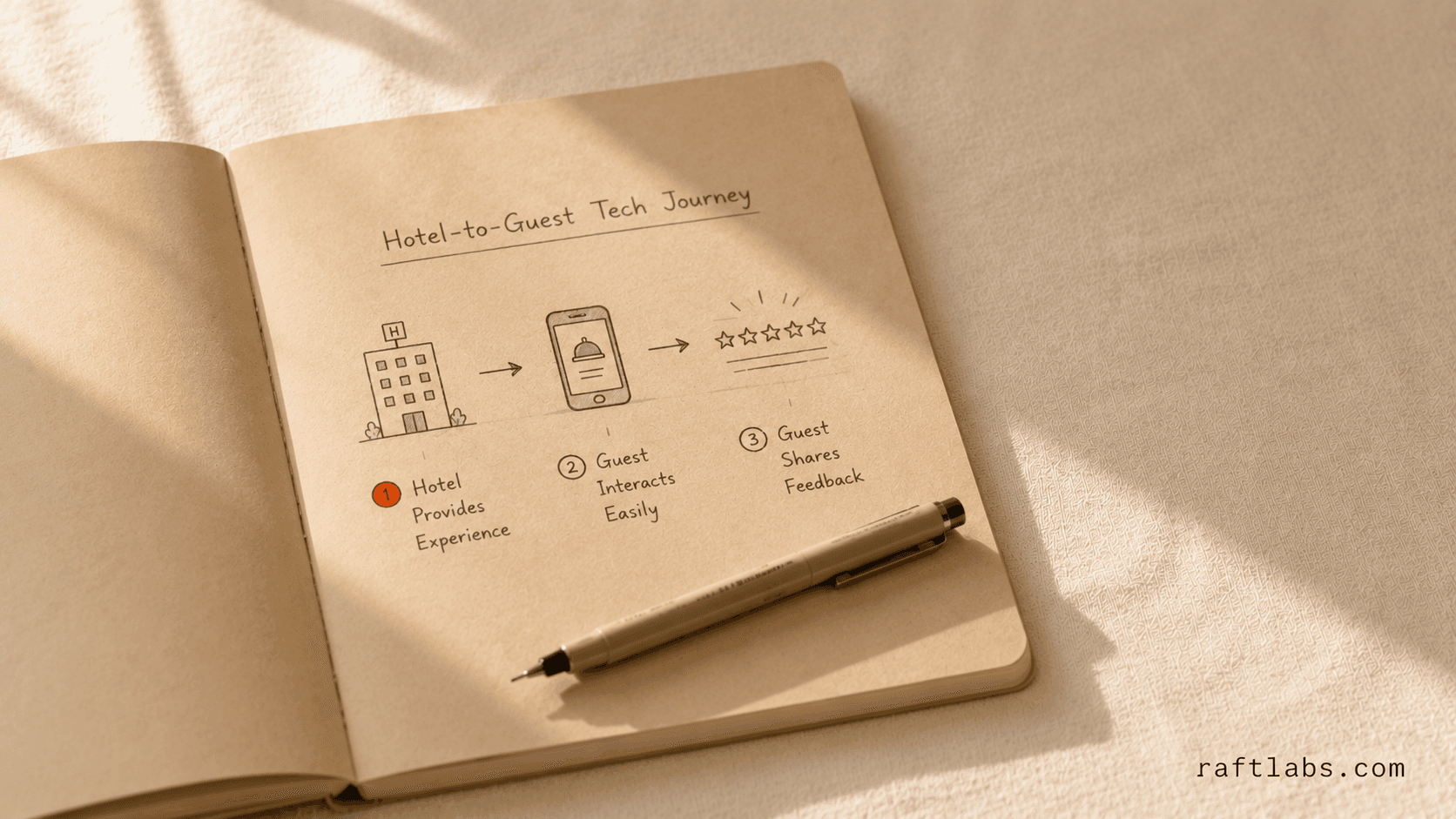
Modern travelers arrive with smartphones in hand and expectations shaped by consumer tech giants. They expect mobile check-in, personalized recommendations, instant service requests, and payments that work without friction.
Hotels that fail to meet these expectations risk negative reviews and lost bookings. The best hospitality tech companies give properties the ability to deliver these digital-first experiences that guests now consider standard, not premium.
3. Over-dependence on online travel agencies
While OTAs provide valuable distribution, their commission structures significantly impact hotel profitability. Properties typically pay 15-25% commission per booking, dramatically reducing margins.
This dependence on third-party platforms has driven hotels to seek technology solutions that boost direct bookings. Top-rated hospitality tech companies offer tools for guest data management, targeted marketing, and friction-free booking experiences that reduce OTA reliance and improve direct channel revenue.
4. Revenue optimization complexity
Gone are the days of simple seasonal pricing. Modern revenue management requires analyzing hundreds of data points - competitor rates, local events, weather patterns, booking pace, and market demand - to optimize pricing in real-time. Doing this manually is impossible.
Travel hospitality tech companies specializing in revenue management use sophisticated algorithms and machine learning to make these complex calculations automatically, maximizing revenue per available room.
5. Sustainability pressures and ESG commitments
Guests increasingly choose hotels based on sustainability practices, while investors and regulators demand measurable ESG (Environmental, Social, Governance) commitments.
Hotels need technology to track energy consumption, reduce waste, optimize resource usage, and report on sustainability metrics. Many hospitality tech companies now build sustainability features that help properties reduce environmental impact while lowering operational costs.
6. Data fragmentation and system integration
Most hotels operate with multiple disconnected systems - separate platforms for reservations, housekeeping, point-of-sale, guest communication, and accounting.
This fragmentation creates data silos, manual data entry, and operational inefficiencies. Integrated platforms enable consistent communication and data sharing across multiple departments, improving overall efficiency and coordination.
The leading tech companies for the hospitality industry either provide integrated platforms or offer APIs that connect disparate systems, creating unified operational setups.
7. Cybersecurity and data protection
Hotels collect sensitive guest data like payment information, personal details, and preferences. Data breaches damage reputation and trigger regulatory penalties under laws like GDPR and CCPA.
Hospitality technology companies must prioritize enterprise-grade security, encrypted data storage, and compliance frameworks that protect both properties and guests.
These challenges are now permanent features of hospitality operations, not temporary disruptions. The technology solutions covered in this guide directly address these pain points and turn them into competitive advantages for forward-thinking hospitality businesses.
Check out: Our Guest experience app development services for hospitality to build custom web and mobile apps for your guest process.
Get started with a free hotel booking engine audit to identify quick wins today. Get free audit report
Real-world success stories: how hospitality tech companies drive results
The true value of hospitality technology companies becomes clear when examining actual implementation results. Many success stories involve the use of technology to support room upgrades, leading to higher guest satisfaction and increased revenue.
These case studies show how the right tech partnerships transform operations, improve guest experiences, and drive measurable business outcomes.
1. Lafayette Hotels doubles direct bookings and unifies operations across 26 properties with RMS
Lafayette Hotels, a New England-based hospitality group with 26 properties, faced growing complexity as it scaled. Multiple PMS platforms, disconnected systems, manual reporting, and costly on-premise servers made it difficult to operate efficiently or deliver a consistent guest experience across locations.
After deploying RMS as a single, cloud-based platform, Lafayette unified operations, cut steps from workflows, and gained the flexibility needed to grow without losing its personal hospitality touch.
Results achieved:
Over 70% of reservations now come from direct channels, with online direct bookings more than doubling in four years
60+ hours saved every week through automated accounting and financial reporting
$100,000 saved annually by eliminating server and IT maintenance costs
Centralized front desk operations managing 315 rooms across multiple properties from one login
Faster onboarding, with new properties live in as little as nine days
Zero system downtime, even during severe weather events
Lafayette's leadership noted that RMS replaced fragmented systems with one unified platform. Teams now update rates, policies, and inventory instantly across the group, operate remotely when needed, and focus less on manual work and more on delivering the genuine, consistent hospitality guests expect at every property.
2. Hoteza enhances digital room access through Omnitec mobile key integration
Hoteza, a global provider of guest-facing hospitality solutions, sought to further simplify the guest process by enabling secure, contactless room access within its mobile app and check-in platform. Hotels needed a reliable mobile key experience that reduced friction at arrival while maintaining high security standards.
By integrating Omnitec's Mobile Key solution into the Hoteza platform, hotels can now offer Bluetooth-based room access directly from guests' smartphones.
Results achieved:
Contactless room access enabled through mobile devices using Bluetooth and proximity technology
Improved guest convenience by eliminating the need for physical key cards
Faster, smoother check-in experience through mobile-first access
Improved security with Omnitec's electronic lock technology
A unified guest experience within Hoteza's mobile app and check-in solution
Leadership from both companies highlighted that the integration creates a more connected and intuitive guest experience. By combining Hoteza's guest-facing platform with Omnitec's mobile key technology, hotels gain a modern, scalable solution that improves convenience, security, and overall guest satisfaction.
3. Lark Hospitality speeds up operations and scales faster with Mews
Lark Hospitality, a full-service hotel management company with a growing portfolio of independent lifestyle properties across the US, needed a modern PMS that could support rapid expansion without adding operational complexity.
Managing dozens of unique boutique hotels meant onboarding had to be fast, payments reliable, and integrations flexible - without slowing teams down or compromising the guest experience.
After deploying Mews' cloud-native platform, Lark was able to modernize operations across its portfolio while giving staff the ability to focus on what matters most: delivering memorable guest experiences.
Results achieved:
44 hotels onboarded in just four months, enabling rapid portfolio-wide rollout
100% automated payments with secure tokenization and faster reconciliation
Reduced manual errors and administrative workload across properties
Improved operational efficiency through centralized, cloud-based management
A fully customizable tech stack using Mews Marketplace and Open API for loyalty, guest data, and communications integrations
Lark's leadership emphasized that Mews did not simply replace legacy systems. It removed friction from daily operations. With faster onboarding, invisible payments, and flexible integrations, hotel teams shifted their focus from screens and spreadsheets to hospitality, creativity, and stronger guest relationships.
Custom booking engine built for effortless guest experiences We helped a leading short and medium-term letting provider simplify guest experiences with a custom-built booking engine.
Measuring ROI: the business impact of hospitality technology investments
Investing in hospitality tech companies requires significant capital, implementation effort, and organizational change. Understanding the potential return on investment helps justify these expenditures and set realistic performance expectations.
Leading hospitality tech companies also surface concrete insights through advanced analytics, giving operators the data to make decisions that drive measurable business value.
Here's how leading hospitality technology companies drive measurable business value.
Revenue impact: direct and indirect gains
Revenue per available room (RevPAR) improvements
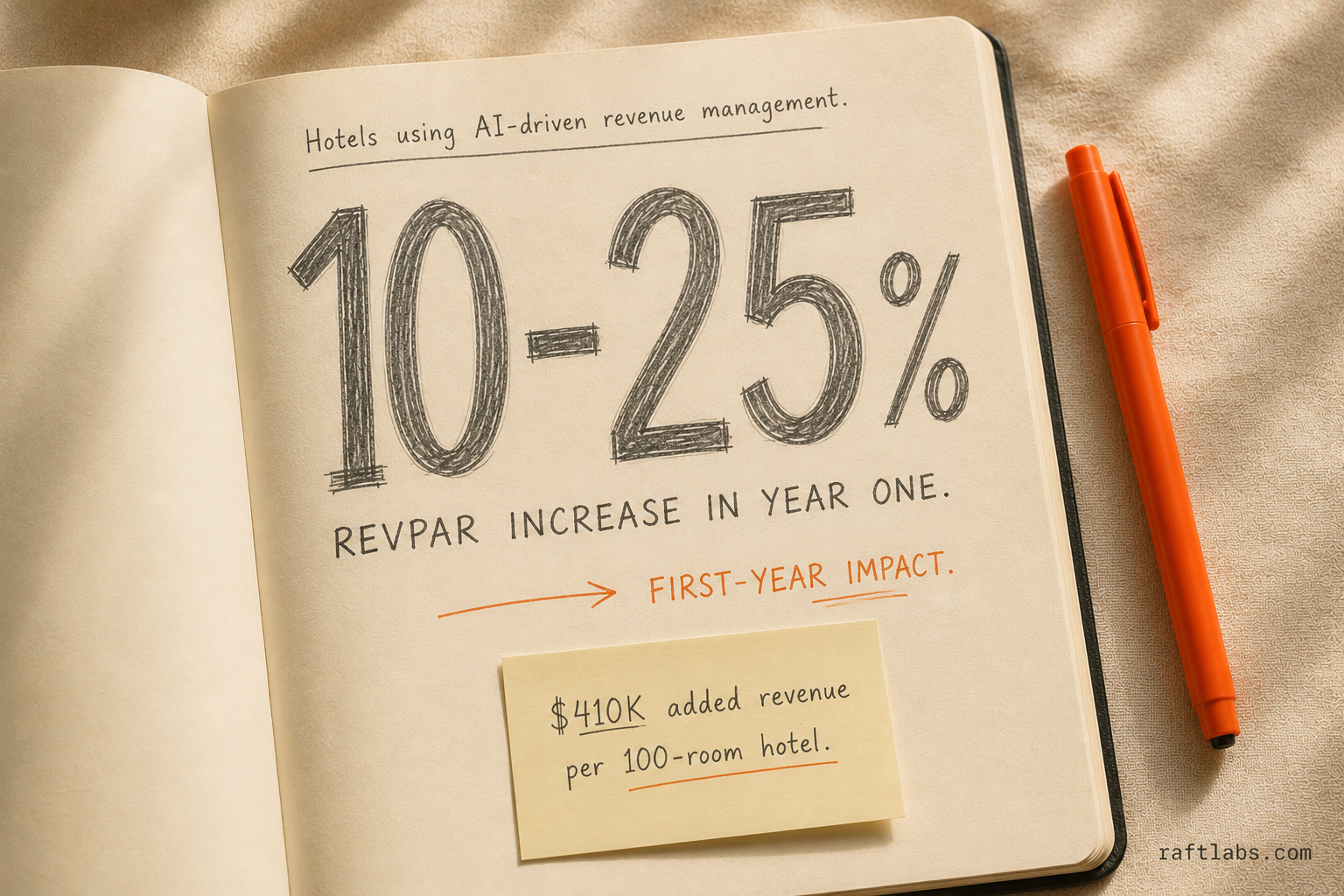
Hotels deploying advanced revenue management solutions from tech hospitality companies like IDeaS or Duetto typically see 10-25% RevPAR increases within the first year.
This comes from optimized pricing strategies, improved forecasting accuracy, and dynamic rate adjustments that capture maximum value during high-demand periods while maintaining occupancy during slower times.
Direct booking revenue growth
Properties deploying guest data platforms and marketing automation through top-rated hospitality tech companies often achieve 20-40% increases in direct channel bookings within 18 months.
By reducing OTA dependence, hotels reclaim 15-25% commission fees, directly improving bottom-line profitability. A 100-room hotel averaging $150 nightly rates with 75% occupancy saves approximately $200,000-$300,000 annually by shifting just 20% of bookings from OTA to direct channels.
Upselling and cross-selling revenue
Integrated platforms that connect property management with point-of-sale, spa booking, and activity reservations enable targeted upselling.
Hotels report 15-30% increases in ancillary revenue when technology supports personalized offers based on guest preferences and booking patterns.
Operational cost reductions
Labor cost optimization
Automation technologies reduce manual tasks without eliminating positions. Properties typically redirect 20-30% of front desk time from administrative work to guest-facing service.
For a hotel with six front desk employees earning $35,000 annually, this represents $42,000-$63,000 in labor value redirected to higher-impact activities. Some properties reduce overtime costs by 40-60% through better scheduling and operational efficiency.
Technology consolidation savings
Hotels operating multiple disconnected systems pay separate licensing fees, maintenance costs, and training expenses.
Consolidating to integrated platforms from leading hospitality tech companies reduces these costs by 25-40%. Properties typically save $5,000-$15,000 annually per 100 rooms by eliminating redundant systems.
Energy and resource optimization
Smart room technology and IoT deployments drive 15-25% reductions in energy consumption.
For a 200-room hotel spending $200,000 annually on energy, this translates to $30,000-$50,000 in savings while supporting sustainability commitments.
Reduced key replacement and lock maintenance
Properties deploying keyless entry solutions from providers like Omnitec eliminate physical key replacement costs (averaging $3-$8 per replacement) and reduce lock maintenance expenses by 60-70%, saving $8,000-$15,000 annually for a typical 150-room property.
Guest satisfaction and loyalty impact
Net Promoter Score (NPS) improvements
Hotels deploying full technology stacks from hospitality technology companies typically see NPS increases of 15-30 points. This correlation with repeat bookings is powerful - improving NPS by 10 points can increase repeat guest rates by 10-15%, directly impacting lifetime customer value.
Review rating improvements
Properties deploying guest experience technology consistently achieve 0.3-0.7 point improvements in online review ratings (on 5-point scales). Research shows a 0.5-point improvement in rating can increase booking conversion rates by 25-30%, particularly for independent properties competing against branded chains.
Guest retention rates
Personalized experiences enabled by guest data platforms increase repeat booking rates by 20-35%. Acquiring new guests costs 5-7 times more than retaining existing ones, making loyalty improvements extremely valuable. For a hotel with 10,000 annual room nights, a 25% improvement in retention can add $150,000-$250,000 in revenue.
Time savings and productivity gains
Check-in and check-out time reductions
Mobile key and self-service technologies reduce check-in time from 8-12 minutes to 2-4 minutes, improving guest satisfaction while allowing front desk staff to assist more guests or handle complex requests. During peak times, this prevents queues that damage first impressions.
Revenue management time savings
Manual revenue management consumes 10-20 hours weekly for revenue managers. Automated solutions from travel hospitality tech companies reduce this to 2-4 hours, allowing strategic focus rather than data entry and spreadsheet manipulation.
Reporting and analytics efficiency
Cloud-based platforms generate real-time reports that previously required days of manual compilation. Finance teams save 40-60 hours monthly during close periods, accelerating decision-making and reducing errors.
Payback periods and total cost of ownership
Most hospitality technology investments achieve payback within 12-24 months when properly deployed:
Property Management Systems: typical payback of 18-24 months when considering labor savings, operational efficiency, and reduced system maintenance costs.
Revenue Management Systems: often achieve payback in 6-12 months due to direct revenue impact. A 10% RevPAR improvement for a 100-room hotel at 75% occupancy and $150 ADR generates approximately $410,000 additional annual revenue.
Guest Experience Platforms: ROI through increased direct bookings and guest loyalty typically manifests over 18-30 months and compounds as guest databases grow.
Keyless Entry Systems: payback periods of 24-36 months considering hardware costs, improving with labor savings and guest satisfaction benefits.
Strategic value beyond immediate ROI
Some benefits resist easy quantification but provide substantial strategic value:
Competitive positioning: hotels with superior technology attract tech-savvy travelers and compete effectively against newer properties and branded chains.
Data-driven decision making: strong analytics capabilities enable decisions based on evidence rather than intuition, reducing costly mistakes.
Scalability for growth: cloud-based systems from leading hospitality tech companies enable rapid expansion without proportional technology cost increases.
Brand differentiation: technology deployments - particularly custom solutions from hospitality development companies - create guest experiences that command premium pricing.
Risk mitigation: modern systems with strong security and compliance frameworks reduce data breach risks, regulatory penalties, and reputation damage.
Calculating your technology ROI
When evaluating hospitality tech companies, consider this framework:
Quantify current pain points: calculate costs of inefficiency, lost revenue from poor pricing, OTA commissions, and guest satisfaction issues.
Project technology benefits: estimate realistic improvements based on vendor case studies and industry benchmarks.
Include implementation costs: factor in licensing fees, implementation services, training, and change management.
Account for ongoing costs: consider annual subscription fees, support costs, and upgrade expenses.
Calculate payback period: determine when cumulative benefits exceed total costs.
Assess strategic value: consider qualitative benefits like competitive positioning and scalability.
The most successful technology investments come from partnering with hospitality tech companies whose solutions address specific, measurable challenges while aligning with long-term strategic objectives. Properties that treat technology as a strategic driver rather than a cost center consistently achieve superior results.
Key trends shaping hospitality technology
The list of hospitality tech companies continues to evolve as new trends emerge. Understanding these trends helps hoteliers make informed decisions about technology investments:
1. Cloud-native architecture: Modern hospitality technology companies are moving away from on-premise systems to cloud-based solutions that offer flexibility, scalability, and automatic updates.
2. Contactless technology: Post-pandemic preferences have accelerated adoption of contactless check-in, mobile keys, and touchless payment solutions.
3. Artificial intelligence: Leading tech companies for the hospitality industry are applying AI to personalized guest recommendations, dynamic pricing, chatbots, and operational efficiency.
4. Open APIs: The trend toward open, connected systems allows hotels to build custom technology stacks by integrating best-of-breed solutions rather than relying on single-vendor systems.
5. Revenue optimization: Advanced analytics and machine learning are enabling more sophisticated revenue management strategies beyond traditional pricing models.
6. Sustainability technology: Hospitality tech companies are developing solutions that help hotels reduce energy consumption, minimize waste, and track sustainability metrics.
Emerging technologies: the next wave of hospitality innovation
While established hospitality tech companies continue refining core platforms, emerging technologies promise to fundamentally transform guest experiences and operational models. Understanding these innovations helps properties prepare for the next generation of hospitality technology.
1. Artificial intelligence and machine learning applications
AI has moved beyond buzzword status to deliver practical hospitality applications that leading tech companies for hospitality industry are rapidly deploying. To explore broader trends and real-world use cases, see how AI in hospitality is evolving across the industry:
AI-powered concierge and chatbots
Modern conversational AI handles guest inquiries across multiple languages 24/7, resolving 60-80% of routine questions without human intervention. Unlike early chatbots that frustrated users with limited capabilities, today's AI assistants understand context, remember previous interactions, and escalate complex requests to human staff without friction. Properties report 40% reductions in front desk call volume while maintaining higher guest satisfaction scores.
Predictive analytics for personalization
Machine learning algorithms analyze booking patterns, guest preferences, and behavior data to predict needs before guests articulate them. Hotels using predictive analytics achieve 25-35% higher upsell conversion rates by offering relevant services at optimal moments - suggesting spa appointments to guests whose profile indicates wellness interest, or recommending local restaurants aligned with previous dining preferences.
Dynamic pricing optimization
Next-generation revenue management goes beyond traditional forecasting to incorporate hundreds of data signals - weather forecasts, local event calendars, competitor pricing, social media sentiment, and even flight booking trends. AI processes these inputs continuously, adjusting prices in real-time to maximize revenue. Early adopters report 8-15% additional revenue gains beyond traditional revenue management systems.
Computer vision for operations
AI-powered cameras (respecting privacy regulations) monitor public spaces to optimize staffing deployment, identify maintenance needs before guests complain, and analyze traffic patterns for better space utilization. Some properties use computer vision to automatically verify room cleanliness standards, reducing housekeeping inspection time by 30-40%.
2. Internet of Things (IoT) and smart room technology
Connected devices transform rooms from static spaces into responsive environments that adapt to guest preferences:
Intelligent room controls
Modern smart rooms remember individual guest preferences - temperature, lighting, curtain position, TV channels - and automatically configure themselves upon check-in. Guests control environments through voice commands, mobile apps, or touchscreen panels. Beyond convenience, IoT sensors reduce energy consumption by 20-30% through occupancy-based HVAC and lighting management.
Predictive maintenance
IoT sensors monitor equipment performance - HVAC systems, elevators, appliances - detecting anomalies that predict failures before they occur. Properties deploying predictive maintenance reduce equipment downtime by 50-70% and extend asset lifespans by 20-30% through optimized maintenance scheduling.
Contactless experiences
IoT enables truly touchless guest experiences like voice-activated controls, automated temperature adjustments, occupancy-sensing lighting, and smart mirrors that display personalized information. Post-pandemic, these features evolved from novelty to expectation, particularly for business travelers.
In-room entertainment evolution
Smart TVs integrated with hotel systems allow guests to stream personal content, order room service, book spa appointments, and receive personalized recommendations - all through familiar interfaces. Some hospitality technology companies partner with entertainment providers to offer premium content that improves guest satisfaction while generating ancillary revenue.
3. Blockchain applications in hospitality
Blockchain technology is moving from experimental to practical deployments:
Decentralized loyalty programs
Blockchain-based loyalty platforms allow guests to earn, track, and redeem points across multiple hotel brands and travel partners without traditional program limitations. Tokens stored on blockchain provide transparency, instant redemption, and even trading capabilities between loyalty programs.
Smart contracts for bookings
Blockchain smart contracts automate booking confirmations, cancellation policies, and payment processing without intermediaries. This reduces OTA dependence, eliminates payment processing fees, and provides transparent, immutable booking records that prevent disputes.
Secure identity verification
Blockchain-based digital identity systems allow guests to verify identity once and use that verification across multiple properties without repeatedly sharing sensitive documents. This improves security, speeds check-in, and protects guest privacy.
Supply chain transparency
Hotels using blockchain track supply chains for food, linens, and amenities, providing guests with verified sustainability and ethical sourcing information. This transparency supports ESG commitments and appeals to conscious travelers.
4. Robotics and automation
Physical automation technologies are handling tasks across hospitality operations:
Service robots
Autonomous robots deliver amenities, towels, and room service orders, operating in elevators and navigating hallways independently. Properties deploying service robots report 25% reductions in delivery-related labor costs while maintaining 24/7 service availability. Guests increasingly view robots as novel experiences rather than cold automation.
Automated food preparation
Robotic systems prepare consistent cocktails, coffee beverages, and even simple meals with precision that confirms quality while reducing labor costs. A robotic bartender can serve 120 drinks per hour versus 30-40 for human bartenders during peak times.
Automated housekeeping assistance
While robots can't yet fully clean rooms, automated systems handle specific tasks - floor cleaning, linen delivery, trash removal - allowing housekeeping staff to focus on detailed cleaning and guest interactions.
Reception robots and kiosks
AI-powered kiosks and robots handle check-in, provide information, and process simple requests in multiple languages. These systems don't replace human staff but handle routine transactions, allowing hospitality professionals to focus on complex guest needs.
5. Virtual and augmented reality experiences
VR and AR technologies create immersive experiences across the guest process:
Pre-stay virtual tours
Potential guests explore rooms, amenities, and surrounding areas through VR before booking, increasing conversion rates by 30-40% for properties offering virtual tours. This technology particularly benefits destination resorts and unique properties where visual differentiation drives bookings.
AR navigation and information
Augmented reality apps overlay navigation assistance, restaurant information, and historical context onto real-world views through smartphone cameras. Guests pointing phones at hotel directories receive detailed information about facilities, while AR city guides improve exploration.
Virtual experiences and events
Hotels host virtual conferences, cultural experiences, and entertainment that extend reach beyond physical capacity. Hybrid events combining in-person and virtual attendance became standard, with hospitality tech companies developing platforms that connect both audiences directly.
AR-enhanced dining
Restaurants use AR to display detailed dish information, ingredient sourcing, nutritional content, and even preparation videos when guests point cameras at menus. This improves transparency while creating memorable dining experiences.
6. Voice technology integration
Voice-activated systems extend beyond smart speakers to complete voice-first experiences:
Voice-activated room control
Guests control lighting, temperature, entertainment, and request services through natural voice commands in multiple languages. This hands-free control particularly appeals to accessibility-conscious travelers and those accustomed to voice assistants at home.
Voice biometrics for security
Voice recognition provides secure, frictionless authentication for room access, payment authorization, and personal information retrieval without passwords or physical keys.
Multilingual voice support
AI-powered voice systems understand and respond in dozens of languages, breaking communication barriers that previously required multilingual staff or translation apps.
7. Sustainable technology innovations
Environmental technology moves from compliance to competitive advantage:
AI-powered energy optimization
Machine learning systems analyze occupancy patterns, weather forecasts, and energy pricing to optimize HVAC, lighting, and water heating. Properties achieve 25-40% energy reductions without compromising guest comfort.
Water conservation technology
Smart irrigation systems, low-flow fixtures with pressure optimization, and greywater recycling reduce water consumption by 30-50% while maintaining aesthetic standards and guest satisfaction.
Waste reduction systems
AI-powered inventory management reduces food waste by 40-60% through precise demand forecasting. Automated composting and recycling systems with sensors confirm proper waste sorting.
Carbon tracking and reporting
Full systems monitor energy consumption, supply chain emissions, and operational impact, generating transparent sustainability reports that support ESG commitments and appeal to environmentally conscious guests.
8. Adoption timeline and practical considerations
Not all emerging technologies warrant immediate adoption. Consider this general timeline:
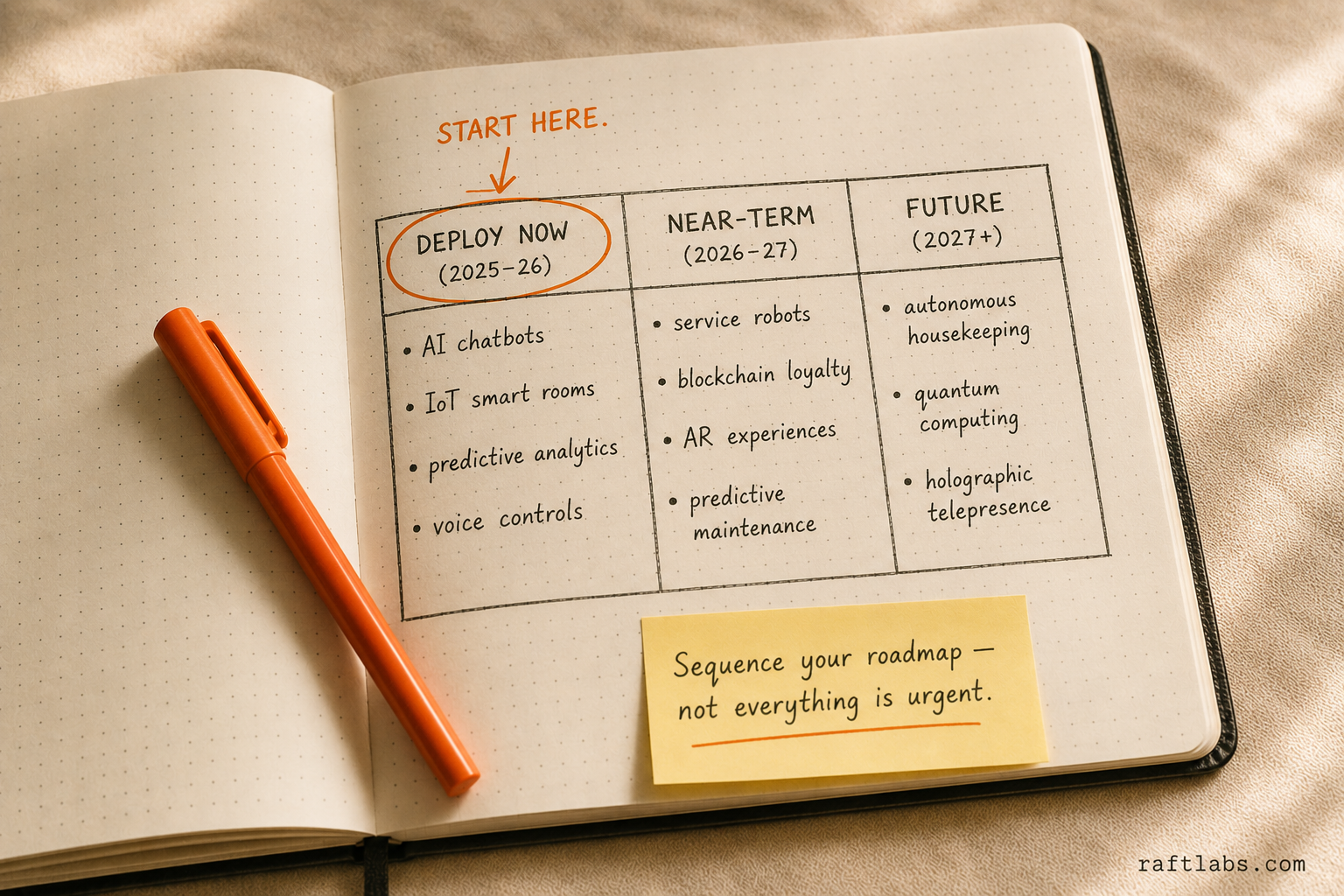
Deploy now (2025-2026):
AI chatbots and conversational interfaces
IoT smart room technology
Advanced predictive analytics
Computer vision for operations
Voice-activated room controls
Plan for near-term (2026-2027):
Service robots for delivery
Blockchain loyalty programs
Complete AR experiences
Advanced predictive maintenance
AI-powered personalization engines
Monitor for future (2027+):
Fully autonomous housekeeping
Brain-computer interfaces for experiences
Holographic telepresence
Quantum computing for optimization
Advanced robotics for guest interaction
The most successful hospitality businesses partner with forward-thinking hospitality tech companies that balance innovation with practical deployment, avoiding technology for technology's sake while remaining competitive in an increasingly digital industry.
How to choose the right hospitality tech partner
Selecting from the many leading hospitality tech companies requires careful consideration of your specific needs:
Assess your requirements: identify your most critical operational challenges and guest experience goals before evaluating technology solutions. Different hospitality technology companies excel in different areas - operations, revenue management, guest experience, or access control.
Consider property size and type: different solutions serve different property types better. A boutique hotel's needs differ significantly from a large chain or vacation rental operation.
Evaluate integration capabilities: make sure any new technology can connect with your existing systems or provides a full solution that replaces multiple disconnected tools.
Check support and training: implementation success depends heavily on training and ongoing support, especially for complex systems.
Consider total cost of ownership: look beyond initial licensing fees to understand implementation costs, training expenses, transaction fees, and ongoing maintenance.
Request demonstrations and references: see the technology running live and speak with current customers in similar property types to understand real-world performance.
Your technology selection checklist: a practical decision framework
Choosing the right hospitality tech companies requires systematic evaluation across multiple dimensions. Use this checklist to guide technology decisions and avoid costly mistakes.
Phase 1: define your requirements
Identify primary pain points
List your top 3-5 operational challenges the technology should address
Quantify current costs of these challenges (time, money, guest satisfaction impact)
Determine which problems must be solved versus nice-to-have improvements
Clarify strategic objectives
Define whether priority is efficiency, revenue growth, guest experience, or combination
Establish measurable success criteria (e.g., "reduce check-in time by 50%," "increase direct bookings 25%")
Determine timeline expectations for achieving results
Assess your current technology
Document all existing systems and their functions
Identify integration requirements for new technology
Evaluate what current systems should be replaced versus retained
Define budget parameters
Establish total budget including licensing, implementation, training, and first-year support
Determine if funding supports one-time purchase versus ongoing subscription
Allocate contingency budget (recommended 25-30% of total)
Consider multi-year total cost of ownership, not just initial investment
Understand property-specific factors
Property size and room count
Property type (full-service, limited service, resort, boutique, etc.)
Target guest segments and their technology expectations
Staff technology proficiency levels
Existing IT infrastructure and support capabilities
Phase 2: evaluate technology solutions
Research potential providers
Identify 4-6 hospitality tech companies in your target category
Review their client portfolios for similar property types
Check independent review sites (Capterra, G2, Hotel Tech Report) for user feedback
Search for recent news about the companies (acquisitions, funding, product launches)
Assess core functionality
Confirm the solution addresses your identified pain points
Confirm it includes must-have features without extensive customization
Evaluate user interface and user experience quality
Check mobile capabilities if relevant to your use case
Evaluate integration capabilities
Confirm compatibility with your existing systems
Review API documentation quality and completeness
Identify whether integrations are native, third-party, or custom development
Understand integration costs and timeline
Examine scalability
Confirm the solution accommodates future growth (additional properties, room additions)
Check if pricing structure remains viable as you scale
Assess whether architecture supports expanded use cases over time
Review security and compliance
Confirm PCI DSS compliance for systems handling payments
Confirm GDPR compliance if serving European guests
Check SOC 2 Type II or similar security certifications
Review data encryption standards (at rest and in transit)
Assess disaster recovery and business continuity capabilities
Investigate vendor stability
Research company financial health and funding status
Evaluate market position and customer base size
Review leadership team experience and company track record
Check for concerning signs (high employee turnover, negative press, shrinking customer base)
Phase 3: conduct demonstrations and trials
Request complete demonstrations
See the actual product, not just sales presentations
Request demonstrations of specific workflows relevant to your property
Ask to see the administrator and configuration interface, not just end-user experience
Ask about customization limitations and options
Conduct hands-on trials
Request trial access for 2-4 weeks if available
Involve staff who will actually use the system daily
Test with realistic data and scenarios from your property
Document usability issues and questions that arise
Check references thoroughly
Request 4-5 reference contacts from similar properties
Ask specific questions about implementation experience, ongoing support, and realized benefits
Ask about unexpected challenges they encountered
Confirm whether they would choose the same solution again
Evaluate support quality
Test response times during trial period
Review support hours and availability (24/7 vs. business hours)
Understand escalation procedures for critical issues
Check if support is included versus extra-cost service
Phase 4: analyze commercial terms
Understand pricing structure
Get detailed pricing broken down by component
Clarify what's included versus add-on costs
Understand billing frequency and payment terms
Identify price increase policies and protections
Review contract terms
Contract length and renewal terms
Cancellation policies and exit fees
Service level agreements and penalties for non-performance
Data ownership and portability rights
Liability limitations and indemnification clauses
Negotiate favorable terms
Request multiple-year discounts if committing long-term
Negotiate fixed-price implementation if possible
Seek extended support periods included in base price
Ask for performance guarantees or trial periods
Clarify implementation costs
Data migration costs and who performs it
Custom integration development and fees
On-site versus remote implementation options
Training costs and what's included
Timeline for full implementation
Phase 5: plan for implementation
Assemble implementation team
Designate internal project manager
Identify departmental champions
Engage external consultants if needed
Establish vendor point-of-contact relationships
Develop project plan
Create detailed timeline with milestones
Identify dependencies and critical path
Schedule staff training sessions
Plan communication to staff and guests
Prepare for data migration
Conduct data quality audit
Clean and organize data before migration
Define data mapping requirements
Establish validation procedures
Plan change management
Communicate reasons for change and benefits to staff
Address concerns about job security proactively
Create feedback mechanisms for issues
Celebrate milestones and early wins
Phase 6: post-implementation evaluation
Monitor performance metrics
Track baseline metrics established in Phase 1
Document improvements and challenges
Calculate actual ROI based on real results
Gather staff and guest feedback systematically
Optimize configuration
Adjust settings based on actual usage patterns
Enable additional features as staff becomes comfortable
Refine integrations and workflows
Apply vendor best practices and recommendations
Plan continuous improvement
Schedule regular system reviews (quarterly)
Stay informed about platform updates and new features
Maintain relationships with hospitality technology companies for ongoing optimization
Consider expanding to additional modules or properties
Red flags to watch for
Be cautious of providers showing these warning signs:
Reluctance to provide references from similar properties
Vague or evasive answers about integrations, security, or pricing
Pressure tactics to sign contracts quickly without adequate evaluation
Unrealistic promises about implementation timelines or guaranteed results
No clear roadmap for product development and future features
Minimal or outsourced support rather than dedicated support teams
Proprietary data formats that make switching providers difficult
Frequent leadership changes or high customer churn rates
The future of hospitality technology
The hospitality technology market keeps moving fast as top-rated hospitality tech companies build to meet changing guest expectations and operational challenges.
Emerging technologies like virtual reality for pre-stay experiences, blockchain for loyalty programs, and advanced robotics for service delivery are beginning to move from experimental to practical deployments.
The convergence of different technology categories is also worth noting. The best hospitality tech companies are increasingly offering integrated solutions that span operations, revenue management, and guest experience, rather than focusing on single categories. This integration gives hotels the ability to deliver consistent, connected experiences while maintaining operational efficiency.
The most successful hotels will be those that treat technology not as a cost center but as a strategic driver of superior guest experiences and operational efficiency. Whether working with established platforms or partnering with hospitality development companies for custom solutions, the key is choosing technology that fits your brand values and operational goals.
The hospitality tech companies featured in this guide represent the industry's most innovative and impactful technology providers across critical operational categories.
From full property management platforms like Oracle Hospitality, Cloudbeds, Mews, and RMS Cloud to specialized revenue management solutions from IDeaS and Duetto, guest engagement platforms from Amadeus and Revinate, and modern keyless entry systems from Omnitec and Assa Abloy - each brings unique strengths to different aspects of hotel operations.
For businesses requiring custom solutions beyond off-the-shelf offerings, partnering with experienced hospitality software development companies like RaftLabs makes sure technology is precisely tailored to specific operational needs and guest experience goals.
As the hospitality industry becomes increasingly technology-driven, staying informed about the leading tech companies for hospitality industry and emerging trends is critical for maintaining competitive advantage.
The right technology partnerships will not only speed up operations and optimize revenue but also give hotels the ability to deliver the personalized, connected experiences today's guests expect.
For hotel owners modernizing an existing property, operators launching a new hotel, or teams scaling a multi-property operation, the hospitality tech companies and development partners featured here offer the expertise and solutions to support your success in an increasingly digital hospitality market.
By understanding the different categories of travel hospitality tech companies and selecting the right partners for each aspect of your operations, you can build a technology stack that drives both operational excellence and exceptional guest experiences.
If you need help building hospitality software, reach out to us and we'll help bring your idea to life within weeks.
Ask an AI
Get an instant summary of this post from your preferred AI assistant.
Common questions
- Hotels are currently facing severe labor shortages, rising guest expectations for mobile-first experiences, and high commission costs from over-dependence on Online Travel Agencies (OTAs). Properties also struggle with revenue optimization complexity and the need to connect fragmented, disconnected systems.
- Technology improves the bottom line by boosting direct bookings to reclaim 15-25% in commission fees and using AI-driven revenue management to increase RevPAR by 10-25%. Operational costs are also reduced through automation, which can reallocate up to 30% of front desk time toward guest-facing service.
- A Property Management System (PMS), like Oracle or Cloudbeds, serves as the operational backbone for managing reservations, housekeeping, and guest data. An RMS, such as IDeaS or Duetto, focuses specifically on science-based pricing strategies, demand forecasting, and maximizing revenue per available room.
- Custom solutions are ideal for properties with unique accommodation types or complex experience-based pricing that standard systems cannot handle. Custom development allows for tailored features - specialized booking engines or unique guest apps - that differentiate a brand in a competitive market.
- Key trends include AI-powered chatbots for 24/7 guest support, IoT-enabled smart rooms that remember guest preferences, and contactless mobile key entry. Future innovations like blockchain for decentralized loyalty programs and service robots for amenity delivery are also moving into practical implementation.